May 22, 2026 | AC Installation, AC Maintenance, AC Repair
What Unexpected AC Freezing Looks Like
When your air conditioner freezes up, it’s usually not subtle. You might notice a thick layer of frost or ice covering the copper refrigerant lines outside your building. Sometimes, the indoor evaporator coil inside your air handler or furnace will also freeze solid, even in the middle of a hot Petaluma summer.
Have you ever noticed water pooling under your system or dripping from vents? That’s often meltwater from a frozen coil thawing out. You may also hear a faint hissing or bubbling sound near the indoor unit. That’s refrigerant struggling to move through the icy blockage.
Here are some typical red flags that your AC is freezing up:
For further reading, see Why Is My Air Conditioner Freezing Up? from autotruckservice.org.
- Uneven cooling—certain rooms feel warm, others much colder
- Reduced airflow from vents
- Visible frost or ice on exterior copper lines or inside the air handler
- Water puddling around the indoor unit
- Unusual noises (hissing, bubbling, or gurgling)
Once you spot these issues, it’s tempting to just turn off the system and hope the problem goes away. Unfortunately, a frozen AC almost always points to an underlying issue that needs attention. If you’ve noticed any of these symptoms in your Petaluma business, it’s time to take a closer look at why your air conditioning system is freezing up.
How Poor Airflow Triggers Sudden Freezing
One of the most common causes of an AC freezing up is poor airflow across the evaporator coil. The evaporator coil is the cold part of your system, located inside the air handler. It needs a steady stream of warm air to work properly. If that airflow drops, the coil can become too cold and condensation freezes directly onto it.
Why does airflow drop? Here are the main culprits:
- Dirty air filters: A clogged filter blocks air before it reaches the coil. Even commercial-grade pleated filters can get packed with dust and debris in a few weeks during heavy use.
- Blocked or closed vents: Furniture, boxes, or closed registers reduce the amount of air the system can move.
- Blower motor issues: If the fan or blower motor is failing or running at the wrong speed, less air makes it over the coil.
- Duct problems: Collapsed, crushed, or leaky ducts restrict airflow and lower pressure in the system.
For example, North HVAC Services often finds that a single dirty air filter can reduce system airflow by 50% or more. That’s enough to cause ice to build up within hours. In commercial buildings, the problem is sometimes traced to a blocked return grille in a storeroom or supply closet. Even a well-maintained blower motor can’t compensate for a blockage in the ductwork or a thick layer of dust on the filter.
If your AC is freezing up, always start by checking for airflow problems. Replace filters monthly during peak cooling season. Walk your building to make sure all supply and return vents are open and unobstructed. If airflow still seems weak, it’s time for a professional inspection.
The Role of Low Refrigerant in AC Freezing Up
Low refrigerant is another big reason for unexpected AC freezing up. Refrigerant is the chemical that absorbs heat from inside your building and releases it outside. If your system is low on refrigerant, the pressure inside the evaporator coil drops. Lower pressure means a lower temperature—and that can cause the coil to freeze solid.
Why does refrigerant run low? Unlike oil in a car, it doesn’t get “used up.” Instead, it escapes through leaks—usually tiny pinholes in the copper lines, coil, or fittings. Over time, even a small leak can drop refrigerant levels enough to cause trouble.
What does this look like in real life? You might notice:
- Longer run times with little cooling effect
- Ice on the lines outside, especially near the service valves
- Bubbling or hissing sounds at the air handler or outdoor unit
- High energy bills, since the system works harder with less refrigerant
Don’t just top off the refrigerant. North HVAC Services recommends a leak check using electronic detectors or dyes. If a leak is found, proper repair is the only way to prevent ongoing freezing and further damage.
Running your system with low refrigerant can cause compressor failure, which is a costly repair. If you see ice and suspect low refrigerant, call a licensed HVAC contractor for help.
Thermostat Settings That Can Cause Freeze-Ups
Your thermostat does more than just set the temperature. It controls how long and how often your air conditioner runs. Certain settings can actually lead to your AC freezing up, even if the system is in good shape otherwise.
- Setting the thermostat too low: Most systems are designed for a minimum setpoint of about 68°F. If you set it lower—especially overnight—your coil can drop below freezing and ice over.
- Fan set to “On” instead of “Auto”: With the fan in the “On” position, the blower keeps running even when the compressor cycles off. This can cause warm air to blow over a cold coil and create excessive condensation, which then freezes.
- Short-cycling due to faulty thermostats: If the thermostat is malfunctioning, it might tell the unit to turn on and off rapidly. This can prevent the coil from warming up between cycles, leading to a freeze-up.
For example, in a Petaluma office, North HVAC Services found an energy-conscious manager had set the thermostat to 62°F overnight. By morning, the coil was a block of ice and the system couldn’t cool at all. Simply raising the setpoint to 70°F solved the problem.
Double-check your thermostat settings if you’re seeing ice. For commercial spaces, programmable thermostats that prevent extreme setpoints can help avoid these issues.
AC Freezing Up in Summer vs. Winter: What’s Different?
You might think AC freezing up is only a summer problem, but it can happen in the cooler months too. The causes and consequences are different depending on the season.
Summer: In summer, your AC works harder and longer. High humidity means more moisture in the air, which can freeze on a cold coil if there’s an airflow or refrigerant problem. You’ll usually spot ice on the outdoor lines, and indoor comfort drops quickly.
Winter: In winter, most businesses don’t run their AC, but some commercial systems use the cooling mode to control humidity or cool server rooms. If the outdoor temperature is low and the system runs anyway, the refrigerant pressure can drop too much. This can freeze the coil even with normal airflow. Many rooftop units have freeze protection built in, but older systems may not.
Common differences include:
- In summer, freezing usually points to airflow or refrigerant issues.
- In winter, freezing can occur from running the AC when it’s too cold outside, or from malfunctioning controls.
If your business relies on cooling year-round, talk to your HVAC contractor about low ambient controls or freeze sensors to prevent winter-related freeze-ups.
Hidden Problems Inside Your System
Sometimes, the cause of AC freezing up is harder to spot. Problems inside the system can create the right conditions for ice to form, even if filters are clean and refrigerant is at the right level. Here are some hidden issues North HVAC Services often uncovers:
- Dirty evaporator coils: Dust and grime act as insulation, reducing heat transfer and causing cold spots that ice over.
- Improperly sized system: An oversized unit cools the space too quickly, not allowing enough airflow across the coil.
- Malfunctioning expansion valve: This part meters refrigerant into the coil. If it sticks open or closed, pressures and temperatures drop, leading to freezing.
- Drainage problems: A clogged condensate drain can let water back up onto the coil, freezing into a solid block.
- Worn or damaged blower belts: In belt-driven systems, a loose or slipping belt reduces airflow even if the motor is running.
For example, a Petaluma restaurant called North HVAC Services for repeated freeze-ups. The cause turned out to be a partial clog in the condensate drain line. Water backed up onto the coil, froze, and blocked airflow even more. Cleaning the drain solved the issue immediately.
If basic troubleshooting doesn’t help, these hidden problems require a professional inspection.
Why Quick Fixes for AC Freezing Up Aren’t Enough
It’s tempting to just shut off the system and let the ice melt, especially in the middle of a busy workday. While this gets the air flowing again for a while, it doesn’t address the real issue. The underlying cause—whether it’s airflow, low refrigerant, or a hidden fault—remains, and the freezing will return.
Repeated freeze-ups can quickly wear out your compressor, blower motor, and other expensive parts. Ice on the coil can cause it to crack, leading to leaks and further damage. Over time, you’ll see:
- Higher energy bills
- Poor comfort and uneven cooling
- Frequent breakdowns
- Shortened equipment lifespan
Quick fixes can even make things worse. Adding refrigerant without fixing leaks leads to more ice, not less. Running the fan to “thaw” the coil can spread water into places it shouldn’t go, causing mold or electrical issues.
If your AC keeps freezing up, don’t just reset the thermostat or replace the filter and hope for the best. Have a professional diagnose and repair the root of the problem. That’s the only way to protect your investment and keep your business comfortable.
How to Prevent Your AC from Freezing Up Again
Preventing your AC from freezing up means staying ahead of the causes before they shut down your business. Here are practical steps you can take:
- Replace air filters regularly: Check them every month during the cooling season and change as needed.
- Keep vents open and clear: Don’t block supply or return grilles with furniture, boxes, or equipment.
- Schedule routine professional maintenance: At least once per year, have a licensed technician clean coils, check refrigerant levels, and inspect for leaks or wear.
- Monitor thermostat settings: Avoid setting temperatures below 68°F, and use programmable or smart thermostats to manage run times.
- Inspect ductwork: Look for signs of damage, disconnected sections, or visible dust buildup. Have ducts cleaned or repaired if needed.
For businesses in Petaluma, North HVAC Services offers maintenance plans that include full inspections, coil cleaning, and detailed checks of all the components that lead to freezing. Early detection of problems saves money and prevents downtime when you need cooling most.
If you’ve dealt with an AC freezing up once, it’s much easier to prevent it from happening again than to deal with another interruption. Make prevention a regular part of your building’s maintenance routine.
Need Help with a Freezing AC? Call North HVAC Services
If your air conditioning system is freezing up in your Petaluma business, don’t wait for it to thaw and hope for the best. Call North HVAC Services at (415) 845-6910. Our licensed technicians will diagnose the cause, repair the problem, and help you set up a maintenance plan that keeps your building cool and comfortable all year round. Get ahead of AC freeze-ups—call today.
Frequently Asked Questions
Why is my air conditioner freezing up even in hot weather?
An AC can freeze up in hot weather if there’s poor airflow over the evaporator coil, often caused by a dirty air filter, blocked vents, or failing blower fans. These issues prevent warm air from circulating properly, causing the coil to get too cold and freeze. Check and replace your air filter first, and if the problem persists, call a professional for a full inspection.
What should I do if I see ice on my AC lines or evaporator coil?
First, turn off your air conditioner to let it thaw completely—running it with ice can cause major damage. Once thawed, check your air filter and vents for blockages. If you’re still seeing ice or reduced airflow after these steps, contact North HVAC Services in Petaluma at (415) 845-6910 for a professional diagnosis.
Can a frozen AC cause water to leak inside my house?
Yes, when the ice on your AC thaws, it can create water puddles around the indoor unit or even drip from vents. This usually signals a bigger issue like a frozen evaporator coil, which needs to be addressed quickly to prevent water damage and system breakdown.
Is it safe to keep running my AC if it’s freezing up?
It’s not safe to keep running your AC when you notice it’s freezing up. Continuing to use it can lead to compressor damage and more expensive repairs. Turn off the system right away and troubleshoot for dirty filters or blocked vents, or call a local HVAC contractor like North HVAC Services for help.
What causes uneven cooling when my AC is freezing up?
Uneven cooling happens because frozen coils restrict proper airflow, so some rooms stay warm while others get colder. Fixing this usually involves addressing airflow issues, such as cleaning or replacing filters and making sure all vents are open and clear.
Mar 25, 2026 | AC Repair
Common Thermostat Issues Causing Warm Air
If your air conditioner is blowing warm air, one of the first places to check is the thermostat. This small device is the control center of your cooling system, and even minor issues can lead to major discomfort. Imagine setting your thermostat to a cool 72 degrees, yet feeling a wave of warm air instead. Frustrating, right?
One common problem is incorrect thermostat settings. It’s easy to accidentally switch the setting from “cool” to “heat” or “fan only.” This might seem obvious, but it’s a mistake many homeowners make, especially if they have a digital thermostat with multiple settings. Verify that your thermostat is set to “cool” and the fan is set to “auto” to ensure the system operates as intended.
Another issue could be the thermostat location. If it’s placed in direct sunlight or near heat-producing appliances, it can misread the room temperature, causing your AC to blow warm air. Relocating the thermostat to a more central and neutral location in your home can help solve this problem.
Finally, consider the age and functionality of your thermostat. Older models might not work accurately, leading to performance issues. Upgrading to a programmable or smart thermostat can improve efficiency and ensure your air conditioning system works properly. If you’re unsure, North HVAC Services can assist with air conditioner diagnostics to determine if your thermostat is the culprit.
Low Refrigerant Levels in Your AC
Low refrigerant levels are another common reason why your air conditioner might blow warm air. Refrigerant is essential for cooling the air, and without enough of it, your system can’t perform effectively. Think of refrigerant as the lifeblood of your AC system; without it, cooling is impossible.
When there’s a refrigerant leak, your AC can’t extract heat from the air, resulting in warm air being circulated instead. Signs of low refrigerant include ice buildup on the refrigerant line or evaporator coil and a noticeable hissing or bubbling noise near the AC unit.
Refrigerant issues aren’t something you can fix yourself. It’s crucial to contact a professional for air conditioning repair. A trained technician can safely check your system for leaks and recharge the refrigerant to the correct levels. At North HVAC Services, we offer comprehensive ac troubleshooting to identify and resolve refrigerant issues efficiently.
Dirty or Clogged Air Filters Impacting Performance
Air filters play a vital role in maintaining your AC’s efficiency. When these filters get clogged with dust and debris, it restricts airflow, causing your air conditioner to work harder than necessary. This can lead to the system blowing warm air since it can’t circulate enough cool air.
For those concerned with AC blowing warm air, think of air filters as the lungs of your AC system. When they’re clogged, the system struggles to breathe, impacting performance and energy efficiency. If you can’t remember the last time you changed your air filter, it’s probably overdue. Ideally, filters should be checked every month and replaced every 1-3 months, depending on the type and usage.
For further reading, see What to Check When Your AC is Blowing Warm Air in Summer from ihaci.org.
- Reduced airflow from vents
- Higher energy bills due to increased workload
- Increased dust accumulation in your home
Regular air conditioning maintenance and tune-ups can help keep your filters clean and your system running smoothly. By scheduling routine ac maintenance, you can prevent common issues and extend the lifespan of your air conditioning unit.
Frozen Evaporator Coils and Their Effect
Another reason your AC might be blowing warm air is frozen evaporator coils. These coils are responsible for absorbing heat from the air inside your home. When they freeze, they can’t perform this function effectively, leading to warm air circulation.
Frozen coils can result from several issues, including low refrigerant levels, dirty air filters, or even a malfunctioning blower fan. When coils freeze, they stop absorbing heat, and the cooling process is disrupted. You might notice ice forming around the coil area or even water leaking from the unit as the ice melts.
Resolving this issue often requires professional intervention. North HVAC Services can provide air conditioning repair to diagnose and fix the root cause of coil freezing. Whether it’s a refrigerant leak or another underlying problem, our team can restore your system to optimal performance.
Electrical Problems Leading to Warm Air
Electrical problems can also be a source of trouble when your AC is blowing warm air. The electrical components of your air conditioning system, such as capacitors, fuses, and wiring, are crucial for its operation. If any of these components fail, the entire system can be compromised.
For instance, a blown fuse or tripped circuit breaker can cut power to the compressor or fan, preventing the system from cooling the air. Similarly, faulty wiring can cause inconsistent power supply, affecting the system’s performance.
Electrical issues can be dangerous to handle without proper knowledge and tools. It’s best to leave these problems to professionals. North HVAC Services provides ac troubleshooting to safely identify and repair electrical faults, ensuring your system is safe and effective.
Compressor Issues Causing Ineffective Cooling
The compressor is the heart of your air conditioning system. It pumps refrigerant through the system, allowing it to remove heat from your home. If the compressor isn’t working correctly, your AC will blow warm air.
Compressor issues can stem from electrical problems, low refrigerant levels, or even overheating. You might notice strange noises coming from the unit or the AC cycling on and off without cooling effectively.
Repairing or replacing a compressor is a complex task that requires professional expertise. North HVAC Services can conduct air conditioner system diagnostics to determine if the compressor is the problem and recommend the best course of action to restore your system’s cooling capabilities.
Blocked Condenser Unit Preventing Heat Dispersion
The condenser unit plays a crucial role in releasing the heat absorbed from your home. If the condenser is blocked by debris, dirt, or vegetation, it can’t disperse heat effectively, causing your system to blow warm air.
Imagine trying to cool yourself with a fan while wrapped in a thick blanket. That’s essentially what happens when the condenser is blocked. Regular cleaning and maintenance are vital to keep the condenser unit clear and functioning properly.
- Ensure the area around the condenser is free from debris
- Trim any plants or bushes that might obstruct airflow
- Schedule regular AC maintenance to prevent blockages
By keeping the condenser unit clean, you help ensure efficient heat dispersion and optimal cooling performance. North HVAC Services is here to assist with any ac performance issues to keep your home comfortable.
When to Call a Professional for AC Blowing Warm Air
While some air conditioning issues can be resolved with simple DIY solutions, others require the expertise of a professional. If you’ve checked the common causes of your AC blowing warm air and still can’t fix the problem, it’s time to contact a professional.
North HVAC Services is ready to help with any air conditioning services you need. Whether it’s ac troubleshooting, a complete air conditioning repair, or an ac tune-up, our team has the expertise to get your system back on track.
Don’t let warm air disrupt your comfort. Contact North HVAC Services at (415) 845-6910 for a FREE estimate and ensure your home stays cool and comfortable all year round.
Frequently Asked Questions
Why is my air conditioner blowing warm air instead of cool?
Your air conditioner may be blowing warm air due to incorrect thermostat settings. Ensure your thermostat is set to 'cool' and the fan is on 'auto.' Also, check if the thermostat is in a location free from direct sunlight and heat sources.
Could the location of my thermostat affect my AC's performance?
Yes, if your thermostat is located in direct sunlight or near heat-producing appliances, it can misread the room temperature and cause your AC to blow warm air. Moving it to a central, neutral location can help resolve this issue.
How can I tell if my thermostat needs to be replaced?
If your thermostat is old and causing performance issues, such as inaccurate temperature readings, it might be time for an upgrade. Consider installing a programmable or smart thermostat for better efficiency. North HVAC Services can assist you with diagnostics and installation.
What should I check if my AC is blowing warm air?
Start by checking your thermostat settings to ensure it's on 'cool' and the fan is set to 'auto.' Also, inspect the thermostat's location and age. If issues persist, contact North HVAC Services at (415) 845-6910 for a professional diagnosis.

Mar 19, 2026 | AC Repair
Understanding the Cost Factors in AC Repair vs Replacement
When facing issues with your air conditioning unit, a common dilemma is deciding between AC repair vs replacement. Understanding the cost factors can help you make an informed decision. Repairing an AC unit might seem cheaper initially, but multiple repairs can add up quickly. On the other hand, replacing the unit involves a more significant upfront cost but can save money in the long run with improved efficiency and fewer breakdowns.
To break this down, consider these cost factors:
- Initial Repair Costs: Minor repairs, like replacing a capacitor or fixing a refrigerant leak, usually cost between $150 to $500. These are manageable expenses, especially if your unit is relatively new.
- Frequent Repairs: If you’re spending on repairs more than once a year, those costs can quickly add up. For example, two $300 repairs annually can soon approach the cost of a new unit.
- Replacement Costs: A new air conditioning installation and replacement can cost anywhere from $3,000 to $7,000, depending on the type and size of the unit. While it’s a larger upfront cost, it might be worth it if your unit is older and less efficient.
Assessing these costs with a professional from North HVAC Services can clarify whether continuing to repair your unit is economical or if replacement is the better long-term investment.
For further reading, see AC Repair vs Replacement: The right way to Make the Proper from southwestsymposium.org.
Evaluating the Age of Your AC: When Replacement Makes Sense
The age of your air conditioner is a crucial factor in deciding between repair and replacement. Most AC units last between 10 to 15 years. If your unit is within this age range or older, it might be time to consider a replacement rather than repeated repairs.
Here’s why age matters:
- Efficiency Decline: Older units typically become less efficient over time, leading to higher energy bills. For instance, a 10-year-old unit may use 20-40% more energy than a newer model.
- Technology Advancements: Newer models come with improved technology that enhances performance and energy efficiency, potentially saving you hundreds of dollars annually on utility bills.
- Parts Availability: As units age, finding replacement parts becomes more challenging and expensive, pushing up repair costs.
If your AC is nearing or past its expected lifespan, a consultation with North HVAC Services can help determine if a new air conditioning installation and replacement is the better option for your home.
Efficiency Considerations: Repair vs. Replacement
Efficiency is another significant factor when deciding between AC repair vs replacement. An inefficient system not only costs more to operate but also fails to keep your home comfortable during the hot summer months.
Consider these efficiency-related aspects:
- SEER Rating: The Seasonal Energy Efficiency Ratio (SEER) measures an AC unit’s efficiency. Older units often have a SEER rating of 10 or less, while newer models can exceed 20.
- Energy Bills: If you notice rising energy bills without a corresponding increase in usage, your AC might be losing efficiency. This can be a sign that replacement could be more cost-effective than continuous repairs.
- Environmental Impact: Newer models are designed to be more environmentally friendly, reducing your carbon footprint and potentially qualifying for energy rebates.
Discussing these efficiency considerations with a professional during an air conditioning system diagnostics can provide a clearer picture of whether it’s time for an upgrade.
Performance Issues: Knowing When Repair Isn’t Enough
Dealing with performance issues can be frustrating, and knowing when a repair won’t suffice is key to maintaining a comfortable home environment. Common performance problems can include uneven cooling, strange noises, or frequent cycling on and off.
- Uneven Cooling: If your AC doesn’t cool your home evenly or struggles to maintain the set temperature, it might indicate a failing compressor or insufficient refrigerant levels. While these can be repaired, the cost might outweigh the benefits if the unit is older.
- Frequent Breakdowns: Regular breakdowns can signify that the system is beyond its prime. If repair costs are adding up, especially on an older unit, replacement is often the wiser choice.
- Noise and Vibration: Loud noises or unusual vibrations often point to significant mechanical issues. While some problems can be repaired, persistent issues may require a complete replacement.
For persistent performance issues, consulting with North HVAC Services can help determine if air conditioning services or a complete replacement is the most effective solution for your needs.
Environmental Impact: Repairing vs. Replacing Your AC
In today’s environmentally conscious world, the decision to repair or replace your AC unit also involves considering its environmental impact. Older systems often use refrigerants that are harmful to the environment, like R-22, which is being phased out due to its ozone-depleting properties.
Consider the following environmental factors:
- Refrigerant Type: Newer units use eco-friendly refrigerants like R-410A, which have less environmental impact.
- Energy Consumption: Replacing an older unit with a high-efficiency model reduces energy consumption, lowering both your bills and your carbon footprint.
- Recycling and Disposal: Proper disposal of old units is crucial. North HVAC Services ensures responsible recycling of outdated systems, minimizing environmental harm.
By evaluating these factors, you can make a more informed decision that aligns with both your comfort needs and environmental responsibility.
The $5,000 Rule: A Quick Decision-Making Tool
The $5,000 rule is a simple yet effective tool to help you decide between AC repair vs replacement. Here’s how it works: Multiply the age of your AC unit by the estimated repair cost. If the result exceeds $5,000, replacement is usually the better option.
Here’s a quick breakdown:
- Calculate: For example, if your unit is 10 years old and the repair is estimated at $400, the result is $4,000 (10 x $400).
- Decision Point: If the result is under $5,000, repairs might be a viable option. If it’s over, replacement is advisable to avoid sinking more money into a unit nearing the end of its life.
This rule provides a straightforward way to assess the financial feasibility of repairs versus replacement, helping you make a decision with confidence.
Personal Comfort and Satisfaction: Repair or Upgrade?
Ultimately, the decision between repair and replacement should also consider your personal comfort and satisfaction. If your current system isn’t meeting your needs, such as failing to maintain a comfortable temperature or causing high humidity levels, it may be time to upgrade.
Consider these personal factors:
- Comfort Level: If your AC struggles to keep your home cool during peak summer months, a replacement might offer better performance and comfort.
- Noise Levels: Newer models are designed to operate more quietly, enhancing comfort in your living space.
- Peace of Mind: Knowing you have a reliable, efficient system can provide peace of mind and reduce stress over potential breakdowns during extreme weather.
Evaluating these personal comfort factors can guide your decision-making process, ensuring your home remains a comfortable sanctuary year-round.
Consulting with Professionals: Making an Informed Decision
While the factors above can guide your decision, consulting with professionals like North HVAC Services can provide tailored advice based on your specific situation. Our experts can conduct air conditioner diagnostics to evaluate performance issues and offer recommendations that align with your budget, efficiency goals, and comfort needs.
By working with us, you benefit from:
- Expertise: Our team has over 48 years of combined experience in HVAC services, ensuring reliable advice and solutions.
- Personalized Advice: We assess each case individually, offering solutions that best fit your home and lifestyle.
- Comprehensive Services: From air conditioning repair to full air conditioning installation and replacement, we cover all aspects of your HVAC needs.
If you’re unsure whether to repair or replace your AC unit, get a FREE estimate today by contacting North HVAC Services at (415) 845-6910. Our team is ready to help you make the best decision for your home and comfort.
Frequently Asked Questions
How do I decide between repairing or replacing my AC unit?
Consider factors like the age of your AC, the cost of recent repairs, and the efficiency of the unit. If your unit is over 10 years old and requires frequent repairs, replacement might be more cost-effective in the long run.
What are the typical costs for AC repair versus replacement?
Minor AC repairs can range from $150 to $500, while replacing your AC unit may cost between $3,000 and $7,000. Evaluate these costs against the age and efficiency of your current unit to make an informed decision.
When is it better to replace an AC unit rather than repair it?
It’s often better to replace your AC unit if it’s over 10-15 years old, has frequent breakdowns, or if repairs are costing more than half the price of a new unit. For personalized advice, consider consulting with North HVAC Services at (415) 845-6910.
Can frequent AC repairs be more expensive than replacement?
Yes, frequent repairs can add up quickly. For instance, spending $300 on repairs twice a year can soon approach the cost of a new AC unit, making replacement a potentially more economical choice.
What should I consider before deciding to replace my air conditioner?
Before replacing, assess the unit's age, the cost and frequency of repairs, and its energy efficiency. A newer, more efficient model might save you money on energy bills and reduce the need for future repairs.

Jan 30, 2026 | AC Repair
Understanding Why Your AC Struggles on the Hottest Days
It’s a common scenario: the temperature soars, and just when you need it most, your air conditioner seems to falter. This issue isn’t just frustrating; it can also impact your comfort significantly. Understanding why this happens can help you take proactive steps to avoid it in the future. Let’s explore some of the reasons your air conditioner might misbehave when temperatures peak, and what you can do about it.
The Impact of Overloading on AC Systems
During extremely hot days, air conditioners often run continuously to maintain a comfortable indoor temperature. This constant operation can overload the system, leading to inefficiencies or breakdowns. Air conditioners are designed to handle a specific load, and when they are pushed beyond these limits, components can overheat or wear out prematurely.
Signs of Overloading
Look for signs like reduced cooling efficiency, unusual noises, or frequent cycling on and off. These can indicate that your system is struggling to cope with the demand. If you notice these symptoms, it might be time to consider a professional evaluation to ensure your system can handle peak loads effectively. North HVAC Services offers comprehensive heating system diagnostics that can identify and resolve these issues efficiently.
Beyond the immediate symptoms, overloading can have long-term consequences. For instance, continuous strain on the compressor, which is the heart of your AC system, can lead to costly repairs or even necessitate a full replacement. To avoid these outcomes, consider implementing energy-saving strategies such as using blinds or curtains to block direct sunlight and setting your thermostat a few degrees higher during peak hours.
Poor Maintenance and Its Consequences
Regular maintenance is crucial for keeping your air conditioner in top shape. Neglecting routine checks can lead to a variety of problems, especially during high-demand periods. Dirty filters, clogged coils, and worn-out parts can all contribute to reduced performance.
Routine Maintenance Tasks
Simple tasks like replacing air filters every three months, cleaning evaporator and condenser coils, and checking refrigerant levels can make a significant difference. Regular furnace maintenance and safety checks can also ensure comprehensive system reliability. By scheduling routine maintenance with a trusted provider like North HVAC Services, you can prevent many common issues and extend the lifespan of your unit.
Additionally, consider creating a maintenance schedule that aligns with seasonal changes. For example, performing a thorough checkup in the spring can prepare your system for the summer heat. This proactive approach not only enhances efficiency but also helps in identifying potential issues before they escalate into more significant problems.
The Role of Refrigerant Levels
Low refrigerant levels are a common culprit behind AC inefficiencies. Refrigerant absorbs heat from the air inside your home and releases it outside. When levels are insufficient, your AC can’t cool effectively, leading to higher energy consumption and inadequate cooling.
If you suspect a refrigerant leak or low levels, it’s crucial to have it addressed by a professional. Handling refrigerants requires specialized knowledge due to their environmental and safety implications. North HVAC Services’ technicians are trained to diagnose and repair refrigerant issues safely and effectively.
Moreover, regularly checking refrigerant levels as part of routine maintenance can help prevent leaks. Early detection of leaks not only saves energy but also reduces the risk of environmental harm. Always ensure that any refrigerant-related work is performed by certified professionals to comply with environmental regulations.
Thermostat Issues: The Hidden Culprit
Sometimes, the problem isn’t with the air conditioner itself but with the thermostat. If your thermostat is malfunctioning, it might not signal the AC to turn on or off at the right times, leading to uneven cooling or unnecessary energy use.
Checking Your Thermostat
Ensure your thermostat is set to the correct settings and functioning correctly. If it’s an older model, consider upgrading to a programmable or smart thermostat, which offers more precision in controlling your home’s temperature. North HVAC Services can assist with thermostat installation and replacement, ensuring optimal performance.
Smart thermostats can learn your schedule and adjust the temperature based on occupancy, significantly enhancing comfort and efficiency. They can also be controlled remotely via smartphone apps, allowing you to manage your home’s climate even when you’re away. This level of control can prevent unnecessary energy consumption and help maintain a consistent indoor environment.
Inadequate Insulation and Its Effects
Your air conditioner’s efficiency is also influenced by your home’s insulation. Poor insulation allows cool air to escape and hot air to enter, forcing your AC to work harder to maintain the desired temperature.
Inspect your home for areas where air leaks might occur, such as around doors, windows, and attic spaces. Sealing these leaks and improving insulation can significantly enhance your AC’s efficiency. This not only improves comfort but also reduces energy costs.
Consider conducting a professional energy audit to identify insulation weaknesses throughout your home. Upgrading insulation materials, such as using spray foam or blown-in cellulose, can provide better thermal resistance, maintaining a stable indoor temperature and reducing the burden on your AC system.
System Age and Performance
An older air conditioning system may struggle to keep up with the demands of a scorching day. As systems age, components can wear out, leading to decreased efficiency and more frequent repairs.
If your unit is over 10–15 years old, it might be time to consider an upgrade. Modern systems are more energy-efficient and capable of handling higher loads. North HVAC Services offers air conditioning installation and replacement services, ensuring your home remains comfortable year-round.
When upgrading, look for systems with high SEER (Seasonal Energy Efficiency Ratio) ratings, which indicate greater efficiency. Investing in an energy-efficient model can lead to substantial long-term savings on your utility bills, offsetting the upfront cost of the new system.
Improper AC Sizing for Your Home
An air conditioner that’s too small for your home will have to work harder to cool the space, leading to strain and potential breakdowns. Conversely, an oversized unit will cycle on and off too frequently, causing wear and inefficiency.
Correct sizing is essential for optimal performance. If you’re unsure whether your system is appropriately sized, a professional evaluation can help. North HVAC Services can provide a free in-home evaluation to determine the best HVAC solutions for your needs.
During the evaluation, a technician will consider factors such as your home’s square footage, ceiling height, and the local climate to recommend the most suitable system. Proper sizing ensures balanced cooling, energy efficiency, and long-term reliability.
Proactive Steps for Reliable AC Performance
To ensure your air conditioner performs reliably, especially during heat waves, take proactive measures:
- Schedule regular maintenance with a trusted provider like North HVAC Services.
- Consider an upgrade if your system is outdated or inefficient.
- Improve home insulation to reduce strain on your AC.
- Check and adjust your thermostat settings regularly.
- Ensure your system is properly sized for your home.
For any air conditioning repair, maintenance, or installation needs in Sonoma, Marin, or Napa counties, contact North HVAC Services. We are here to help you stay comfortable and efficient. Get a FREE Estimate Today by calling (415) 845-6910 or visiting our website.
Jan 2, 2026 | AC Repair
Imagine it’s the peak of summer in Marin or Sonoma County, and your home’s air conditioning system is silently struggling. It might still blow cool air, but something has shifted. Maybe it’s not cooling as efficiently, or there’s an unfamiliar noise you can’t quite place. While these signs might seem minor, they could indicate a hidden issue with your AC unit. If unnoticed, these problems might not just affect comfort but also lead to unexpected spikes in your energy bill.
Understanding what happens when your AC secretly fails is crucial. It helps you save on costs and ensures your home remains a sanctuary of comfort. North HVAC Services is here to guide you through these scenarios, offering insights into how your energy bill reacts to a failing AC, and what you can do about it.
Signs Your AC is Failing
Before we dive into the impact on your energy bill, it’s essential to recognize the signs of a failing AC. While some indicators are obvious, others might be more subtle. Knowing these signs helps in taking proactive steps before things escalate.
Reduced Cooling Efficiency
One of the first signs of a failing AC is a noticeable decline in cooling efficiency. You might find that your AC runs longer than usual to maintain the desired temperature. This extended operation is not only a comfort issue but can also lead to increased energy use, as the system works harder to cool your home.
- Example: If your AC used to cool your home in an hour but now takes two, it’s likely consuming more energy during this extended period.
Unusual Noises
Strange noises such as grinding, rattling, or squealing can indicate mechanical issues within your AC unit. These noises often mean that components are wearing down or are misaligned, causing the system to operate inefficiently.
- Real-world scenario: A homeowner hears a persistent squealing noise, leading to a motor fan issue. Addressing this promptly can prevent further damage and inefficiency.
Frequent Cycling
Frequent cycling is when your AC turns on and off more often than it should. This can be due to thermostat issues, refrigerant leaks, or other underlying problems. Frequent cycling increases wear and tear on the system, leading to higher energy consumption.
- Example: If you notice your AC turning on every 10 minutes, it’s time to investigate further.
Impact on Your Energy Bill
When your AC starts to fail, the repercussions on your energy bill can be significant. The unit requires more power to achieve the same level of cooling. Here’s how different issues can impact your energy costs.
Increased Runtime
A failing AC often runs longer to cool your space, significantly impacting your energy bill. The longer runtime means more electricity usage, translating directly into higher costs each month.
- Practical insight: An AC that runs continuously to maintain 75 degrees is using more energy than one that cycles off once the temperature is reached.
Decreased Energy Efficiency
As components wear out or fail, the efficiency of your AC decreases. This inefficiency forces the system to consume more energy to achieve the same cooling output, leading to increased costs.
- Example: A dirty or clogged filter can significantly reduce airflow, causing the system to work harder and use more energy.
Costly Repairs and Replacements
Neglecting the early signs of failure can lead to more significant issues requiring costly repairs or even a full air conditioning installation and replacement. These expenses, combined with higher energy bills, can strain your budget.
- Real-world scenario: A homeowner ignored the signs until the compressor failed, leading to a complete system replacement.
Preventive Measures
Preventing these issues from escalating is key to maintaining energy efficiency and avoiding skyrocketing bills. Regular maintenance and timely repairs play a critical role in this.
Regular HVAC Maintenance and Tune-Ups
Scheduling regular HVAC maintenance and tune-ups helps identify potential issues before they become significant problems. These services ensure that your system runs efficiently, extending its lifespan and saving on energy costs.
- Tip: Consider signing up for HVAC maintenance plans to keep your system in top shape year-round.
Seasonal HVAC Tune-Ups
Seasonal HVAC tune-ups are crucial for addressing wear and tear that naturally occurs over time. These checks can identify and rectify issues such as refrigerant leaks or electrical problems, improving efficiency and reducing your energy bill.
- Example: A seasonal check revealed a refrigerant leak that, when fixed, improved the system’s efficiency by 20%.
Immediate Repairs
Addressing repairs promptly can significantly reduce the risk of more extensive damage and higher costs. Whether it’s furnace repair and troubleshooting or air conditioning issues, timely intervention saves you money and stress.
- Practical advice: Don’t wait for a minor issue to become a costly repair. Address problems as soon as they arise.
Optimal Solutions for Homeowners
For homeowners in Marin and Sonoma counties, understanding the local climate and specific needs of your home is crucial to maintaining an efficient HVAC system. North HVAC Services is dedicated to providing reliable solutions tailored to your needs.
Customized HVAC Plans
Every home is different, and having a customized HVAC maintenance plan ensures that your system operates at peak efficiency. These plans can include regular checks, seasonal tune-ups, and priority service options.
- Example: A homeowner with an older system benefits from specialized maintenance plans that focus on extending the unit’s lifespan.
Professional Guidance and Support
Relying on professional guidance means you have access to experienced technicians who understand the intricacies of HVAC systems. Whether it’s furnace installation and replacement or routine maintenance, having experts by your side ensures peace of mind.
- Real-world support: North HVAC Services offers professional consultations to help you make informed decisions about your HVAC needs.
Take Action for Efficiency
Maintaining an efficient and reliable HVAC system is essential for keeping your energy bills manageable and your home comfortable. By recognizing the signs of a failing AC and taking proactive measures, you can avoid unnecessary costs and ensure your system operates smoothly.
For more information on how North HVAC Services can assist with HVAC maintenance and tune-ups or any other HVAC needs, reach out to us today. Our team is here to help you optimize your home’s comfort and efficiency all year round.
Dec 31, 2025 | AC Repair
You walk through your Santa Rosa home on a pleasant December afternoon. The thermometer reads 68°F, and sunlight streams through your south-facing windows. Your living room feels stuffy, so you adjust the thermostat to cooling mode. Nothing happens.
Most homeowners dismiss this moment. “It’s winter, who needs AC?” they think. But if you live in Northern California’s wine country, this assumption creates problems. When an air conditioner does not start on a warm winter day, common causes include electrical or control faults such as dead thermostat batteries, tripped breakers, or failing capacitors. Other possibilities include issues related to prolonged idle time, such as oil migration or degraded components, and external causes like debris blocking the outdoor coil or rodent damage.
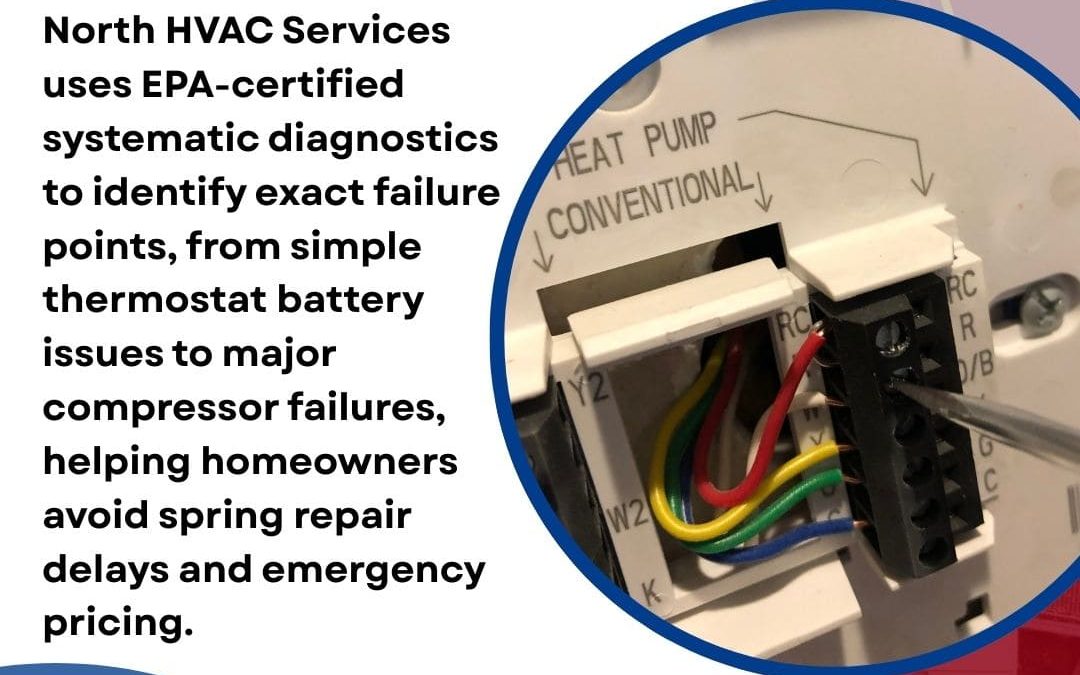
At North HVAC Services, Inc Heating & Air Conditioning, we see these winter AC failures regularly across Marin and Sonoma Counties. Professional diagnostic testing identifies the actual problem and determines whether repair or replacement makes financial sense.
Finding AC problems during winter gives you advantages. You avoid spring emergency pricing, schedule repairs when technicians have availability, and gain time to plan if replacement becomes necessary. Understanding why your system failed starts with recognizing how Northern California’s climate affects air conditioning repair in Santa Rosa, CA, differently than anywhere else.
Why Your AC Matters Year-Round in Sonoma County
Santa Rosa doesn’t follow traditional heating and cooling seasons. Local climate data shows average high temperatures in Santa Rosa of about 57 degrees Fahrenheit in December. Occasional warm days can push temperatures much higher than the monthly average, which helps explain why homeowners sometimes need cooling during winter.
These numbers explain why your cooling system cannot hibernate. Santa Rosa AC repair becomes necessary during months when most of the country has forgotten that AC exists.
Real scenarios happen regularly. South-facing rooms during afternoon sun reach interior temperatures of 75-80°F. Post-holiday gatherings with 15-20 people generate body heat. Home offices where computers create heat loads need cooling. Well-insulated modern homes retain heat effectively.
You don’t test your cooling system from November through March. Then a warm spell arrives, you need cooling, and the system doesn’t respond. Discovering problems during winter gives you control over predictable repair costs and flexible technician scheduling.

Common Causes of Mid-Winter AC Failures
Electrical and Control Issues
Thermostat battery failure is a common, easily fixed cause of no-start issues. Batteries can die after months of light use, and a depleted thermostat battery prevents the thermostat from sending the start signal to the system. Breaker trips create confusion. Holiday decorations and space heaters stress circuits. The AC breaker trips, you reset it, but nobody checks if the cooling still works.
Failing capacitors often show physical signs such as swelling or leakage. Technicians usually test-run and start capacitors using a meter with capacitance mode or a dedicated capacitor tester. When using resistance mode as a basic check, a reading that stays near zero suggests a shorted capacitor, while a reading that rises toward open circuit as the part charges indicates the capacitor is able to hold a charge. For safety and accuracy, have a qualified technician perform capacitor testing.
Mechanical Problems During Dormancy
Refrigeration compressors can suffer oil migration or inadequate oil return after long idle periods or repeated short-run cycles, which can harm starting reliability. In some systems, a crankcase heater or minimum run strategy prevents oil migration, so having a technician inspect and maintain the compressor before peak season is a sensible precaution.
Capacitors degrade during non-use periods. These components store electrical energy to start motors. A capacitor that worked in October might fail by February from age alone. Refrigerant leaks that started small become obvious by January. Your system lost charge over four months. When you test it on a mild day, it won’t cool because the refrigerant has dropped below operational minimums.
External Factors
Debris accumulation intensifies during fall storms. Leaves and dirt collect around outdoor units, blocking airflow. When you need cooling, the blocked unit overheats within minutes. Rodent damage peaks in winter. Mice and rats nest in outdoor AC units, chewing through wiring. Drainage line blockages develop from algae growth in condensate pans.
Age-Related Decline
Systems over 10 years old show accumulated wear. Research from the University of Central Florida found that typical system life averages 15-18 years, with severe performance drop-off after 15 years.
When air conditioning repair services address winter failures in older systems, the repair-versus-replace decision becomes critical.
The Step-by-Step Diagnostic Process
1. Initial Assessment
Before calling for service, verify basic issues. Check thermostat settings (mode on “COOL,” temperature below room temp). Replace thermostat batteries. Inspect breaker panel (both indoor and outdoor units). Visually inspect outdoor units (debris, damage, ice). Check the air filter condition.
Performing basic checks first often resolves many no-start situations. Homeowner steps to try include checking thermostat mode and batteries, inspecting the breaker, looking for obvious debris on the outdoor unit, and checking the air filter.
2. Professional Diagnostic Protocol
Technicians verify that the outdoor unit is receiving the proper residential supply voltage, typically about 240 volts. Low voltage readings can point to a tripped breaker or other electrical problems, such as loose connections, and should be addressed by a qualified electrician or HVAC technician.
Capacitor testing uses multimeters on start and run capacitors. Zero reading indicates a shorted capacitor. Compressor resistance testing measures resistance across terminals. Infinite resistance indicates a failed compressor.
Refrigerant pressure analysis connects manifold gauges to service ports. Low pressure indicates refrigerant loss. High pressure suggests blockages. Control board verification tests the voltage during operation cycles.
Why This Approach Saves Money
Systematic diagnosis prevents costly trial-and-error. Consider this scenario. The system won’t start, the technician guesses it’s the capacitor, replaces it for $250, but the system still doesn’t work. Now they test the contactor, replace it for $200, but the problem persists. Finally, they discover the thermostat had dead batteries (a $0 fix).
Professional air conditioner repair in Santa Rosa, CA, technicians test first, identify the actual problem, and then recommend specific repairs with accurate cost estimates. Modern diagnostic tools provide accuracy impossible 20 years ago. EPA-certified technicians measure refrigerant levels with precision equipment rather than guessing.
Repair Solutions for Common Off-Season Problems
Minor Repairs
Thermostat replacement addresses control failures quickly. Modern programmable thermostats cost $150-250 plus 1-2 hours of installation labor. Capacitor replacement ranks among the most common air conditioning repair fixes. Replacement takes about one hour. Costs range from $180-350, depending on capacitor type. Contactor repair replaces the switch controlling high-voltage power to the compressor. Total costs run $200-350.
Moderate Repairs
Refrigerant leak repair follows a specific process. Locate the leak, repair the leak point, vacuum the system, then recharge with the correct refrigerant. This work takes 2-3 hours and costs $300-800. Fan motor replacement addresses failures in indoor blower motors or outdoor condenser fan motors. New motors cost $200-500 for parts, with labor adding $150-300. Control board replacement costs $150-600, depending on system type, with labor adding $100-200.
Major Repairs
Compressor replacement represents the most significant repair decision. When they fail, replacement costs $1,500-3,500, including parts, labor, refrigerant, and system testing.
The critical question becomes repair or replace the entire system. Major manufacturers and industry guidance typically indicate a central air system lifespan in the 15 to 20 year range with proper maintenance.
If your system is 12+ years old and needs a $2,500 compressor, replacement often makes more financial sense. New systems cost $4,000-8,000 installed but include warranties, improved efficiency, and modern features. For systems in the 10-15 year range requiring major repairs, AC repairs at North HVAC Services include an honest cost-benefit analysis.
The Off-Season Advantage
Identifying repair needs between December and March comes with key benefits. Emergency and after-hours services often carry premium rates (sometimes 50% higher or more), especially on weekends or holidays. Scheduling is typically more flexible in the off-season, with same-week availability compared to the weeks-long wait times common in summer. You’ll also have time to research service options without the urgency that comes with extreme weather. Plus, some manufacturers offer rebates during slower months, adding even more value to winter repairs.
Preventive Measures and Winter Service Scheduling
Year-Round Maintenance
Wine country residents need heating and cooling system awareness twelve months a year. Your AC potentially operates 180+ days (April through October) with occasional winter use. Bi-annual service schedules (spring AC preparation and fall heating checks) provide the best protection.
Homeowner Actions
Monthly thermostat function tests prevent surprise failures. Even in January, run your AC for 10 minutes on a warm day. Listen for normal startup sounds. Feel for cool air from vents.
Quarterly outdoor unit inspections catch developing issues. Clear debris from around the unit. Check for physical damage or corrosion. Look for ice formation indicating refrigerant issues. Confirm electrical connections appear intact.
Air filter changes maintain proper airflow. Replace standard filters monthly during high-use periods, every 90 days during low-use periods. Maintain 2-foot clearance around outdoor units.

When to Call for Service
Certain symptoms demand immediate attention. Unusual sounds when the system attempts to start. Visible ice formation on the outdoor unit. Tripped breakers that reset but trip again. Warm air is blowing instead of cool air. Water is leaking from the indoor unit. Systems 10+ years old benefit from winter professional inspections.
December Diagnostic Advantage
Scheduling air conditioning repair service evaluations during December offers strategic benefits. Many HVAC companies have more appointment availability in the winter months and face heavier demand in the spring and summer cooling season. Customers are more likely to get faster scheduling in the off-season, while peak months can produce multi-week waits.
Schedule Your Winter AC Diagnostic Today
That mild December afternoon when your air conditioner repair in Santa Rosa, CA, becomes necessary isn’t a disaster. It’s an opportunity. Northern California’s wine country climate creates unique demands. Your home needs both heating and cooling capability year-round.
The diagnostic approach gives you control. Professional technicians identify actual problems rather than guessing. You understand repair costs versus replacement benefits. Winter timing advantages matter financially.
We’ve served Marin and Sonoma Counties since 1988 with EPA-certified technicians who use systematic diagnostic processes. As a Diamond Authorized Mitsubishi Dealer and Factory Authorized Trane & Day & Night Dealer, our AC repairs at North HVAC Services identify exactly what failed and whether repair or replacement makes better financial sense.
Call us today at (415) 845-6910 or email northhvacservices@gmail.com to schedule your winter air conditioning repair in Santa Rosa, CA.
That winter AC test run might be the smartest maintenance decision you make all year.