Jul 27, 2026 | Heat Pumps, Heating Systems
What Are the Key Differences Between Heat Pumps and Furnaces for Marin and Sonoma County Homes?
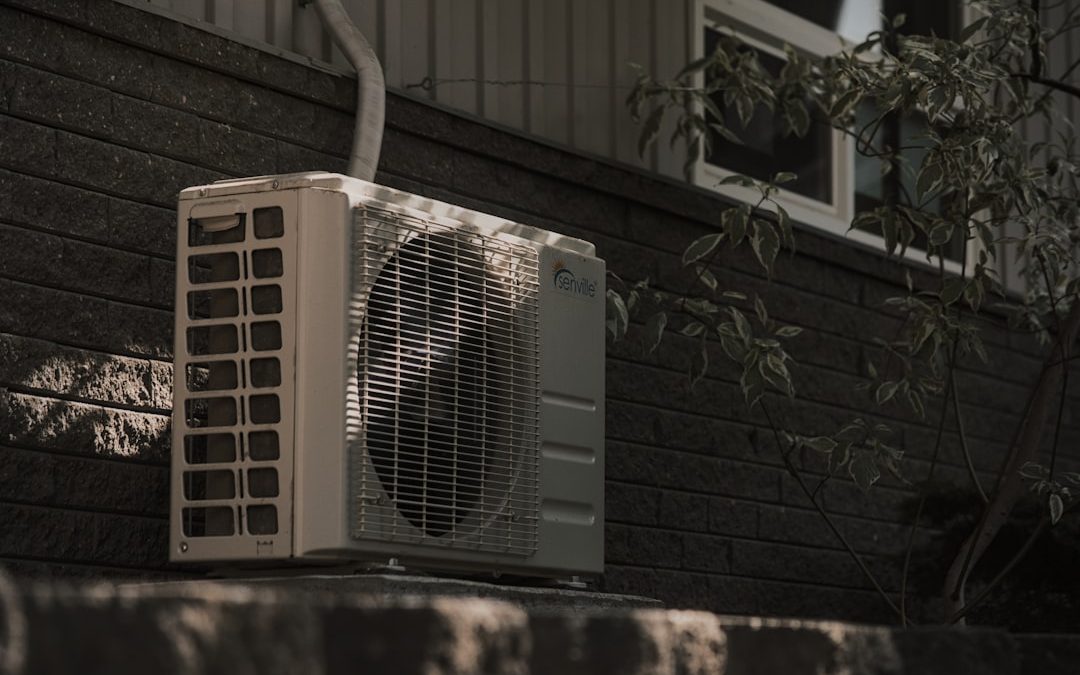
Heat pumps and furnaces both heat your home, but they do so in fundamentally different ways. Heat pumps transfer heat from the outside air, while furnaces generate heat by burning fuel or using electricity.
A heat pump works by extracting heat from the air outside (even when it’s chilly) and moving it indoors. It can also reverse this process in summer, acting as an air conditioner. Heat pumps are powered by electricity, making them a single-system solution for both heating and cooling.
A furnace creates heat by burning natural gas, propane, or using electric resistance coils. It’s dedicated to heating only, so you’ll need a separate air conditioning system for summer. Furnaces typically deliver higher heat output, which can be helpful on the coldest days.
For further reading, see Natural Gas or a Heat Pump? Where You Live Matters from aga.org.
- Heat pumps can both heat and cool your home; furnaces only heat.
- Furnaces tend to heat spaces faster and to higher temperatures than heat pumps.
- Heat pumps are more energy efficient in mild climates.
- Furnaces may be necessary where winter temperatures regularly dip below freezing.
Choosing between a heat pump and a furnace depends on your heating and cooling needs, energy goals, and the layout of your home.
How Does the Local Climate in Marin and Sonoma Counties Affect Heat Pump vs Furnace Performance?
The mild, coastal climate in Marin and Sonoma Counties makes heat pumps a strong contender, but some rural or inland areas may still benefit from a furnace.
Heat pumps are most effective in regions where winter temperatures rarely drop below freezing. In Marin and Sonoma, typical winter lows are in the 30s and 40s. This means a heat pump can efficiently extract enough warmth from the outside air to heat your home for most of the year.
If your property is in a microclimate—like Sonoma Mountain, Occidental, or higher elevations—that experiences harder winter freezes, a furnace may provide more reliable heat during cold snaps. Furnaces work well regardless of the outside temperature because they create heat rather than move it.
- Coastal and valley locations: Heat pumps usually offer efficient, year-round comfort.
- Hilly or rural areas with hard freezes: Furnaces or dual-fuel (hybrid) systems may be more consistent on the coldest nights.
Ask yourself: How often does your area experience freezing temperatures? If it’s rare, a heat pump could be a practical, efficient choice.
What Is the Installation Process Like for Heat Pumps Compared to Furnaces?
Installing a heat pump is typically more complex than a furnace because it requires both indoor and outdoor components, but both require professional handling for safety and performance.
- Heat Pump Installation:
- Install outdoor condenser/compressor unit.
- Install indoor air handler (connected to ductwork or wall-mounted for ductless systems).
- Run refrigerant and electrical lines between units.
- Test and charge the system with refrigerant.
- Furnace Installation:
- Install furnace unit (usually in a garage, attic, or closet).
- Connect to existing ductwork and gas or electrical utilities.
- Add flue/venting for combustion gases (if gas-powered).
- Test for leaks and ensure safe operation.
Heat pump installation often involves more steps, especially if you’re replacing an older furnace-only system. It can require new wiring, refrigerant lines, and sometimes electrical upgrades. Furnace replacements are often straightforward if you’re swapping out an old unit for a new one of the same type.
North HVAC Services can assess your current setup and recommend the most efficient installation path with minimal disruption to your home or business.
How Do Installation Costs Compare: Heat Pump vs Furnace in Marin and Sonoma Counties?
Generally, installing a heat pump system costs more upfront than a standard furnace, but the gap narrows if you also need air conditioning.
Heat pumps serve both heating and cooling functions, so you’re investing in a two-in-one system. Furnaces are less expensive to install, but pairing one with a new air conditioner can raise your total investment.
| System Type |
Typical Installation Steps |
Relative Upfront Cost |
Includes Cooling? |
| Heat Pump |
Indoor & outdoor units, refrigerant lines, wiring |
Higher |
Yes |
| Furnace Only |
Indoor unit, venting, gas/electric hookup |
Lower |
No |
| Furnace + AC |
Furnace + separate AC installation |
Highest |
Yes |
Actual costs vary depending on home size, ductwork, electrical upgrades, and equipment efficiency. If your goal is to upgrade both heating and cooling, a heat pump often makes financial sense. North HVAC Services can give you a detailed quote for both options so you can compare apples to apples.
What Are the Pros and Cons of Heat Pump vs Furnace Installation for Local Homes?
Both systems have clear advantages and drawbacks. Here’s a breakdown to help you weigh your options for Marin and Sonoma homes.
- Heat Pump Pros:
- Provides both heating and cooling
- Lower energy use in mild climates
- No onsite combustion or flue gases (safer, no carbon monoxide risk)
- Potentially lower lifetime maintenance
- Heat Pump Cons:
- Higher initial installation cost
- Less efficient when outdoor temperatures drop below freezing
- May require electrical upgrades for older homes
- Furnace Pros:
- Reliable, strong heating in any temperature
- Simpler to install if replacing an old furnace
- Lower upfront cost (if cooling isn’t needed)
- Furnace Cons:
- Only provides heat—separate AC needed for cooling
- Produces combustion gases (if gas-powered)
- Greater fluctuation in indoor air humidity
Consider which factors are most important for your property—comfort, safety, efficiency, or initial investment.
How Does Each System Impact Monthly Energy Bills in Marin and Sonoma County?
Heat pumps can significantly lower monthly energy bills in our region’s mild climate, while furnaces may cost more to operate—especially if you use electric resistance heating.
Because heat pumps transfer heat instead of generating it, they use less electricity to deliver the same amount of warmth. This efficiency means lower utility bills during winter, particularly if you’re replacing electric baseboard or old, inefficient systems.
Gas furnaces are efficient, but fluctuating natural gas prices can affect your bills. Electric furnaces are typically the most expensive to run because they use more electricity per unit of heat.
- Heat pumps usually lower monthly heating costs in Marin and Sonoma’s climate.
- Furnaces can be more cost-effective in homes with easy access to affordable natural gas.
- If you cool your home in summer, heat pumps can also cut cooling costs compared to older AC units.
If you’re interested in reducing your carbon footprint while saving on bills, a modern heat pump is often the best fit for the North Bay’s weather.
Which Is a Better Long-Term Investment: Heat Pump or Furnace for Your Home?
For most Marin and Sonoma County homes, a heat pump is the better long-term investment due to its dual functionality and energy savings, especially if you need both heating and cooling.
A new heat pump can last 10–15 years with proper maintenance. Its high efficiency leads to lower utility bills over time. Because it replaces both a furnace and an air conditioner, you simplify maintenance and replacement cycles.
Furnaces, especially gas models, are durable and can last up to 20 years. If you already have a separate, efficient air conditioner and rarely need cooling, replacing just the furnace can make sense for targeted upgrades.
- Heat pumps: Lower long-term energy costs, reduced maintenance, modern comfort features.
- Furnaces: Long lifespan, higher heat output, lower upfront cost if cooling isn’t a concern.
Think about your total cost of ownership, not just purchase price. North HVAC Services can help you calculate payback periods and expected savings for your home or business.
How to Decide Between Heat Pump and Furnace Installation for Your Marin or Sonoma County Home
To decide between a heat pump and a furnace, consider your climate, comfort needs, energy costs, and whether you want one system for both heating and cooling.
- Assess your local winter lows—heat pumps excel in mild climates, furnaces in colder spots.
- Do you already have or need air conditioning? If yes, a heat pump often simplifies things.
- Check your fuel sources: Is natural gas available and affordable? Or is electricity your main option?
- Consider your budget for installation and long-term operation.
- Factor in safety, air quality, and maintenance preferences.
- Consult a trusted local contractor like North HVAC Services for an evaluation of your existing system and a tailored recommendation.
Ready to explore your options? Contact North HVAC Services at (415) 845-6910 for personalized advice and a no-obligation estimate for your Marin or Sonoma County home.
Frequently Asked Questions
Which is more energy efficient for Marin and Sonoma County homes: a heat pump or a furnace?
A heat pump is generally more energy efficient in Marin and Sonoma County’s mild climate. Since heat pumps transfer existing heat rather than generating it, they use less energy for most of the year, making them a great choice for local homeowners.
Can a heat pump keep my home warm enough during colder winter nights?
Heat pumps can provide sufficient warmth for most winter nights in Marin and Sonoma Counties, but on the coldest nights, a furnace may deliver higher heat output. If your home is in an area that occasionally experiences freezing temperatures, you might want to consider a backup heat source or consult with North HVAC Services for tailored advice.
Do I need both a heat pump and a furnace, or just one of them?
In most cases, you only need one system, but the best choice depends on your comfort goals and home’s layout. Heat pumps provide both heating and cooling, while furnaces only heat your home, meaning you’d also need a separate air conditioner if you choose a furnace.
How does installation cost compare between a heat pump and a furnace?
Installation costs can vary based on system size, existing ductwork, and your home’s needs, but heat pumps can sometimes have a higher upfront cost because they handle both heating and cooling. Contact North HVAC Services to get a detailed estimate for your specific situation.
Is a heat pump or furnace better for indoor air quality?
Heat pumps typically offer better indoor air quality since they don’t burn fuel and circulate air more consistently. However, both systems require regular filter changes and maintenance to keep your air clean and healthy.

Jun 25, 2026 | Heat Pumps, Heating Systems
Are Most Heat Pump Problems Truly Repairable?
Yes, most heat pump problems are repairable when handled by a skilled technician with the right tools and knowledge. Many issues that seem serious—like loss of heat, odd noises, or even a unit that won’t start—often have solutions that don’t require replacing the entire system.
Common repairable problems include faulty relays, capacitor failures, thermostat issues, and refrigerant leaks. Even compressor and fan motor failures, which are sometimes misdiagnosed as catastrophic, can often be resolved. In our experience at North HVAC Services, we routinely revive heat pumps that others have written off. The main reason repairs fail is not the equipment, but a lack of accurate diagnostics or technical know-how. With advanced troubleshooting and up-to-date training, technicians can often restore your system to reliable operation, saving you the cost and hassle of early replacement.
What Does ‘The Right Expertise’ Mean for Heat Pump Repairs?
The right expertise means a technician who truly understands heat pump systems, stays current with technology, and uses thorough, methodical diagnostics. This expertise separates average repairs from lasting solutions.
Heat pumps blend heating and cooling technology, so repairs require knowledge of refrigeration, electrical circuits, controls, and airflow. The best technicians:
For further reading, see Heat Pump Repair in Manton, California from homecomfort.org.
- Carry specialized tools for pressure testing and electrical measurements
- Understand brand-specific quirks and common failure points
- Stay updated on new models and refrigerants
- Follow safety protocols, especially when handling refrigerant or high voltage
Real expertise also means knowing when a repair is truly safe and cost-effective. For example, at North HVAC Services, we often find that a heat pump written off by a general handyman is fully repairable—just overlooked due to lack of experience with these systems. The right technician will explain your options clearly and never push a replacement when a repair is possible and practical.
Which Heat Pump Failures Are Most Often Misjudged as Unrepairable?
Several heat pump failures are commonly misjudged as unrepairable by less experienced or rushed service providers. In reality, many of these problems have proven solutions.
- Compressor not running—Often a failed start capacitor or relay, not a dead compressor
- Frozen outdoor unit—Could be a faulty defrost control board or sensor, not a system-ending failure
- Low or no heat output—Frequently caused by a thermostat or control board issue, not a total system failure
- Refrigerant leaks—Most leaks can be located and sealed, then the system recharged
- Loud or unusual noises—Could be loose components, worn bearings, or debris, not always internal damage
- Short cycling (turning on/off rapidly)—Often a result of dirty filters, miswired thermostats, or faulty sensors, not a sign that replacement is needed
- Outdoor fan failure—Sometimes just a bad capacitor or contactor, not a burnt-out motor
We frequently see these “unrepairable” diagnoses turn into affordable, effective repairs when handled by someone with deep experience in heat pump repair services.
How an Experienced Technician Approaches Heat Pump Repair Services
An experienced technician follows a systematic process to identify and fix heat pump issues, ensuring nothing is overlooked and repairs last.
- Listen to the Customer—Ask about symptoms, noises, timing, and any recent changes or maintenance.
- Visual Inspection—Look for obvious issues: damaged wires, dirty coils, ice buildup, or leaking refrigerant.
- Electrical Testing—Check capacitors, relays, contactors, fuses, and voltage at key points in the system.
- Refrigerant Check—Measure pressures and temperatures to confirm proper refrigerant charge and flow.
- Test Controls and Thermostat—Verify that control boards, sensors, and thermostats communicate properly.
- Airflow and Ducts—Check filters, blower function, and ductwork for blockages or leaks.
- Pinpoint Root Cause—Combine findings to identify the real issue, not just the symptom.
- Discuss Options—Explain repair vs. replacement, costs, and risks so you can make an informed decision.
- Complete Repair and Retest—Fix the problem, then run the system through all modes to ensure reliability.
This step-by-step approach is what sets professional heat pump repair services apart from quick, surface-level fixes.
Why Homeowners Are Sometimes Told Their Heat Pump Can’t Be Fixed
Homeowners are sometimes told their heat pump can’t be fixed due to limited diagnostic skills, lack of access to parts, or a financial incentive to sell a replacement system. The result is unnecessary expense and waste.
General HVAC technicians may not keep up with the latest heat pump technology, leading them to misdiagnose complex problems. Some companies may avoid repairs that require extra time or specialized parts, especially if the system is older. Others may focus on sales quotas, pushing for new installations instead of cost-effective repairs.
At North HVAC Services, we often hear from clients who were advised to replace their system—only for us to find a faulty sensor, a bad capacitor, or a miswired thermostat. Always ask for a second opinion from a heat pump repair service that prioritizes repairs when possible and doesn’t just default to replacement.
When Is Heat Pump Replacement the Only Sensible Option?
Replacement is the only sensible option when repair costs approach or exceed the value of a new system, or when safety and reliability can’t be restored. Most other cases warrant a careful repair evaluation first.
- Compressor Burnout with Contaminated System—A compressor that fails and spreads metal debris or acid throughout the system can damage other components, making repair risky and costly.
- Extensive Coil or Heat Exchanger Damage—Cracked or corroded coils often require replacement of large, expensive parts.
- Repeated Major Failures—If your heat pump has a history of major repairs in a short time, it may be near the end of its useful life.
- Obsolete or Unsupported Equipment—If the manufacturer no longer makes parts, repairs may not be feasible.
- System Age—Most heat pumps last 10–15 years; repairs on very old units may not be cost-effective compared to energy savings and reliability from a new system.
Even in these cases, a skilled technician should explain your options and the risks before you commit to replacement.
How to Choose a Heat Pump Repair Service with Proven Expertise
Choose a heat pump repair service with proven expertise by looking for clear signs of skill, transparency, and a track record with similar systems. Don’t settle for the first company you find—dig a little deeper.
- Specialization in Heat Pumps—Ask if they handle heat pump repairs regularly, not just general HVAC work.
- Up-to-Date Training—Look for technicians with recent manufacturer or industry training.
- References and Reviews—Check for positive feedback about successful repairs, not just installations.
- Transparent Diagnostics—A good technician explains findings and walks you through repair options.
- Written Estimates—Get a detailed estimate before work begins.
- Willingness to Repair—Beware of companies that push replacement without exploring repair.
- Local Knowledge—A company familiar with Petaluma’s climate and local building codes can provide better solutions.
North HVAC Services combines local experience, factory training, and a customer-first approach to heat pump repair services in the Petaluma area.
What Can You Do if You’re Unsure Whether to Repair or Replace?
If you’re unsure whether to repair or replace your heat pump, start by getting a thorough inspection and honest feedback from a reputable technician. Don’t rush the decision—gather information and weigh your options.
- Ask for a Detailed Diagnosis—Request a clear explanation of what’s wrong and how it can be fixed.
- Compare Costs—Look at the cost of the repair versus the cost of a new system, including long-term energy savings.
- Consider System Age—If your heat pump is under 10 years old and hasn’t needed many repairs, fixing it often makes sense.
- Check Warranty—A warranty may cover parts or labor, reducing your out-of-pocket expense.
- Get a Second Opinion—If a company pushes hard for replacement, seek another evaluation from a repair-focused specialist.
- Think About Comfort—If your system has struggled to heat or cool your building, replacement could improve comfort and efficiency.
Ready to get expert advice? Call North HVAC Services at (415) 845-6910 to schedule a professional evaluation. We’ll explain your options so you can make the best decision for your business and your budget.
Frequently Asked Questions
Can most heat pump problems be repaired instead of replaced?
Yes, most heat pump problems can be repaired by a skilled technician rather than requiring full replacement. Common issues like refrigerant leaks, electrical faults, or faulty components are usually fixable if diagnosed correctly, saving you money and extending your system’s life.
What are common signs that my heat pump needs repair?
Signs your heat pump may need repair include loss of heating or cooling, unusual noises, frequent cycling, or if the system won’t start at all. If you notice any of these issues, call a professional like North HVAC Services in Petaluma for prompt diagnostics and service.
How do I find a qualified technician for heat pump repair?
Look for a technician with specific experience in heat pump systems, proper certifications, and up-to-date training. Ask if they use advanced diagnostic tools and are familiar with your heat pump’s brand to ensure a thorough and accurate repair.
Is it worth repairing an older heat pump?
In many cases, repairing an older heat pump is worthwhile if the issue is isolated and the system has been well-maintained. A technician can assess the condition and recommend whether a repair or replacement is the best long-term solution for you.
How quickly can I get heat pump repair service in Petaluma, CA?
You can often get same-day or next-day heat pump repair service in Petaluma by calling local experts like North HVAC Services at (415) 845-6910. Acting quickly when you notice a problem helps prevent further damage and keeps your home comfortable.

Mar 5, 2026 | Heating Systems
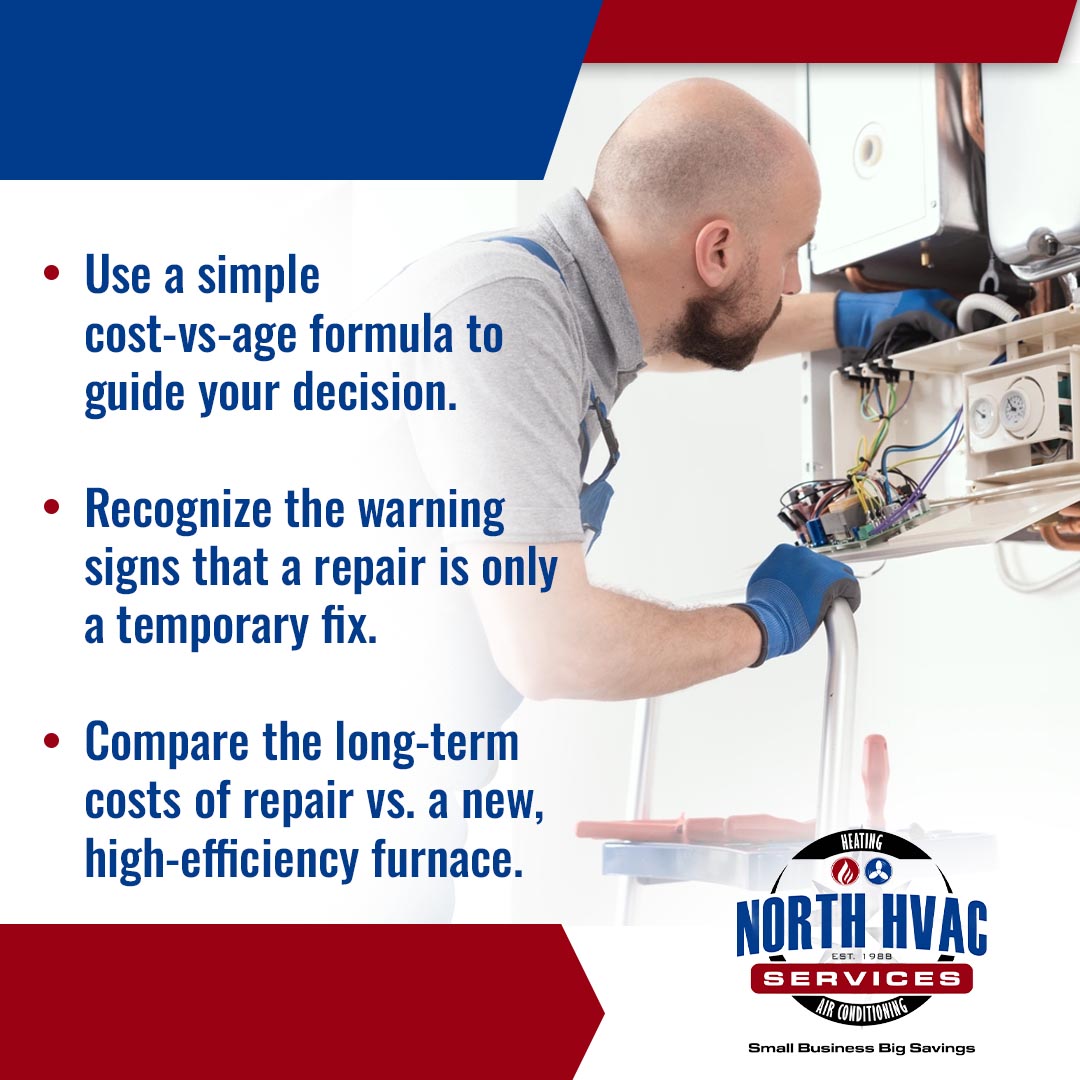
When your furnace stops working on a cold December night, the decision between repair and replacement can feel overwhelming. Santa Rosa homeowners face this dilemma regularly, wondering whether investing in another repair makes sense or if replacing the entire system offers better long-term value. This guide from North HVAC Services provides the clear criteria and cost comparisons you need to make an informed decision based on your furnace’s age, efficiency rating, and repair history, helping you avoid both premature replacement and costly emergency breakdowns.
The 50% Rule: Calculating Repair Costs vs. Replacement Value
The heating industry uses a straightforward formula to help homeowners determine whether repair or replacement makes financial sense. The 50% Rule, widely used throughout the HVAC industry, provides a practical framework for repair-versus-replace decisions: if your repair cost multiplied by your furnace’s age exceeds half the replacement cost, replacement typically becomes the smarter investment. While this formula offers helpful guidance, North HVAC Services evaluates each situation individually, considering factors like system efficiency, safety, and your specific budget and comfort needs.
Here’s how the calculation works: Take the estimated repair cost and multiply it by your furnace’s age in years. If that number exceeds 50% of what a new furnace would cost, replacement offers better value. For example, a $600 repair on a 12-year-old furnace equals $7,200 ($600 × 12). If a new furnace costs $5,000, the calculation ($7,200) exceeds 50% of the replacement cost ($2,500), indicating replacement makes more sense.
According to Fixr’s furnace installation cost data, a typical furnace replacement in a 2,000 square-foot home ranges from $4,000 to $8,000 installed. Using this range, here are example calculations for common scenarios:
| Furnace Age |
Repair Cost |
Calculation |
50% Threshold |
Recommendation |
| 8 years |
$400 |
$3,200 |
$3,000 |
Repair (borderline) |
| 12 years |
$600 |
$7,200 |
$3,000 |
Replace |
| 15 years |
$800 |
$12,000 |
$3,000 |
Replace |
| 6 years |
$500 |
$3,000 |
$3,000 |
Repair |
When homeowners call about repeated failures, a blower motor in September, ignition problems in November, and a gas valve issue in January, these multiple small repairs often signal declining system reliability. Even if each individual repair costs less than the 50% threshold, the pattern indicates broader deterioration. A furnace requiring three or more separate repair visits within two heating seasons typically faces imminent major failure.
North HVAC Services provides transparent cost assessments during every service call, helping Santa Rosa homeowners understand exactly where their system stands on the repair-versus-replace spectrum. We walk through the 50% rule calculation with actual numbers specific to your furnace model and home size.
Furnace Repair in Santa Rosa, CA: Common Issues Worth Fixing
Not every furnace problem requires system replacement. Several common issues respond well to targeted furnace repair, particularly when your system is under 12 years old and has received regular maintenance. Many homeowners search for heating repair nearby when their system shows warning signs, and recognizing which problems are worth fixing helps you make learned decisions.
Thermostat malfunctions represent one of the most frequent and most repairable heating complaints. Faulty wiring, dead batteries, or calibration issues can prevent your furnace from receiving proper temperature signals. Thermostat repairs or replacements typically cost $150-$300, depending on whether you upgrade to a programmable or smart model.
Pilot light and ignition problems affect gas furnaces when the pilot assembly becomes dirty or the ignitor fails. These components wear naturally over time but rarely indicate broader system failure. Professional cleaning costs $80-$150, while ignitor replacement runs $150-$400, depending on the furnace model.
Blower motor issues cause airflow problems, weak heating, unusual noises, or no air movement despite the furnace running. Capacitor replacement fixes many blower problems for $150-$250. Complete blower motor replacement costs $400-$600 but extends furnace life by years when the rest of the system remains sound.
According to data from HomeAdvisor’s furnace repair guide, common repair costs in 2025-2026 include:
- Thermostat replacement: $100-$600
- Flame sensor cleaning: $80-$200
- Blower motor replacement: $150-$2000
- Gas valve replacement: $200-$600
- Control board replacement: $200-$600
Systems under 10 years old generally warrant a repair-first approach unless facing heat exchanger cracks or catastrophic compressor failure. Manufacturers design modern furnaces to last 15-25 years, meaning a 7-year-old furnace with a failed blower motor still has 8-18 years of potential service remaining.
However, some repairs serve as temporary patches rather than lasting solutions. Watch for these warning signs that a repair might not carry you through the full heating season:
- Repeated cycling issues that return within weeks of repair
- Rust or corrosion visible on the heat exchanger or burner assembly
- Unusual odors persisting after cleaning and filter replacement
- Yellow pilot flame instead of bright blue (indicates combustion problems)
- Increasing carbon monoxide readings during annual inspections
When contractors recommend “temporary” repairs that might need revisiting mid-winter, homeowners should seriously consider whether replacement avoids the inconvenience and expense of emergency service calls during Santa Rosa’s coldest months.
When Furnace Installation in Santa Rosa, CA, Becomes the Better Investment
Specific conditions shift the equation decisively toward replacement rather than continued repairs. Being aware of these thresholds helps homeowners avoid throwing money at failing systems while getting maximum value from furnaces that still have serviceable life remaining.
Age represents the primary replacement indicator. Furnaces 15 years or older facing major component failures rarely justify expensive repairs. Even if the current repair seems manageable, systems in this age range typically encounter multiple failures within the next 1-3 years. The cumulative repair costs quickly exceed the replacement value.
Heat exchanger cracks create immediate safety concerns. The heat exchanger separates combustion gases (including carbon monoxide) from the air circulating through your home. Cracks allow dangerous gases to enter your breathing air, creating life-threatening conditions. Heat exchanger replacement costs $1,500-$3,000, rarely worthwhile on furnaces over 12 years old, when furnace installation in Santa Rosa, CA, for a complete new system runs $4,000-$8,000.
Low AFUE ratings waste energy and money every month. AFUE (Annual Fuel Utilization Efficiency) measures how much of your gas converts to heat rather than venting outside. Federal standards for gas furnaces took effect in 1992 with a minimum of 78% AFUE. Many older furnaces installed before 1992 operate at lower efficiencies (often around 60–70%), while many units from the 2000s commonly fall in the ~78–84% AFUE range.
Switching from ~70% to ~95% AFUE can reduce fuel use by roughly 28% for the same heat output; the annual dollar savings depend on gas price and heating demand.
Repair frequency provides another clear signal. Furnaces requiring three or more service calls within two years demonstrate declining reliability. Each repair addresses individual component failures without solving the underlying problem: the entire system has reached the end of its design life. Continued repairs simply delay the inevitable while accumulating costs that could fund replacement.
The combination of age and major repair creates the clearest replacement indicator. When facing repair estimates exceeding $1,000 on furnaces older than 12 years, replacement almost always delivers better value and reliability.
Understanding Modern High-Efficiency Furnace Options
Modern furnaces offer significant improvements in efficiency and comfort compared to older models. Understanding your options helps you choose a system that fits your budget and heating needs.
AFUE Ratings: What You’re Actually Paying For
AFUE shows what share of the fuel’s energy becomes usable heat over a season. An 80% AFUE furnace loses about 20% of the fuel energy, while a 95% AFUE model loses about 5%, though losses don’t occur only through the chimney/vent.
| Efficiency Level |
Equipment Cost |
Gas Usage |
Best For |
| Standard (80-85% AFUE) |
$700-$1,800 |
Higher monthly bills |
Mild climates, budget-conscious |
| High-Efficiency (90-98% AFUE) |
$1,500-$3,700 |
15-30% lower bills |
Cold climates, long-term savings |
Comfort Features Worth Considering
Beyond efficiency ratings, furnace operation style affects your comfort:
- Single-Stage: Runs at full blast every time, like a light switch (on/off only). Most affordable but creates temperature swings.
- Two-Stage: Operates at 60-70% capacity most of the time, switching to 100% only during colder weather. Steadier temperatures and quieter operation.
- Modulating (Premium): Continuously adjusts heat output in very small increments (often about 1%), typically operating between approximately 40% and 100% capacity, depending on the model. When paired with a compatible communicating thermostat, it can maintain temperatures within about 0.5 – 1°F of your setting. It offers the quietest performance and highest comfort level, with a higher upfront investment.
North HVAC Services carries premium Trane and Day & Night models with variable-speed blowers that adjust airflow to match your home’s needs, eliminating hot and cold spots while reducing energy waste during mild weather.
Choosing a Qualified Furnace Installation Contractor
The quality of installation affects furnace performance, efficiency, and lifespan as much as the equipment itself. Selecting the right furnace installation contractor requires understanding which credentials matter and which warning signs indicate potential problems.
Required certifications and licensing include EPA Section 608 certification for refrigerant handling (relevant when replacing heat pumps or adding air conditioning), proper state contractor licensing, and manufacturer-specific training. Contractors working with premium brands like Trane or Mitsubishi must complete factory training programs to achieve authorized dealer status, a designation that brings enhanced warranty coverage and technical support.
California requires C-20 (Warm-Air Heating, Ventilating, and Air-Conditioning) contractor licenses for HVAC installation. Licensed contractors carry required insurance protecting homeowners from liability if injuries occur during installation.
Red flags that should prompt additional scrutiny include:
- Unusually low bids that undercut competitors by 30% or more often indicate unlicensed contractors, substandard equipment, or corner-cutting during installation
- High-pressure tactics pushing immediate decisions without allowing time to gather multiple quotes or research equipment options
- Lack of verifiable references from recent customers in your area
- Reluctance to provide detailed written quotes itemizing equipment model numbers, labor costs, and permit fees
- No mention of load calculations or proper system sizing based on your home’s specifications
When comparing furnace installation companies near you, ask these specific questions during consultations:
About warranty coverage: “What warranty does the manufacturer provide on this model? Do you offer installation warranty separate from equipment warranty? What situations would void the warranty?”
About installation timeline: “How long will installation take? When can you schedule the work? What preparations should I make? Will you handle old equipment removal and disposal?”
About permits and inspections: “What permits does this installation require? Will you obtain permits and schedule inspections? Are permit fees included in your quote?”
About system sizing: “What factors did you consider when recommending this furnace size? Can I see the load calculation results?”
Professional furnace installation contractors provide detailed written proposals clearly itemizing equipment costs, labor charges, permit fees, and any additional materials needed. They explain warranty terms, maintenance requirements, and realistic timelines before requesting deposits.
Financing Your Decision: Making Replacement Affordable
The upfront cost of furnace replacement creates legitimate budget concerns for many homeowners. Knowing about the available financing options, rebate programs, and the true cost comparison between continued repairs versus replacement helps make quality equipment accessible.
Furnace Installation Payment Plans and Financing Options
Payment plan options through HVAC contractors or third-party financing companies allow spreading replacement costs over 24-60 months. Interest rates vary based on credit qualification, with promotional offers sometimes providing 0% APR for 12-24 months to qualified buyers. Monthly payments typically range from $75-$175 depending on system cost and term length..
California Rebates and Federal Tax Credits for Heating Systems
California rebate programs vary by utility provider and change annually. While many programs have reached capacity by early 2026, homeowners should check current availability before finalizing equipment decisions.
Tax credit opportunities exist for specific equipment types. The Federal Energy Efficient Home Improvement Credit (Section 25C) provided valuable incentives for homeowners who upgraded to high-efficiency HVAC systems between 2023 and December 31, 2025. High-efficiency heat pump systems qualified for a larger incentive, 30% of the installed cost, up to $2,000 per year.
Schedule Your Free Furnace Assessment Today
Determining whether heating repair or complete replacement makes sense for your Santa Rosa home requires accurate diagnosis and honest cost evaluation. The wrong decision, either replacing a repairable furnace prematurely or pouring money into a failing system, wastes thousands of dollars and creates unnecessary stress during the heating season.
North HVAC Services offers comprehensive furnace inspection throughout Santa Rosa, Petaluma, Rohnert Park, and surrounding Sonoma County communities. As one of the best furnace companies in Petaluma, CA, our team specializes in both expert repairs for serviceable systems and professional installations when replacement delivers better value. We provide access to premium high-efficiency furnaces backed by manufacturer warranties covering parts and, in many cases, extended coverage options. Our quality installation ensures your equipment performs as designed throughout its warranty period.
Whether your furnace needs a simple repair or complete replacement, we provide the same transparent service: accurate diagnosis, fair pricing, and skilled workmanship that keeps your Santa Rosa home comfortable all winter long. Our owner-operators – Chris Burke, Paul, and Ivan – bring combined decades of experience specifically in Northern California heating systems, specifically in Northern California heating systems, understanding both the equipment and the climate conditions that affect performance.
Contact us at (415) 845-6910 or northhvacservices@gmail.com to schedule your free furnace assessment. You can also reach us through our contact page to discuss your heating concerns and receive honest guidance about the best path forward for your specific situation. Don’t wait until your furnace fails completely; get the information you need to plan ahead and avoid emergency situations during the coldest weeks of winter.

Feb 26, 2026 | Heating Systems
Homeowners across Santa Rosa, Petaluma, and surrounding Northern California communities face an important decision when replacing or upgrading their heating systems. The choice between modern heat pump technology and traditional gas furnaces affects not just comfort, but also long-term energy costs and environmental impact. North HVAC Services has helped hundreds of Marin and Sonoma County residents navigate this decision since 1988, and knowing how each system performs in our region’s unique climate is the foundation for making the right choice for your home.
The moderate winters and mild temperatures that define Sonoma County create specific advantages and limitations for different heating technologies. While both systems can effectively warm your home, their efficiency, operating costs, and suitability vary considerably based on your property’s existing infrastructure, your budget, and your long-term goals.
Understanding How Each System Works in Northern California’s Mild Climate
Heat pumps operate on a fundamentally different principle than traditional furnaces. Rather than generating heat through combustion, heat pump technology extracts thermal energy from outdoor air and transfers it indoors. Even when outside temperatures drop to 35-40°F, sufficient heat energy exists in the air for modern heat pumps to extract and amplify. The system uses refrigerant and a compressor to concentrate this thermal energy, delivering warm air throughout your home.
Traditional furnaces create heat through natural gas combustion. A burner ignites gas, heating a metal heat exchanger. Your home’s blower fan then pushes air across this hot exchanger, distributing warmed air through your ductwork. This process generates new heat rather than moving existing thermal energy.
Sonoma County’s climate provides distinct advantages for heat pump performance. According to Weather Spark’s Santa Rosa climate data, the temperature typically varies from 37°F to 84°F throughout the year and rarely drops below 28°F. This temperature range sits within the optimum efficiency zone for modern heat pump systems, which can operate effectively down to approximately 25°F before requiring supplemental heating.
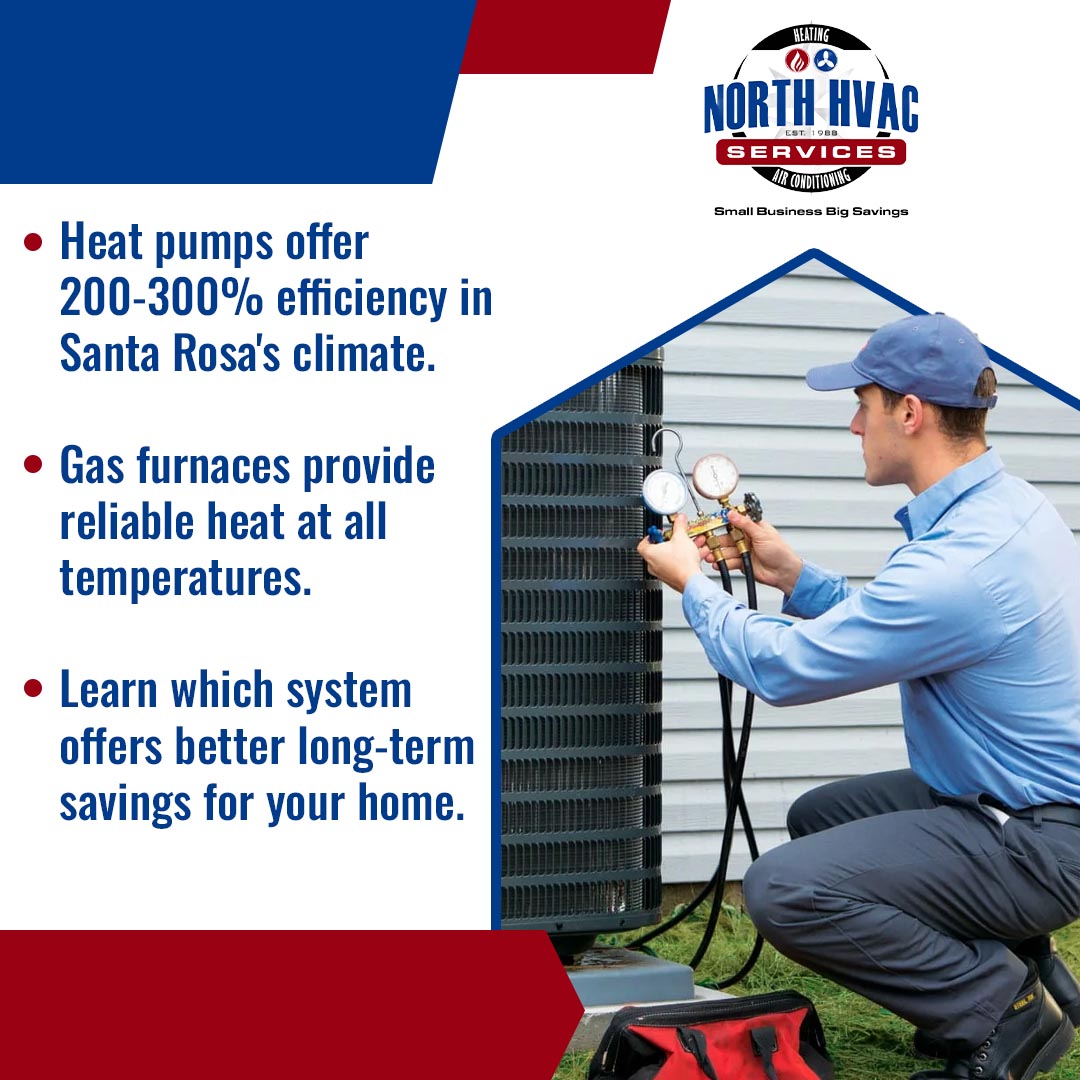
The energy consumption difference becomes substantial in mild climates. Heat pumps can deliver 2-3 units of heat energy for every unit of electricity consumed, achieving 200-300% efficiency. Gas furnaces, even high-efficiency models, cannot exceed 98% efficiency since they’re limited by the combustion process itself. In regions where heating demands remain moderate rather than severe, this efficiency advantage translates directly into lower monthly utility costs.
| System Type |
Efficiency Rating |
Best Performance Temperature |
Energy Source |
| Heat Pump |
200-300% (HSPF 8-13) |
Above 35°F |
Electricity |
| Gas Furnace |
80-98% (AFUE) |
All temperatures |
Natural Gas |
| Mitsubishi Mini-Split |
250-330% (HSPF 10-14) |
Above 25°F |
Electricity |
Comparing Installation Costs and Long-Term Energy Savings
The upfront investment for heating systems varies based on your home’s existing infrastructure and system selection. According to industry data compiled by Angi’s furnace cost guide, heat pump installation typically ranges from $10,000 to $25,000 for complete systems, including necessary electrical work. Traditional high-efficiency furnace installation generally costs between $3,800 and $10,000, though gas line modifications can increase these figures.
For Sonoma County homeowners, the monthly operating cost difference matters more than the initial price over time. PG&E’s bundled residential electric average rate is about $0.41/kWh (Jan 2026), while residential gas charges can be around $2.0–$2.5 per therm depending on baseline vs excess use. A typical 1,800 square-foot home in Santa Rosa using a heat pump might consume 800-1,000 kWh monthly during winter, resulting in $256-320 utility bills. The same home heated with an 80% AFUE furnace would use approximately 60-75 therms monthly, costing $150-188.
However, when comparing high-efficiency systems, the gap narrows. A 95% AFUE furnace would consume about 50-63 therms monthly ($125-158), while modern heat pumps with HSPF ratings above 10 might reduce electricity consumption to 600-750 kWh ($249-311). These calculations assume Santa Rosa’s approximately 2,700 heating degree days annually.
The payback period for choosing a heat pump over a traditional furnace depends on several factors:
- If replacing an 80% efficiency furnace: 6-8 years typical payback
- If replacing a 95% efficiency furnace: 10-15 years typical payback
- With available rebates applied: 4-6 years typical payback
California’s 2026 incentive programs can impact heat pump economics, though many programs are now at capacity. The federal Energy Efficient Home Improvement Credit (25C) allows a credit of 30% of qualifying costs, up to $2,000 per year for eligible heat pumps, for qualifying property placed in service in tax years through 2025. As of January 7, 2026, HEEHRA rebates for single-family homes in Central and Southern California are fully reserved, and Northern California is expected to reach full reservation soon. Homeowners should check current availability through TECH Clean California for the latest program status.
Heat Pump Installation Requirements for Santa Rosa Area Homes
Converting from a gas furnace to heat pump technology involves several technical considerations beyond simply swapping equipment. The electrical system represents the most significant requirement. Most heat pumps require 240-volt circuits with 30-60 amp capacity, depending on system size. Homes built before 1990 often need electrical panel upgrades to accommodate this additional load, adding $1,500-3,000 to project costs.
Ductwork compatibility affects both performance and installation complexity. Existing duct systems designed for gas furnaces can typically support heat pumps, but airflow requirements differ slightly. Heat pumps move larger volumes of air at lower temperatures compared to furnaces, so duct sizing and sealing become more important. A thorough duct assessment before installation prevents comfort issues and efficiency losses after the new system operates.
Outdoor unit placement requires careful planning specific to Northern California properties. The compressor and heat exchanger unit needs:
- Minimum clearances: 2 feet on sides, 5 feet above, 3 feet in front
- Solid, level mounting surface: concrete pad or reinforced platform
- Protection from direct afternoon sun (reduces cooling season efficiency)
- Distance from bedrooms: heat pumps generate 50-65 decibels during operation
- Drainage consideration: condensate during heating mode in humid conditions
The timeline for professional heat pump installation typically spans 1-2 days for straightforward replacements, extending to 3-5 days when electrical upgrades or ductwork modifications are needed. When searching for heat pump services near you, prioritize contractors like North HVAC Services who understand local code requirements and climate considerations – proper expertise prevents common issues and ensures accurate system sizing.
Furnace Installation in Santa Rosa, CA: When Traditional Systems Make Sense
Despite heat pump advantages in mild climates, certain situations still favor traditional furnace technology. Homes with existing natural gas service and infrastructure can leverage lower gas costs when compared to electricity rates. Properties that already have properly sized gas lines, approved venting systems, and compatible thermostats avoid the additional electrical work heat pumps require.
Replacement scenarios often make furnaces the practical choice. When your existing furnace fails during winter, and you need immediate heating restoration, replacing it with a comparable unit minimizes installation time and complexity. The familiarity of the technology means most licensed contractors can complete furnace installation in Santa Rosa, CA, within a single day for standard replacements.
High-efficiency furnace options from manufacturers like Trane and Day & Night deliver performance that rivals heat pumps in certain conditions. Units with AFUE ratings of 95-98% waste very little energy during combustion. These systems include features like variable-speed blowers, two-stage burners, and sealed combustion designs that improve comfort and reduce operating costs compared to older single-stage models.
Budget considerations sometimes prioritize lower upfront costs over long-term savings. Homeowners planning to sell within 3-5 years may find the immediate return on a furnace investment more attractive than the extended payback period heat pumps require. Additionally, financing options for furnace replacement are widely available through utility programs and manufacturer incentives.
North HVAC Services maintains Diamond Authorized Dealer status with Mitsubishi and Authorized Factory Dealer status with both Trane and Day & Night, providing access to the highest-efficiency models from these manufacturers, along with extended warranties and certified installation quality in Santa Rosa, CA.
Year-Round Heating Services: Maintenance Needs for Each System
Heat pump seasonal maintenance differs from furnace care due to the dual heating and cooling functionality. Professional services for heat pumps should occur twice annually, before the summer cooling season and before the winter heating season. Each service includes:
- Refrigerant level verification and leak detection
- Electrical connection inspection and tightening
- Coil cleaning (both indoor and outdoor units)
- Condensate drain clearing
- Reversing valve operation testing
- Defrost cycle verification
- Fan motor lubrication and belt inspection
Traditional furnace annual tune-up schedules typically happen once per year, ideally in early fall before regular use begins. The service focuses on combustion safety and efficiency:
- Heat exchanger inspection for cracks or corrosion
- Burner cleaning and flame adjustment
- Gas pressure verification
- Ignition system testing
- Flue and venting inspection
- Carbon monoxide testing
- Filter replacement and airflow measurement
The expected lifespan differs between technologies, though both depend heavily on maintenance quality and usage patterns.
Making Your Decision: Which System Fits Your Home and Budget?
Several factors should guide your heating system selection for Marin and Sonoma County properties. Consider this decision framework:
Choose a heat pump when:
- Your home has adequate electrical service, or you’re planning an electrical panel upgrade
- You want combined heating and air conditioning in a single system
- Long-term energy savings outweigh upfront cost concerns
- You qualify for available California rebates and federal tax credits
- Your home is under 2,500 square feet with good insulation
- Environmental considerations influence your decisions
Choose a gas furnace when:
- Your home already has natural gas service and proper venting
- You need immediate replacement without electrical modifications
- Your heating load exceeds the heat pump capacity in your space
- You plan to sell your property within 5 years
- Your home exceeds 3,000 square feet with significant heat loss
- Upfront budget constraints limit available investment
Mitsubishi mini-split heat pump systems deserve special consideration for certain Northern California applications. These ductless systems provide room-by-room temperature control, making them perfect for:
- Home additions without existing ductwork
- Converting garages or bonus rooms into living space
- Older homes where adding ducts would be impractical
- Targeting specific rooms with comfort issues
When consulting with heating and air conditioning contractors nearby, ask these important questions:
- What system size calculations did you perform for my specific home?
- Which efficiency ratings are you recommending and why?
- What warranty coverage comes with equipment and installation?
- How many similar installations have you completed in Sonoma County?
- What permits are required, and who handles the filing process?
Red flags to avoid include contractors who:
- Provide quotes without conducting home assessments
- Recommend significantly oversized or undersized equipment
- Cannot provide licensing and insurance verification
- Pressure to make immediate decisions without explaining options
- Offer prices substantially below competitors without explanation
Since 1988, North HVAC Services has specialized in helping Northern California homeowners make learned decisions about their comfort systems. Our owner-operated team, led by Chris, Paul, and Ivan, brings combined decades of experience specifically in Marin, Sonoma, and Napa County installations.
Get Expert Guidance on Your Heating System Upgrade
Choosing between heat pump installation and traditional furnace systems requires understanding your home’s unique characteristics, your budget parameters, and how Northern California’s climate affects performance. The right decision balances upfront investment with long-term operating costs while meeting your comfort expectations.
North HVAC Services offers free in-home assessments throughout Santa Rosa, Petaluma, Rohnert Park, and surrounding communities. Our certified heat pump installers and furnace specialists provide detailed system comparisons specific to your property, including accurate cost projections, rebate qualification assistance, and customized recommendations based on your priorities.
Our team works with premium equipment from Mitsubishi, Trane, and Day & Night, backed by manufacturer warranties and our commitment to quality installation. Whether you’re considering modern heat pump technology or high-efficiency furnace options, we provide transparent pricing, professional installation, and ongoing heating services to keep your system performing reliably.
Contact us at (415) 845-6910 or northhvacservices@gmail.com to schedule your consultation with our highly skilled heat pump installers and furnace specialists. You can also reach us through our contact page to discuss your options and receive a detailed proposal tailored to your Sonoma County home. Let us help you choose and install the heating solution that delivers the comfort, efficiency, and value you deserve.