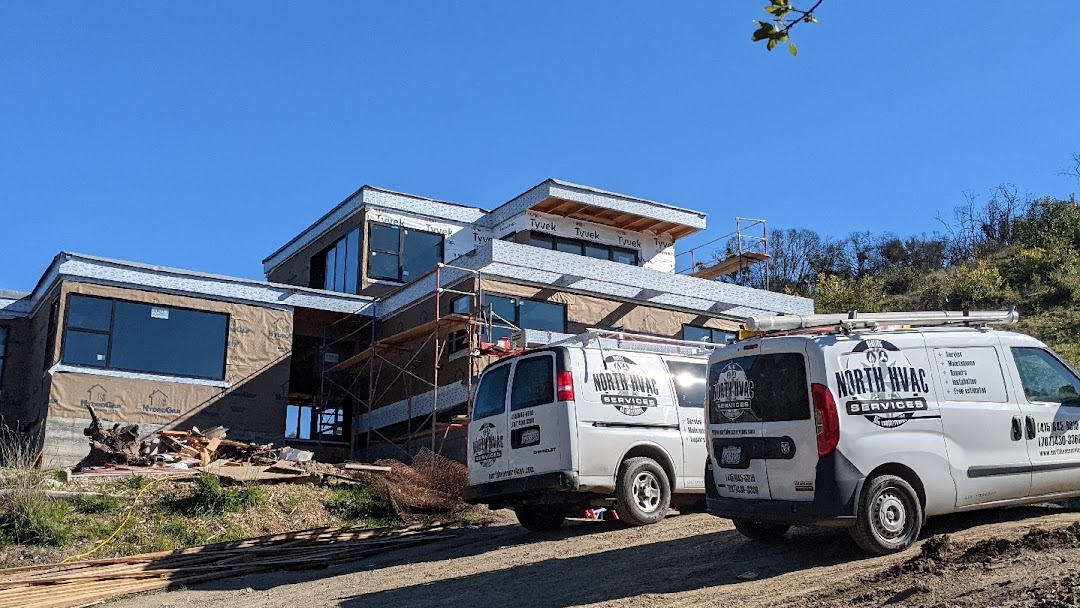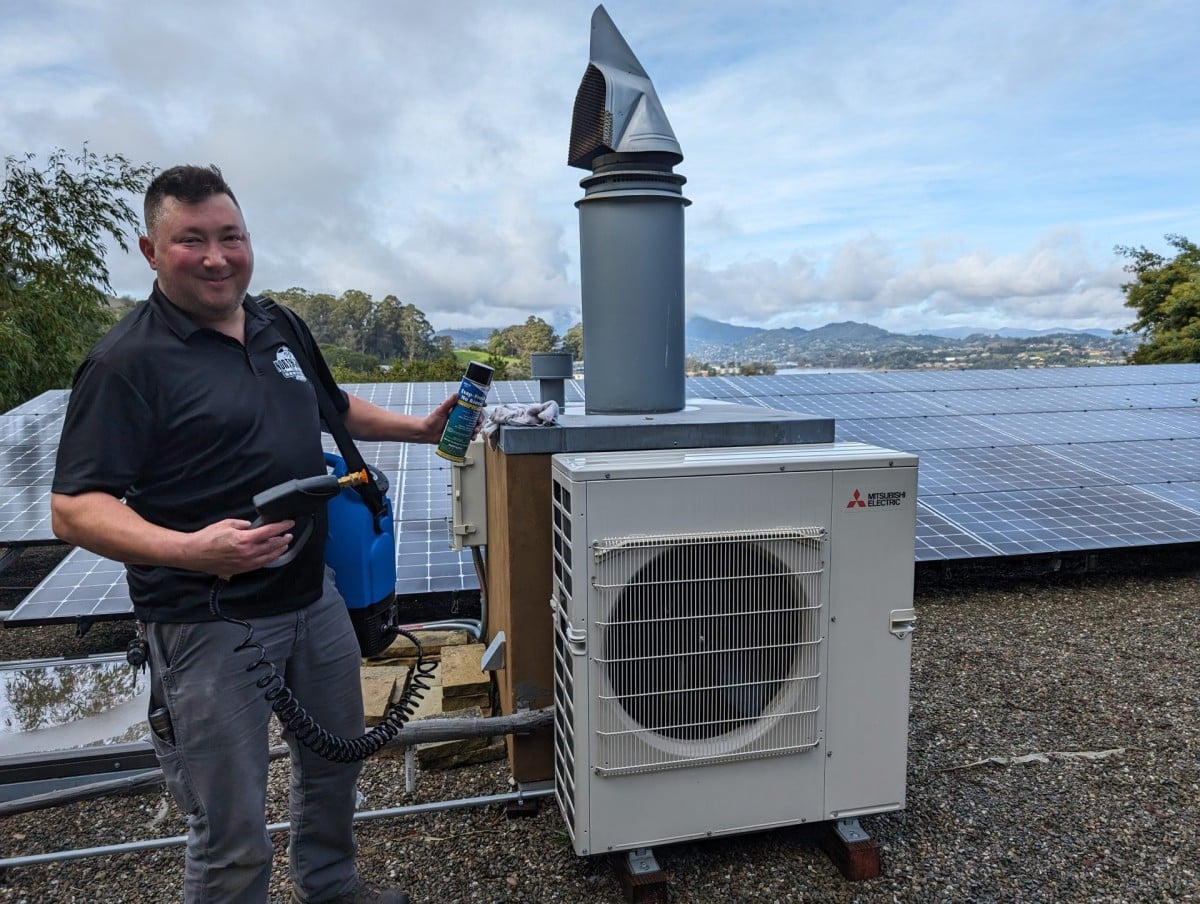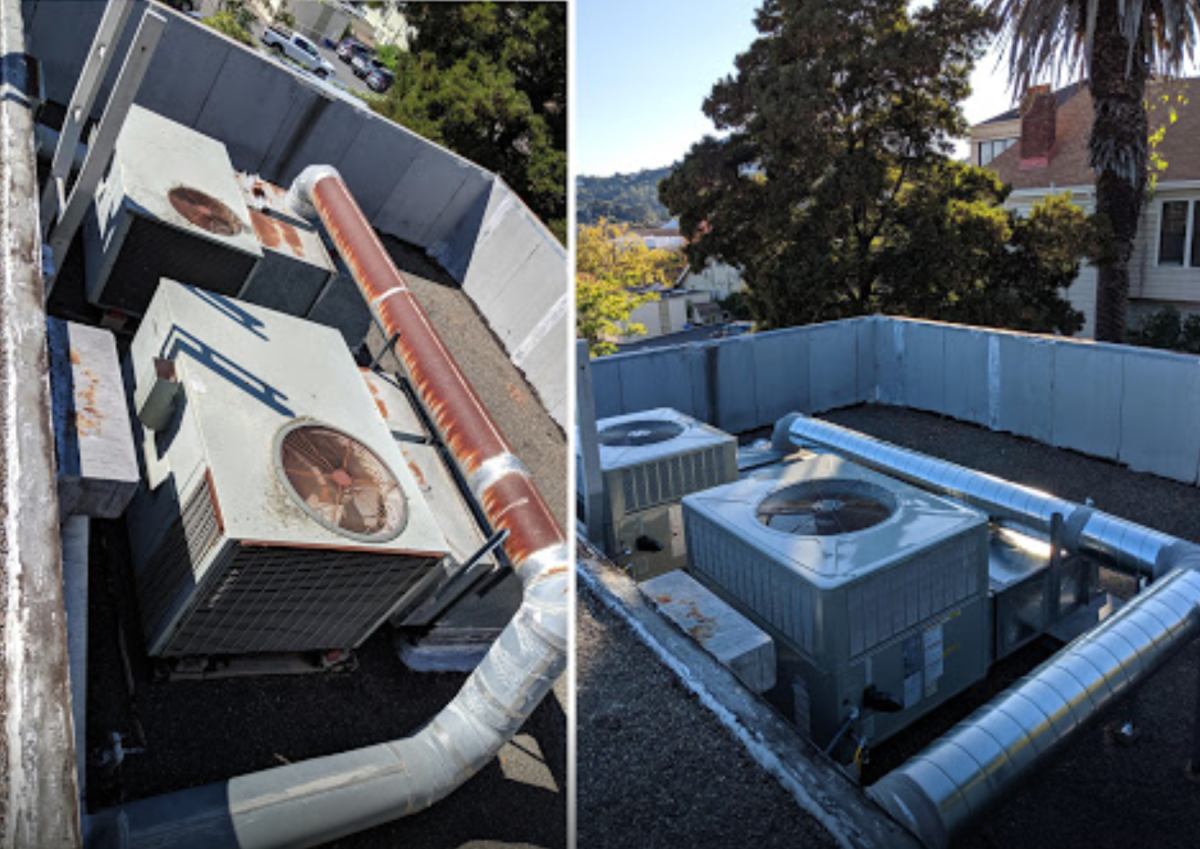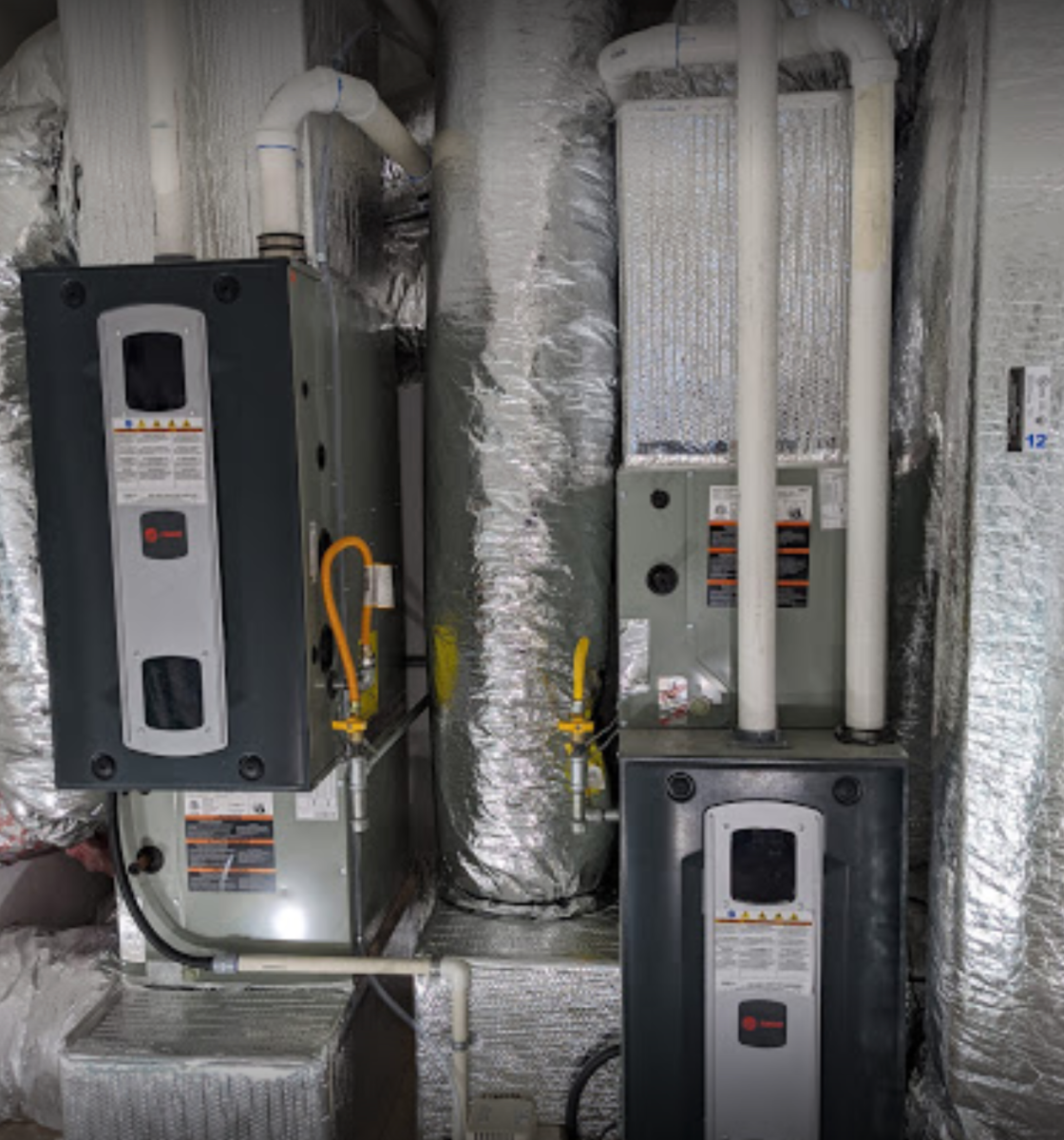

Marin County businesses have a short pre-summer window: typically May through early June, to inspect and service commercial HVAC systems before peak cooling demand arrives. North HVAC Services walks through a 12-point maintenance checklist, explains what a licensed commercial inspection covers, and breaks down the cost difference between scheduled service and an emergency repair call. If your property hasn’t had a pre-season inspection this spring, act now – before your calendar fills and temperatures climb.
Why Marin County Summers Push Commercial Cooling Systems to the Limit
Marin County’s climate carries more complexity than a standard California summer. Coastal communities – Mill Valley, Sausalito, Tiburon – often stay cool through much of the day under the Pacific marine layer. But inland areas, including San Rafael and Novato, regularly see temperatures climb into the mid-to-upper 90s during July and August heat events, often within hours of a cool morning fog burn-off.
According to WeatherSpark’s climate data for San Rafael, the region’s hot season runs from late June through September, with peak afternoon temperatures typically occurring between 2 and 5 PM, precisely when retail floors, restaurant dining rooms, and office buildings carry their highest occupant loads.
Commercial rooftop units and split systems bear the full weight of that demand. Systems operating below capacity due to dirty coils, low refrigerant charge, or worn electrical components often fail during any early sustained heat event of the season. That pattern: deferred service meeting peak demand, is one of the most predictable causes of mid-summer HVAC failures in the North Bay.
The California Energy Commission’s Commercial End-Use Survey identifies HVAC systems, including space cooling, as among the top energy consumers in California’s commercial building sector. When systems aren’t properly maintained heading into summer, that cost reflects directly on monthly utility statements.
May and early June represent the right time to act. Service appointments are still available, replacement parts aren’t on backorder, and problems can be identified and resolved before summer heat puts systems under full load.

Your Pre-Summer Commercial HVAC Maintenance Checklist
Running through the following 12 tasks before summer arrives keeps systems operating at rated capacity and reduces the risk of unexpected downtime. Some items are appropriate for facility staff to handle. Others require a licensed, EPA-certified technician.
| Task | Recommended Frequency | Why It Matters |
| Air filter inspection and replacement | Monthly to quarterly | Restricted airflow forces systems to run harder and longer |
| Condenser coil cleaning | Annually (pre-summer) | Fouled coils reduce heat rejection and raise energy draw |
| Evaporator coil cleaning | Annually | Dirty coils cut cooling capacity and can cause system icing |
| Refrigerant level check and leak inspection | Annually | Low charge strains compressors and reduces cooling output |
| Electrical testing (contactors, capacitors, wiring) | Annually | Worn electrical parts are a leading cause of summer failures |
| Belt, motor, and bearing inspection | Annually | Mechanical wear causes inefficiency and unexpected shutdowns |
| Thermostat calibration and controls verification | Seasonally | Miscalibrated controls waste energy and reduce comfort consistency |
| Ductwork inspection for leaks and insulation gaps | Every 2–3 years | Leaky ducts can waste 20–30% of conditioned air before it reaches occupied zones |
| Condensate drain clearing | Annually (pre-summer) | Blocked drains cause water damage, mold growth, and system shutdowns |
| Damper function check | Annually | Failed dampers allow unconditioned air into occupied spaces |
| Outdoor unit clearance and debris removal | Seasonally | Blocked units overheat and lose efficiency under sustained load |
| Building automation system (BAS) verification | Seasonally | Incorrect scheduling and setpoints drive unnecessary energy costs |
Filter replacement, thermostat checks, and outdoor unit clearance are tasks facility staff can handle on a regular basis. Refrigerant handling, electrical diagnostics, and coil cleaning are a different matter. Under EPA Section 608 technician certification requirements, any technician who maintains, services, repairs, or disposes of equipment involving refrigerants must be certified – not just as a compliance formality, but to protect both the equipment and the people working on it.
What to Expect from Santa Rosa HVAC Contractors During a Commercial Tune-Up
A commercial HVAC inspection is a substantially different scope of work from a residential service call. Property managers who understand what a thorough inspection covers are far better positioned to evaluate proposals, ask the right questions, and hold contractors accountable for the work performed.
When Santa Rosa HVAC contractors arrive at a commercial property, a licensed technician should bring diagnostic tools capable of catching problems that a visual check alone would miss:
- Refrigerant analyzers to verify charge levels and detect active leaks
- Thermal imaging cameras to identify hot spots in electrical panels, ductwork, and mechanical components
- Amp draw meters to check that motors and compressors are operating within rated specifications
- Static pressure gauges to evaluate airflow distribution across duct systems
- Combustion analyzers for gas-fired rooftop units
Inspection duration depends on system count and size. A single packaged rooftop unit typically takes two to three hours. Properties with multiple zones should plan for a full-day engagement. Multi-building commercial portfolios often benefit from a service agreement that schedules inspections on a defined calendar throughout the year.
After the inspection, you should receive written documentation: a system condition report, photographs of components showing wear or failure, and a prioritized list of recommended repairs. That documentation supports capital planning conversations with ownership and protects property managers when tenants raise comfort complaints under their lease terms.
At North HVAC Services, our EPA-certified technicians provide written service reports on every commercial visit across Marin, Sonoma, and Napa counties. Clear documentation is a standard part of how we work – not an add-on.
The Real Cost of Skipping Summer HVAC Prep
Scheduling commercial HVAC maintenance before summer becomes a clear financial decision once you factor in what a mid-season failure actually costs – across emergency repairs, lost revenue, and accelerated equipment wear.
For restaurants, retail operations, and hospitality businesses, an HVAC failure during a July heat event doesn’t just create discomfort. A dining room reaching 85 degrees or a retail floor with no cooling drives customers out and, in some cases, forces a temporary closure. Emergency service calls carry premium rates, and parts availability during peak season can extend downtime by days.
On the energy side, the U.S. Department of Energy notes that simply replacing a clogged air filter with a clean one can lower an air conditioner’s energy consumption by 5 to 15 percent. Across an entire season of deferred maintenance – dirty coils, low refrigerant charge, worn components left unaddressed – the cumulative efficiency loss in commercial systems runs considerably higher. For a property operating multiple units through a full California cooling season, that gap shows up directly on monthly utility statements.
| Service Scenario | Estimated Average Cost | Notes |
| Scheduled annual tune-up (single unit) | $150–$500 | Per unit; varies by system size and contractor |
| Refrigerant recharge (per pound, R-410A) | $100–$350 | Higher when leak diagnosis and repair are included |
| Condenser fan motor replacement (emergency) | $200–$500 | After-hours and same-day labor premiums apply |
| Compressor replacement (mid-season failure) | $800–$2,300+ | Most costly single-component repair; commercial systems trend toward the higher end |
| Full rooftop unit replacement (emergency) | $5,000–$15,000+ | Varies by tonnage, brand, and installation complexity |
Cost estimates are based on HomeAdvisor HVAC repair data and industry cost references. Actual pricing varies by equipment type, location, labor rates, and emergency service requirements.
Property managers also carry lease and liability considerations. A documented service history is often the most straightforward line of defense when tenant comfort or air quality disputes arise under a lease agreement. Systems without regular service can accumulate microbial growth on coils and drain pans, circulating contaminants through occupied office and retail spaces – a detail that increasingly comes up in lease conversations and tenant health discussions.

How to Choose an HVAC Contractor in Santa Rosa, CA, for Your Business
Finding reliable service often starts with a search for HVAC service near you, helping you to connect with local professionals. That can return a list of options quickly. Knowing how to evaluate those results is what actually protects your property, your tenants, and your operating budget.
Here’s what to verify before committing to a service agreement:
- California C-20 license: HVAC contractors in California must hold a C-20 Warm-Air Heating, Ventilating, and Air-Conditioning license. Verify any contractor’s active status through the CSLB’s HVAC contractor licensing page, where you can confirm the license is current and in good standing.
- EPA Section 608 certification: Required by federal law for any technician handling refrigerants. This is a baseline requirement for commercial work, not a bonus credential.
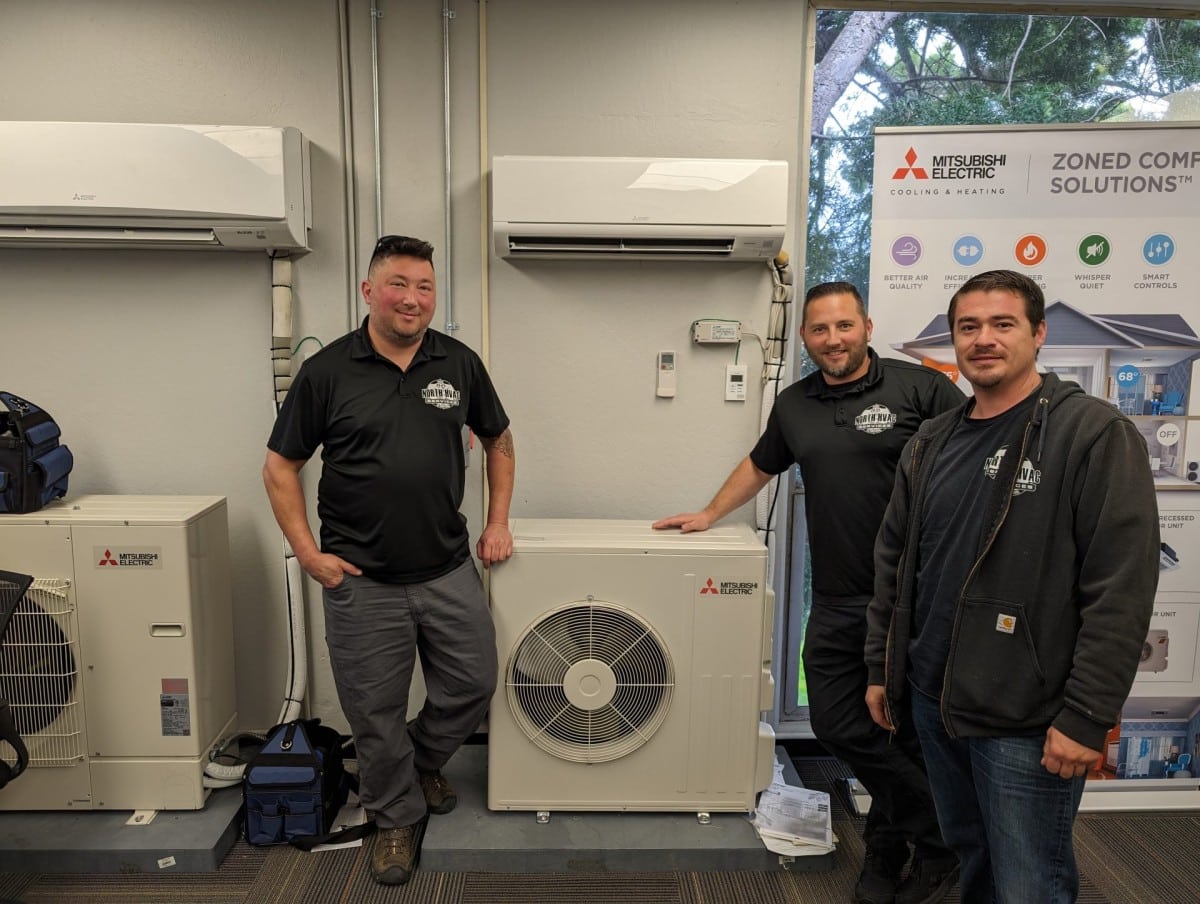
- Manufacturer authorizations: Dealer authorizations from Trane, Mitsubishi, or Day & Night signal technicians trained to manufacturer service standards. North HVAC Services holds Authorized Factory Dealer status for both Trane and Day & Night, along with Diamond Authorized Dealer status for Mitsubishi: credentials that directly protect equipment warranties and confirm a higher level of technician training.
- Commercial liability insurance and bonding: Verify that coverage levels are appropriate for your property type and tenant occupancy.
- Service contract structure: Understand what the annual fee covers, what gets billed separately, response time commitments for emergency calls, and whether after-hours service is included.
- References from comparable commercial accounts: Experience with multi-unit commercial properties is meaningfully different from residential service work. Ask specifically for similar-sized commercial references.
Finding the right HVAC contractor in Santa Rosa, CA, for a commercial property takes more than checking a star rating. The credentials above represent the minimum standard for work that protects your equipment, your lease obligations, and the people inside your building.
How often should a commercial HVAC system be serviced?
Most commercial systems benefit from at minimum two inspections per year – one before the cooling season and one before the heating season. High-use applications, including restaurants, medical facilities, and 24-hour operations, often require quarterly visits to maintain performance and meet applicable health and safety requirements.
What does a commercial HVAC maintenance contract typically include?
A standard HVAC maintenance contract covers two scheduled inspections annually, filter replacements at each visit, coil cleaning, electrical component testing, refrigerant level verification, and priority scheduling for service calls. Many agreements also offer discounted labor and parts rates for repairs identified during planned inspection visits.
Can routine maintenance actually lower commercial energy bills?
Yes. Clean coils, properly charged systems, calibrated controls, and unobstructed airflow all contribute to a system running at rated efficiency. A system losing efficiency each year from deferred maintenance will show measurable cost differences on monthly utility statements – particularly across a full California cooling season.
Get Your Marin County Business Summer-Ready with North HVAC Services
The pre-summer service window in Marin County is short. Once late June arrives, booking a licensed commercial HVAC inspection becomes considerably harder, and waiting becomes more expensive.
North HVAC Services has served commercial and residential clients across Marin, Sonoma, and Napa counties since 1988. Our team includes EPA-certified technicians, Authorized Factory Dealers for Trane and Day & Night, and Diamond Authorized Dealer status for Mitsubishi – meaning every inspection is backed by manufacturer-trained technicians, not just general trade knowledge.
To schedule your pre-summer commercial inspection, explore our commercial HVAC services and maintenance tune-up programs, or request a maintenance contract quote. Call us directly at (415) 845-6910 (Marin County); (707) 430-3360 (Sonoma County) or email northhvacservices@gmail.com. You can also visit our Contact Page to get started. Your cooling season is coming – let’s get ahead of it.