Apr 24, 2026 | Furnaces
Why Old Furnaces Struggle Most During Cold Snaps
When it comes to old furnace issues cold weather, every winter, business owners across Marin and Sonoma Counties face a familiar challenge: old furnace issues in cold weather. When temperatures drop rapidly, aging heating systems often fall short. Why does this happen?
Older furnaces were designed for efficiency standards that are now outdated. Many units over 15 years old simply can’t deliver consistent heat when demand spikes. During a cold snap, your building loses heat faster, forcing the furnace to run longer cycles. This extra workload exposes every weakness in the system, especially in models that haven’t seen regular maintenance.
Consider a 20-year-old gas furnace in Petaluma. On mild days, it might keep up just fine. But during a freezing week, it runs nearly nonstop, risking overheating, cracked heat exchangers, or shutdowns from overloaded safety sensors. Even a minor issue becomes a major one when the furnace faces extreme stress.
For many businesses, this means cold rooms, employee discomfort, and frustrated customers. Old furnace issues in cold weather can also lead to higher energy bills and surprise breakdowns. The colder it gets, the less forgiving your old equipment becomes.
For further reading, see Troubleshooting Furnace Problems: How to Help Your Customers from rsi.edu.
How Extreme Cold Worsens Old Furnace Issues
Extreme cold puts pressure on every part of an old furnace. When temperatures plunge, the heat loss from your building increases exponentially. Your furnace must work harder and longer to maintain a comfortable temperature, which can reveal hidden problems.
Here are a few ways cold weather amplifies old furnace issues:
- Longer Run Times: Older components—motors, burners, and heat exchangers—wear faster. Extended operation accelerates this wear, making breakdowns more likely.
- Short Cycling: Some furnaces overheat and shut off before completing a heating cycle, then restart soon after. This short cycling is common in older units struggling to match demand.
- Reduced Efficiency: Dirt, rust, and worn-out parts restrict airflow or combustion, cutting efficiency further. In cold weather, this means your furnace works harder for less heat.
- Frozen or Blocked Vents: Older venting systems may not resist ice or snow buildup. Blocked exhaust can cause safety shutdowns or even dangerous carbon monoxide buildup.
For those concerned with old furnace issues cold weather, at North HVAC Services, we often see business owners surprised by a furnace that “was fine last year” but now can’t handle the cold. That’s because every year of use adds up, and extreme weather exposes even minor weaknesses.
Common Old Furnace Issues in Cold Weather
Old furnace issues in cold weather tend to fall into familiar categories. Recognizing these early can help you avoid a total breakdown.
- Ignition Problems: Older pilot lights or electronic igniters can fail in low temperatures. If your furnace won’t start, this is a likely cause.
- Blower Motor Failures: The blower circulates warm air. Worn motors may stall or overheat, especially when running for hours on end.
- Cracked Heat Exchangers: Years of temperature swings can cause cracks. This is a serious safety hazard, as it may leak carbon monoxide.
- Thermostat Malfunctions: Old or poorly calibrated thermostats misread temperatures, leading to uneven heating or short cycling.
- Dirty Burners or Filters: Dust and buildup block airflow, reducing heat output and straining the system.
- Worn Electrical Components: Loose wires or old relays can fail when cold contracts metal connections.
- Drafts and Poor Insulation: Not a furnace issue per se, but older buildings often leak heat, making even a healthy furnace struggle.
These problems rarely resolve on their own and often get worse with each cold snap. Early intervention keeps your business comfortable and safe.
Warning Signs Your Old Furnace Can’t Keep Up
How do you know if your furnace is on its last legs? Watch for these warning signs, especially during cold spells:
- Inconsistent Heating: Some rooms are warm, others stay cold no matter what you do.
- Furnace Runs Constantly: If your furnace never seems to shut off, it’s likely struggling to keep up.
- Unusual Noises: Rattling, banging, or squealing sounds signal internal problems.
- Frequent Cycling: The furnace turns on and off in short bursts, never running a full cycle.
- Unexplained Energy Spikes: Higher gas or electric bills can mean the furnace is running inefficiently.
- Yellow or Flickering Pilot Light: This can indicate combustion issues or a cracked heat exchanger.
- Odors or Soot: Burning smells or visible soot suggest incomplete combustion or airflow problems.
- Old Age (15+ Years): If your unit is approaching or past this age, reliability drops sharply in cold weather.
Don’t ignore these signs. A failing furnace can leave your business out in the cold when you least expect it.
Quick Fixes for Old Furnaces During a Cold Snap
If your old furnace falters during a cold snap, you may want to try some safe, quick fixes before calling for help. Here are practical steps you can take:
- Check and Replace the Air Filter: A clogged filter limits airflow. Swap it out for a new one—this simple fix can boost heat output in minutes.
- Check Thermostat Settings: Make sure it’s set to “heat” and the temperature is set higher than room temperature. Replace batteries if needed.
- Clear Vents and Registers: Ensure all supply and return vents are open and not blocked by furniture, rugs, or storage boxes.
- Inspect the Furnace Intake and Exhaust: Outside vents can ice over or get blocked by debris. Gently clear away snow, ice, or leaves.
- Power Cycle the Furnace: Turn off the furnace at the breaker, wait 60 seconds, then turn it back on. This can reset basic electronic issues.
- Look for Error Codes: Many newer old models (10-15 years old) flash codes near the blower compartment. Check the user manual for troubleshooting steps.
- Seal Obvious Drafts: Block cold air from leaking in with weather stripping or a rolled towel at the door base.
These steps can buy you time, but if the furnace doesn’t respond—or if you see warning signs like yellow flames or soot—shut it down and call a professional.
When to Call a Professional for Old Furnace Issues in Cold Weather
For those concerned with old furnace issues cold weather, some furnace problems are too risky or complex for DIY fixes. Call North HVAC Services or another qualified contractor right away if:
- The furnace won’t start or keeps shutting down: This often signals a safety limit or failed part.
- You smell gas, burning, or see soot: These signs can mean a gas leak or dangerous combustion problem—shut off the furnace and evacuate if needed.
- The pilot light is yellow, flickering, or goes out: Safe pilot flames should be steady and blue.
- You hear grinding, banging, or screeching: Unusual noises usually mean a mechanical failure.
- No heat despite the furnace running: If the blower runs but the air is cold, the heat exchanger or burners may be compromised.
- You see water pooling around the furnace: Older condensing furnaces can leak if the drain line is blocked or cracked.
In these cases, a professional can diagnose the root cause and make safe repairs. Waiting too long can lead to bigger, more expensive failures—or even safety hazards for your staff and customers.
North HVAC Services responds quickly to emergency calls in Petaluma, Marin, and Sonoma. Don’t hesitate to reach out when your old furnace issues in cold weather escalate.
Long-Term Solutions: Upgrades and Preventive Care for Aging Furnaces
Relying on an old furnace through another harsh winter is a gamble. If you’re tired of emergency calls and high energy bills, consider these long-term solutions:
- Schedule Annual Maintenance: Preventive service catches issues early, extends equipment life, and improves efficiency. Technicians clean burners, check safety controls, inspect heat exchangers, and test airflow.
- Replace Old Thermostats: Upgrading to a modern, programmable thermostat improves accuracy and comfort. Smart thermostats can optimize run times and save money.
- Seal Ductwork and Insulate: Leaky ducts or poor insulation force your furnace to work harder. Professional duct sealing and attic insulation can cut heat loss significantly.
- Consider a Furnace Replacement: If your unit is over 15 years old and repair bills are stacking up, a new high-efficiency furnace pays off. Modern models use up to 30% less energy and offer better comfort control.
- Upgrade Air Filtration: High-quality filters keep dust out of your system, improving both air quality and furnace performance.
- Implement a Service Agreement: Many businesses benefit from a maintenance contract, ensuring priority service and regular tune-ups at a predictable cost.
Investing in these solutions reduces the risk of future breakdowns and keeps your business running smoothly. North HVAC Services can help you plan and execute these upgrades based on your building’s needs and budget.
Staying Warm and Safe in Marin and Sonoma Counties
Cold snaps are tough on old heating systems, but you don’t have to face them alone. Early attention to old furnace issues in cold weather saves money, protects your business, and keeps everyone comfortable. Whether you need urgent repairs, a tune-up, or a full system upgrade, the team at North HVAC Services is here to help.
If your furnace is struggling—or you want to prepare for the next big chill—call North HVAC Services at (415) 845-6910. Our experts keep businesses in Petaluma, Marin, and Sonoma Counties safe and warm, no matter how cold it gets.
Frequently Asked Questions
Why does my old furnace struggle to keep my building warm during cold snaps?
Older furnaces weren’t designed for today’s efficiency standards and often can’t handle the increased demand during extreme cold. As temperatures drop, your building loses heat faster, forcing the furnace to run longer and expose underlying issues.
What are common signs my furnace might fail during a cold spell?
Watch for symptoms like the furnace running nonstop, uneven heating, cold spots, and unusual noises. If your energy bills suddenly spike or the system shuts down unexpectedly, it’s a sign your old furnace is struggling.
How can I prevent my old furnace from breaking down in extreme cold?
Schedule regular maintenance, replace filters monthly, and have a professional inspect your system before winter. If you notice problems, call North HVAC Services at (415) 845-6910 to address issues before they become costly breakdowns.
Is it better to repair or replace my old furnace if it can’t handle cold weather?
If your furnace is over 15 years old and struggles during cold snaps, it may be more cost-effective to replace it with a modern, efficient model. Repairs can provide a short-term fix, but an upgrade from North HVAC Services can save you money and prevent future headaches.
Can old furnaces cause higher energy bills in winter?
Yes, old furnaces lose efficiency over time and must work harder in cold weather, which drives up your energy costs. Regular tune-ups and considering a new unit can help lower your bills and keep your building more comfortable.
Mar 4, 2026 | Furnaces
Your heating system works quietly in the background for most of the year, easily forgotten during Northern California’s mild seasons. Then, December arrives with its first cold evening, you adjust the thermostat, and nothing happens. Or worse, strange sounds echo through your home, utility bills spike unexpectedly, or only half your rooms receive adequate warmth. These scenarios happen more often than homeowners realize, particularly in Sonoma County, where systems operate intermittently rather than continuously.
Recognizing the early warning signs of furnace failure protects you from emergency breakdowns during the coldest weeks of winter. While Santa Rosa’s climate remains moderate compared to regions with harsh winters, cold snaps between December and February create genuine discomfort when heating systems fail. Holiday gatherings, family visits, and daily routines all depend on reliable warmth. This guide identifies five critical indicators that your system needs professional attention before complete failure occurs, helping you avoid the stress and expense of emergency service calls when temperatures drop.
Why Even California Furnaces Fail During Cold Weather
Northern California presents unique challenges for heating systems that differ significantly from cold-climate regions. Systems in Santa Rosa and the surrounding Sonoma County areas operate intermittently rather than continuously throughout the winter months. This pattern allows developing problems to remain hidden during mild weather, only revealing themselves when homeowners activate their systems during cold snaps.
Dormant issues that caused no problems during months of inactivity suddenly prevent proper operation when demand increases. Components that deteriorate slowly over time reach critical failure points precisely when you need reliable performance. Systems aging beyond 15-20 years face increased vulnerability to breakdown. Wear accumulates on motors, heat exchangers, and ignition components.
Mild weather creates maintenance complacency among homeowners who don’t perceive immediate threats, yet seasonal temperature swings still stress equipment. Understanding these patterns helps explain why proactive attention to warning signs prevents costly emergencies and the need for furnace repair in Santa Rosa, CA.
Warning Sign #1: Strange Noises Coming From Your Furnace
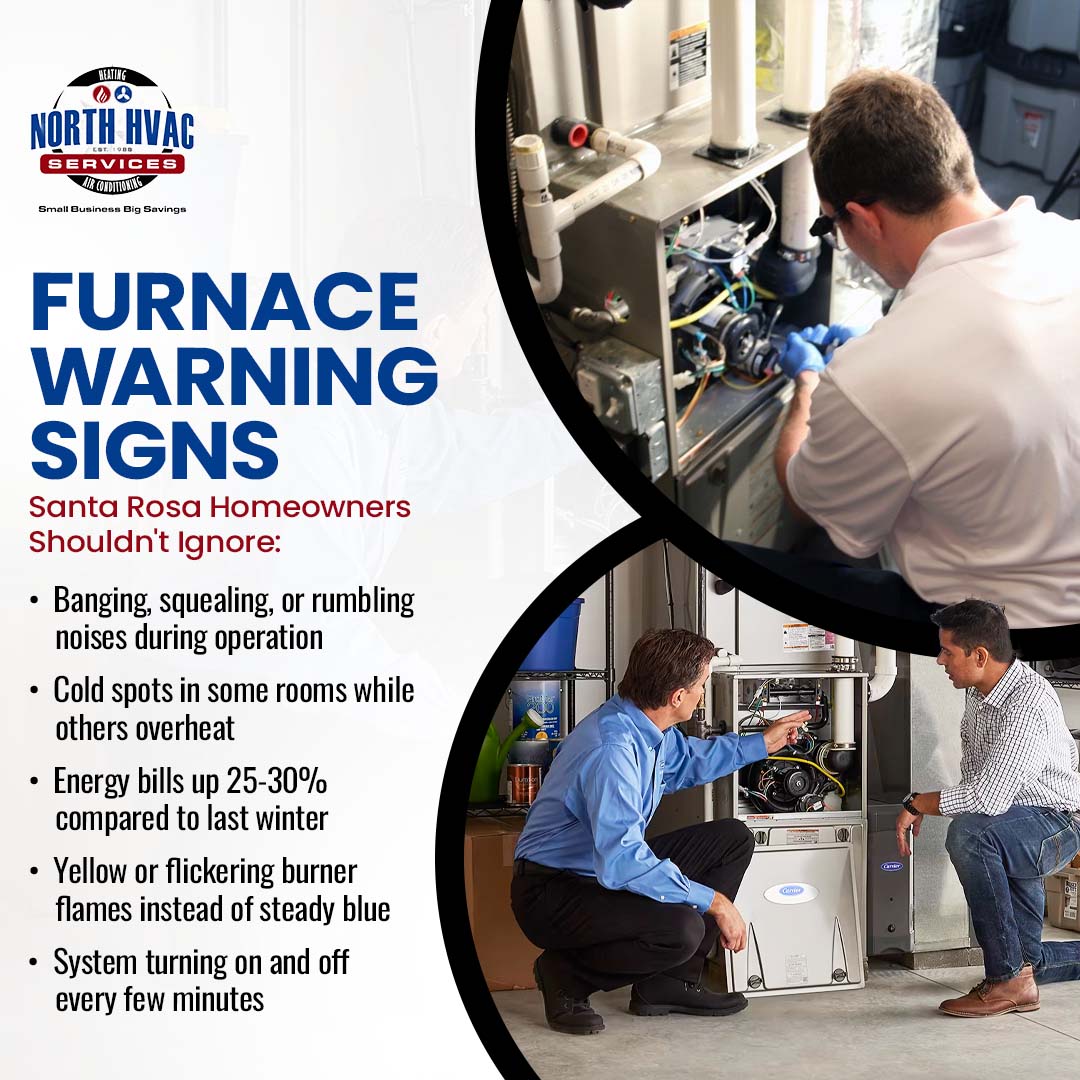
Modern heating systems operate quietly during normal function. When unusual sounds emerge from your equipment, they signal specific mechanical problems requiring professional diagnosis. Different noises indicate distinct issues:
Banging or popping sounds typically result from delayed ignition or ductwork expansion. When gas accumulates before ignition, combustion creates small explosions rather than smooth ignition. Metal ductwork expanding from temperature changes produces similar sounds, though less concerning.
Screeching or squealing noises point to blower motor problems or worn belts. These components require lubrication and proper tension. When maintenance lapses, friction increases, and parts fail. Continuing operation with these sounds causes additional damage.
Rumbling after shutdown suggests burner issues or flame sensor problems. Proper combustion stops immediately when your thermostat signals satisfaction. Continued rumbling indicates incomplete fuel burning or control failures.
Not all sounds require emergency response, but none should be ignored. Homeowners in Fountaingrove, Rincon Valley, and throughout Santa Rosa should document when sounds occur and their characteristics. When searching for heating repair near you, choosing qualified technicians who use this information to diagnose problems accurately during inspection makes the difference between temporary fixes and lasting solutions.
Warning Sign #2: Inconsistent Heating or Cold Spots Throughout Your Home
Balanced temperature distribution throughout your living space indicates proper system function. When certain rooms remain cold while others overheat, several problems may exist:
- Thermostat calibration errors causing incorrect temperature readings
- Ductwork leaks, losing heated air before reaching the intended spaces
- Failing blower motors, unable to circulate air adequately
- Zoning system malfunctions in homes with multiple heating zones
- Blocked vents or registers restricting airflow
This problem develops gradually, making it easy to dismiss as normal variation. Homeowners adapt by closing doors, wearing extra layers in cold rooms, or adjusting individual vents. However, uneven heating wastes substantial energy while indicating system deterioration.
The U.S. Department of Energy reports that ductwork problems and inefficient operation can cause substantial heating energy loss in poorly maintained systems. In typical Santa Rosa home layouts, whether single-story ranch designs or two-story craftsman styles common throughout the area, this represents significant utility expense and reduced comfort.
Early intervention addresses these issues before complete system failure. Professional inspection identifies root causes, from simple filter changes to complex ductwork repairs. Addressing inconsistent heating promptly extends equipment life and maintains comfort. North HVAC Services provides comprehensive heating services that address both immediate concerns and underlying system inefficiencies.
Warning Sign #3: Spike in Energy Bills Without Increased Usage
Your heating costs should remain relatively consistent from year to year, accounting for rate changes and weather variations. When bills increase 25-30% compared to previous winters without corresponding usage increases, your system struggles with efficiency problems.
Failing furnaces work harder to maintain desired temperatures, consuming more fuel or electricity while delivering less heat. Common efficiency-killing problems include:
- Dirty or clogged air filters restricting airflow
- Deteriorating heat exchangers unable to transfer heat effectively
- Poor combustion efficiency from dirty burners or improper air mixture
- Ductwork leaks, distributing heated air to attics or crawl spaces
- Aging components requiring more energy to achieve the same results
Research confirms that aging heating systems suffer from substantial performance decline, resulting in wasted energy and higher operational costs.
Baseline Efficiency Decay: The DOE indicates that a 20-year-old furnace typically wastes at least 22% of its energy consumption. While older furnaces often have much lower annual fuel utilization efficiency (AFUE), many newer condensing models achieve considerably higher AFUE ratings.
Maintenance and Airflow Gains: Technical research highlights that routine professional cleaning of HVAC components can reduce blower energy consumption by 41% to 60% while simultaneously increasing supply airflow by up to 46%.
Impact of Component Wear: Mechanical wear on components like motors and heat exchangers often forces systems to run longer cycles, which can cost owners up to 20% to 50% more in monthly bills compared to maintained high-efficiency units.
Forthcoming Regulatory Mandates: To address these efficiency gaps, the DOE has finalized standards requiring nearly all residential gas furnaces manufactured after December 18, 2028, to reach a minimum 95% AFUE. Additionally, as of October 6, 2026, new commercial gas storage water heaters must meet a 95% thermal efficiency requirement.
For Sonoma County residents facing PG&E rate structures, these efficiency losses translate to substantially higher annual heating costs. A system operating at 70% AFUE wastes 30 cents of every dollar spent on heating, while a well-maintained modern system at 95% AFUE wastes only 5 cents per dollar. For systems nearing the end of their 15–20 year expected life, furnace installation with modern equipment can convert nearly all consumed fuel directly into heat, significantly reducing waste.
Monitoring utility bills provides early warning of developing problems. When unexplained increases occur, scheduling a professional inspection prevents further efficiency loss and potential system failure.
Warning Sign #4: Yellow or Flickering Burner Flame
The appearance of your furnace’s burner flame provides direct insight into combustion quality and system health. Proper operation produces a steady blue flame with minimal yellow coloring. When flames appear predominantly yellow, flicker excessively, or roll out from the burner area, serious problems exist.
Yellow flames indicate incomplete combustion, typically caused by:
- Dirty burners restricting proper gas flow
- Cracked heat exchangers, allowing air mixture problems
- Insufficient combustion air from blocked intake vents
- Gas pressure irregularities from supply or valve issues
Incomplete combustion raises carbon monoxide concerns. This colorless, odorless gas poses serious health risks when present in living spaces. While modern furnaces include safety mechanisms, deteriorating components compromise these protections.
The Centers for Disease Control and Prevention (CDC) reports that carbon monoxide claims the lives of hundreds of people every year in the United States, with heating equipment representing a significant source. Carbon monoxide detectors provide important protection, but they serve as backup warning systems rather than primary prevention.
Observing yellow or flickering flames requires immediate professional attention. EPA-certified technicians possess the equipment and training to diagnose combustion problems safely. If you’re searching for heat repair near you, due to flame concerns, schedule service immediately rather than continuing operation, and ventilate your home if your carbon monoxide detector alarms activate.
Warning Sign #5: Frequent Cycling or System Won’t Stay Running
Normal heating operation follows predictable patterns: your system activates when the temperature drops below the thermostat setting, runs until achieving the desired warmth, then shuts off for an extended period. Short cycling, turning on and off every few minutes, signals serious problems:
Common causes of short cycling include:
- Oversized systems producing too much heat too quickly
- Failing limit switches incorrectly detecting overheating
- Severely clogged filters preventing proper airflow
- Thermostat placement or calibration problems
- Dirty flame sensors causing ignition cycle interruptions
Systems should complete several cycles per hour during active heating periods without excessive on-off patterns. More frequent cycling damages equipment through repeated startup stress, increases energy consumption, and often precedes complete failure.
Sonoma County’s moderate climate means systems should run less frequently than in cold-climate regions. When cycling becomes excessive, or your system fails to complete normal heating cycles, a professional diagnosis identifies root causes before breakdown occurs.
In some cases, short cycling indicates that replacement makes more economic sense than repair. Systems approaching 20 years old with frequent cycling problems may benefit from modern, properly-sized equipment rather than continued repairs to aging components. North HVAC Services offers both heating services for immediate repairs and heat pump installation for homeowners ready to transition to more efficient systems.
When to Call for Emergency Service vs. Scheduling Regular Maintenance
Understanding the difference between emergency situations and urgent-but-not-emergency issues helps you respond appropriately:
Immediate emergency service required for:
- Complete heating failure when outdoor temperatures drop below 50°F
- Gas odors near the furnace or throughout the home
- Carbon monoxide detector activation
- Visible flames or smoke from heating equipment
- Electrical burning smells or sparking
Urgent service within 24-48 hours for:
- Loud mechanical noises from the furnace
- Yellow burner flames or flame rollout
- Short cycling that developed suddenly
- Rooms remaining unheated despite system operation
Schedule regular maintenance for:
- Seasonal tune-ups before heating season
- Gradual efficiency decline
- Minor noises or performance changes
- Annual inspections and filter replacements
Research shows that emergency repairs cost 2-3 times more than scheduled service, averaging $300-800 for emergency calls compared to $150-300 for preventive maintenance visits. Beyond cost considerations, emergency situations create stress and discomfort that proactive maintenance prevents.
North HVAC Services operates throughout Marin and Sonoma counties, providing both emergency response and scheduled maintenance. Our EPA-certified technicians carry diagnostic equipment and common replacement parts, often resolving problems during initial visits. Regular maintenance services extend equipment life while preventing unexpected failures.
Protecting Your Comfort and Investment
Recognizing these five warning signs: strange noises, inconsistent heating, increased energy bills, yellow flames, and frequent cycling, enables you to address problems before they escalate. Most homeowners miss early indicators, attributing minor changes to normal variation or aging equipment. Professional inspection transforms vague concerns into specific diagnoses with clear action plans.
Even quality heating systems require periodic attention. Components wear, efficiency declines, and safety mechanisms need verification. Catching developing problems early prevents emergency situations during the coldest weeks of winter when service demands peak and wait times extend. When homeowners research the best furnace companies nearby, they discover that local, family-owned contractors often provide more personalized service and faster emergency response than national chains.
Schedule a professional heating system inspection before winter weather arrives. Early detection keeps your home comfortable, protects your equipment investment, and avoids the stress of unexpected breakdowns. Whether your system shows warning signs or you simply want seasonal peace of mind, qualified technicians identify issues and recommend appropriate solutions.
For immediate concerns about your heating system’s performance or to schedule a pre-winter inspection, contact North HVAC Services at (415) 845-6910 or visit our contact page. Our team provides comprehensive furnace repair and serves all manufacturers and models. We also offer furnace installation in Santa Rosa, CA, for systems beyond economical repair. When looking online for heating repair near you, most repair situations respond well to timely intervention, preventing minor issues from becoming major expenses.
Feb 25, 2026 | Furnaces, HVAC Maintenance
Why Your Furnace’s Noises Matter
When your furnace starts making strange noises, it’s not just an annoyance; it’s a signal that something might be wrong. Furnace noise issues can indicate various underlying problems that, if left unaddressed, could lead to more significant issues or even a complete system breakdown. Understanding what these noises mean can help you take action before a minor issue turns into a costly repair. At North HVAC Services, we’re committed to helping you decipher these sounds and provide the necessary guidance to keep your furnace running smoothly.
Strange noises can be your furnace’s way of communicating issues ranging from minor annoyances to severe malfunctions. Ignoring these sounds can lead to decreased efficiency, higher energy bills, and in some cases, safety hazards. By paying attention to these noises and understanding their meanings, you can ensure a warm and safe environment in your home.
Rattling Sounds: Loose Components or Ductwork Issues?
Rattling sounds in your furnace often suggest loose components or issues within the ductwork. This noise can occur when screws, bolts, or panels become loose over time due to the vibrations of the furnace. Additionally, parts of the ductwork may have shifted or become disconnected, causing them to rattle when the furnace is operating.
For further reading, see Authority Resource from handbook.ashrae.org.
Imagine your furnace as a car engine. Just like a loose part in a car can lead to rattling, so can a furnace with unsecured components. If you hear rattling, it’s a good idea to check for any obvious loose parts. You might also consider whether the sound is coming from the ductwork itself, as this may require tightening or resealing the connections.
- Tighten any loose screws or bolts on the furnace panels.
- Inspect visible ductwork for gaps or loose connections.
- Consider professional heating system diagnostics to identify and fix the issue accurately.
Addressing these issues promptly with the help of North HVAC Services can prevent further damage and ensure your heating system operates quietly and efficiently.
Squealing Noises: Worn Belts or Motor Bearings?
A squealing noise from your furnace can be particularly alarming. This usually indicates that the blower belt is worn or the motor bearings need lubrication. Over time, belts can become brittle and crack, while bearings might lose lubrication, leading to increased friction and noise.
Think of the belt as similar to a fan belt in your vehicle. If it’s worn, it will slip and create a high-pitched squeal. Alternatively, dry bearings in the motor can cause a similar sound. It’s crucial to address these issues quickly to prevent further wear and potential motor failure.
Regular furnace maintenance and safety checks are essential in preventing these problems. During these checks, technicians can replace worn belts and lubricate motor bearings, ensuring your furnace runs smoothly. If you’re hearing these squealing noises, contacting a professional for furnace repair and troubleshooting is advisable.
Booming Sounds: Ignition Delays and Their Dangers
Booming sounds can be one of the most concerning noises coming from your furnace. This noise is typically caused by a delay in ignition, where gas builds up in the combustion chamber before igniting with a small explosion. This is not only unsettling but can also be dangerous.
Consider a gas stove where the burner doesn’t light immediately. The gas accumulates until it ignites all at once, creating a boom. In furnaces, this delayed ignition can lead to damage or even cracks in the heat exchanger, which can release carbon monoxide into your home.
- Ensure the burners are clean and free from debris.
- Check the flame sensor and ignition system for proper operation.
- Schedule regular furnace safety checks to prevent ignition delays.
If you experience booming noises, it’s crucial to contact North HVAC Services for a thorough furnace troubleshooting session to address and fix the problem safely.
Furnace Noise Issues: Persistent Clicking Sounds
Clicking noises during furnace operation can be normal to some extent, such as when the thermostat sends a signal to the furnace to start. However, persistent clicking can indicate problems such as a defective relay, issues with the ignition system, or a failing flame sensor.
Imagine your furnace trying to start up like an old car that struggles to turn over. This continuous clicking can mean the ignition system is repeatedly trying to ignite, failing each time. Not only is this a sign of inefficiency, but it can also lead to more significant problems if not addressed.
- Inspect the ignition system and flame sensor for wear or damage.
- Check the thermostat for proper operation and settings.
- Engage in regular HVAC troubleshooting to maintain system reliability.
Persistent clicking is a cue to call in professionals like those at North HVAC Services to perform a complete hvac system diagnostics and resolve the issue effectively.
Whistling Noises: Airflow Restrictions or Filter Problems?
Whistling noises are often a sign of airflow restrictions within the furnace. This can be due to dirty air filters, closed vents, or improperly sized ductwork. When air struggles to move through the system, it creates a whistling sound, much like wind squeezing through a narrow gap.
Think of a blocked straw when you try to sip a drink. The restricted flow makes a whistling sound. In a furnace, this can lead to overheating and reduced efficiency.
- Replace the air filter regularly to ensure proper airflow.
- Check all vents to ensure they are open and unobstructed.
- Consider professional furnace maintenance to assess ductwork sizing and condition.
Addressing airflow restrictions promptly can prevent further issues and improve the efficiency of your heating system. Regular furnace maintenance and safety checks are key to avoiding these problems.
Scraping Sounds: Blower Issues or Loose Fan Blades
Scraping or metal-on-metal sounds are typically indicative of blower wheel issues or loose fan blades. This noise can occur if the blower wheel becomes misaligned or if a fan blade becomes loose, scraping against other components.
Imagine a ceiling fan where one blade is loose and scrapes against the ceiling. This not only causes noise but can also lead to further damage if not corrected. Similarly, in a furnace, this scraping can cause damage to the blower assembly or other parts.
- Inspect the blower wheel for alignment and secure any loose components.
- Check fan blades for any signs of looseness or damage.
- Schedule professional heating system diagnostics to address and repair these issues.
Scraping sounds require immediate attention to prevent costly repairs. Contact North HVAC Services for expert furnace repair and troubleshooting to resolve these issues quickly.
When to Call North HVAC Services for Furnace Noise Issues
If you’re experiencing any of these strange furnace noises, it’s a clear sign that professional intervention is needed. Ignoring these sounds can lead to increased wear and tear, higher energy bills, and potential safety hazards. At North HVAC Services, we specialize in diagnosing and resolving furnace noise issues efficiently.
Our skilled technicians offer comprehensive furnace repair and troubleshooting services to ensure your system operates safely and effectively. Whether it’s a simple fix or a more complex issue, we’re here to help. Don’t wait for a small noise to turn into a significant problem.
For reliable and efficient solutions to your furnace noise issues, contact North HVAC Services today at (415) 845-6910. We’re dedicated to keeping your home comfortable and safe all year round.
Frequently Asked Questions
Why is my furnace making rattling noises when it starts up?
Rattling noises from your furnace often indicate loose components or ductwork issues. Check for any loose screws or panels that may need tightening. If you're unsure or need assistance, consider contacting North HVAC Services at (415) 845-6910 for a professional inspection.
Is it safe to use my furnace if it makes a loud banging noise?
A loud banging noise could indicate an issue with delayed ignition or expanding and contracting ductwork. It's best to turn off your furnace and have it inspected by a professional to prevent potential safety hazards or further damage.
What should I do if my furnace is making a whistling sound?
A whistling sound may suggest a clogged filter or restricted airflow. Check your furnace filter and replace it if necessary. If the noise persists, there might be an issue with the ductwork, and you should contact a professional for a thorough evaluation.
Can I fix a squealing noise coming from my furnace myself?
A squealing noise often points to issues with the blower motor or belt. While replacing a belt might be a DIY task, it's wise to consult with a professional, like North HVAC Services, to ensure the problem is accurately diagnosed and resolved.
What does a clicking sound from my furnace mean?
A clicking sound typically indicates an ignition system problem or a faulty flame sensor. It’s crucial to address this promptly to avoid furnace failure. Contact a certified technician to inspect and repair the issue to ensure safe and efficient operation.