Nov 21, 2025 | AC Maintenance, AC Repair
When your air conditioner runs nonstop but still doesn’t cool your Santa Rosa home, it’s more than just a comfort issue. You may be facing a repair or replacement decision, and without understanding the cause of the warm air, you risk overspending on small fixes or postponing critical repairs that only get worse.
Warm air complaints represent one of the most common service calls we receive at North HVAC Services. After serving Sonoma County families since 1988, we’ve identified five primary causes that account for nearly all cooling failures. More importantly, we’ve helped thousands of homeowners navigate the repair versus replacement decision using a clear framework based on system age, repair costs, and long-term value.
This guide explains what actually causes air conditioners to blow warm air, provides real cost data for common repairs, and gives you a practical decision-making framework. You’ll learn which questions to ask contractors, how to recognize red flags in service recommendations, and when repair makes better financial sense than replacement.
Recognizing Why Air Conditioners Blow Warm Air: The 5 Root Causes
Refrigerant Leaks: The Silent Performance Killer
Your air conditioning system doesn’t burn refrigerant like a car burns gasoline. Instead, refrigerant circulates continuously through a closed loop, absorbing heat from your indoor air and releasing it outside. When this closed loop develops even a small leak, your system’s cooling capacity drops noticeably.
Most refrigerant leaks occur at copper line connections, in corroded coil sections, or at service port valves. Refrigerant leaks develop gradually in commercial systems due to vibration stress, corrosion, and normal wear over time. Even small leaks progressively degrade system performance and efficiency until properly diagnosed and repaired.
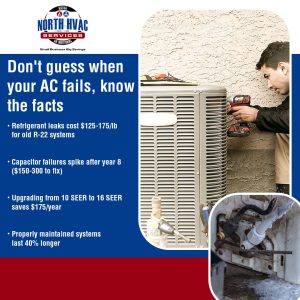
Here’s where Santa Rosa homeowners face a specific challenge. If your system was installed before 2010, it likely uses R-22 refrigerant, commonly called Freon. The EPA phased out R-22 production due to its ozone-depletion effects. Limited supply has driven R-22 costs to $145-250 per pound, compared to $50-100 per pound for the current standard R-410A refrigerant.
Some contractors offer to simply “top off” your refrigerant without locating and repairing the leak. This approach violates EPA Section 608 regulations and guarantees the same problem returns within months. Professional air conditioning repair services should always include leak detection using electronic sensors or tracer dyes, followed by proper repairs before recharging the system.
Refrigerant Repair Cost Reality:
| Refrigerant Type |
Approximate Cost per Pound* |
Typical System Charge |
Temporary Repair (No Leak Fix) |
Full Recharge / Repair (With Leak Fix) |
| R‑22 (Freon) |
$90 – $125 |
6–12 lbs |
$500–$850 |
$800–$1,400 |
| R‑410A |
$50–$90 |
6–8 lbs |
$240–$320* |
$650–$1,200* |
(Source: Today’s Homeowner). *Actual cost may vary depending on system size, leak repair requirements, and labor/service fees.
At North HVAC Services, our EPA-certified technicians use professional leak detection equipment to locate the source before adding any refrigerant. This approach costs more upfront but saves you from repeated service calls and wasted refrigerant.
Capacitor and Contactor Failures: The Electrical Weak Points
Air conditioning systems depend on multiple electrical components working in precise coordination. Capacitors store electrical energy and provide the power surge needed to start motors. Your system typically has two capacitors: one for the compressor and one for the outdoor fan motor.
When capacitors weaken or fail, motors struggle to start or run inefficiently. A failing capacitor often produces a distinctive humming sound from your outdoor unit without the fan actually spinning. Capacitor replacement typically costs $150-300, including labor.
The contactor acts as an electrical relay, controlling power flow to the compressor. When contact points pit or burn from repeated electrical arcing over the years, they fail to close properly. Contactor replacement runs $100-250, depending on your system size.
Frozen Evaporator Coils: The Misunderstood Problem
Here’s a cooling paradox: ice forming on your indoor coil actually stops your air conditioner from cooling your home. This happens because of airflow restriction, not because your system is working too hard.
Your indoor evaporator coil needs adequate air flowing across it to absorb heat properly. When airflow drops substantially, the coil temperature drops below freezing, moisture condenses and freezes on the coil surface, and ice buildup blocks remaining airflow completely.
Several conditions cause coil freezing beyond just dirty air filters. Low refrigerant levels reduce pressure and temperature in the evaporator. Blower motor failure prevents adequate air movement. Closed or blocked supply registers restrict return airflow, creating conditions that allow ice formation on evaporator coils.
Many homeowners try turning the system off and letting the ice melt. While this addresses the immediate symptom, it doesn’t solve the underlying cause. Repeated freeze and thaw cycles damage the thin aluminum fins on the coil and progressively reduce efficiency.
Compressor Failure: The Major Repair Decision Point
The compressor functions as the heart of your air conditioning system, pumping refrigerant through the entire loop. When a compressor fails, you face the most significant repair decision because compressor replacement often approaches half the cost of a complete new system.
Warning signs include hard starting, loud grinding or screeching noises, and circuit breakers that trip repeatedly. Most commercial-grade compressors are designed to operate reliably for 12 to 15 years under normal operating conditions with proper maintenance.
This is where the 50% rule becomes important for replacement decisions. If your repair cost exceeds 50% of replacement cost AND your system is over 10 years old, replacement typically makes better financial sense than continuing with repairs.
Thermostat and Control Issues: The “False Alarm” Diagnosis
Sometimes what appears to be a serious air conditioning problem turns out to be a simple thermostat or control board issue. These components control when your system runs and how it operates, so failures create symptoms that mimic more expensive problems.
Before assuming the worst, perform a simple calibration test. Place a separate thermometer near your thermostat for 20 minutes and compare readings. If temperatures differ by more than 3°F, you likely have a thermostat problem rather than an AC system failure.
When we diagnose cooling complaints at North HVAC Services, we always check the simplest and least expensive potential causes before recommending major repairs. This approach has kept us trusted in Sonoma County since 1988.

The Santa Rosa Climate Factor: Why Location Matters
Santa Rosa’s Mediterranean climate, classified by NOAA climate data, features warm, dry summers with temperatures reaching the high 80s and mild winters averaging the mid-50s. This moderate climate pattern subjects commercial HVAC systems to consistent seasonal cycling between heating and cooling modes.
While systems in extreme climates experience continuous operation in a single mode, Santa Rosa equipment cycles between heating and cooling throughout the year, affecting component longevity. Commercial systems in this climate zone typically require replacement consideration at 12 to 15 years rather than the 15 to 20-year lifespan possible in more stable climates.
Wildfire smoke season creates additional challenges. When smoke blankets our region, outdoor coils become contaminated with ash and fine particulates. Air filters clog much faster than normal. The California Air Resources Board documented that during the 2018 Camp Fire, PM2.5 levels increased by more than 300 percent compared to average levels, creating extreme demand on HVAC filtration systems throughout Northern California.
We recommend pre-summer inspections specifically to address smoke damage from the previous season. Our indoor air quality analysis helps identify whether your current filtration adequately protects your system during poor air quality periods.
Repair vs. Replacement: The Decision Framework
The Age-Cost-Efficiency Triangle
Three factors intersect in every repair versus replacement decision: your system’s age, the repair cost you’re facing, and the efficiency difference between keeping your current system versus upgrading.
System Age and Repair Cost Evaluation:
| System Age |
Repair Cost:
< $500 |
Repair Cost:
$500-1,500 |
Repair Cost:
> $1,500 |
| 0-5 years |
Always repair |
Repair |
Investigate warranty |
| 6-10 years |
Repair |
Evaluate efficiency |
Consider replacement |
| 11-15 years |
Repair if minor |
Calculate 5-year costs |
Lean toward replacement |
| 15+ years |
Repair only if under $300 |
Replace |
Definitely replace |
Older systems operate at 8-10 SEER (Seasonal Energy Efficiency Ratio), while current minimum standards require 14 SEER in northern states and 15 SEER in southern states. The U.S. Department of Energy provides guidance on energy efficiency standards and potential savings from system upgrades.
The Total Cost of Ownership Approach
Looking beyond the immediate price tag reveals the true financial picture. Let’s examine a real scenario. You have a 12-year-old system needing a $1,200 compressor repair.
Repair scenario over the next 3 years:
- Immediate repair cost: $1,200
- Estimated additional repairs: $800-1,500
- Energy costs at 10 SEER: $1,410
- Total 3-year cost: $3,410-4,110
Replacement scenario over the next 3 years:
- New 16 SEER system installed: $4,500-7,500
- Energy costs at 16 SEER: $885
- Likely repairs (under warranty): $0-200
- Total 3-year cost: $5,385-7,700
The replacement costs more initially, but after three years, your repaired system has reached 15 years old and likely faces replacement anyway. Your new system still has 12-15 years of useful life remaining with considerably lower operating costs.
At North HVAC Services, we provide these calculations during our free replacement consultations so you can make learned decisions based on your specific situation.
Red Flags That Signal Replacement Over Repair
Certain situations make replacement the clear choice. If you have an R-22 system requiring both refrigerant and a major component repair, your combined costs often exceed 60% of the replacement cost.
A second major repair within 24 months indicates your system has reached the failure cascade stage. Industry experience demonstrates that repeated major repairs rarely provide good value once systems exceed 75% of their expected lifespan. At this point, you are funding a series of expensive repairs on equipment that will continue declining.
Energy bills increasing 15-20% year-over-year despite consistent usage patterns signal declining efficiency. This gradual decline costs you hundreds in excess energy bills while you delay the inevitable replacement decision.
What to Expect From Professional Santa Rosa AC Repair Services
Professional Santa Rosa AC repair should follow a systematic diagnostic process. Proper evaluation includes visual inspection of both units, electrical testing, refrigerant pressure readings, airflow measurement, thermostat calibration, and duct system evaluation.
This comprehensive approach typically takes 45-90 minutes. Diagnostic fees range from $89-150, covering expertise, specialized testing equipment, and travel time. The Better Business Bureau guidelines emphasize that transparent diagnostic fees indicate professional operations.
Questions to Ask Before Authorizing Repairs
- “What exactly failed and what caused the failure?” A good technician explains both the broken component and why it failed.
- “How much useful life does my system have remaining?” Honest contractors will tell you if you’re repairing a system near the end of its lifespan.
- “Are there other components likely to fail soon?” This reveals whether you’re facing one repair or a series of upcoming expenses.
- “What’s included in your repair warranty?” Quality contractors stand behind their work with written warranties covering both parts and labor.
- “Do you offer a written estimate before starting work?” Written estimates protect both parties by documenting what work will be performed and at what cost.
We provide written estimates for all AC repairs at North HVAC Services, with clear warranty terms spelled out before any work begins. Our labor warranties reflect our confidence in the EPA-certified technicians who have been serving Sonoma County families for over 35 years.
Red Flags in Contractor Behavior
Be wary of pressure to decide immediately without a written estimate. Avoid contractors who seem reluctant to explain what failed and why. Never authorize refrigerant additions without leak detection and repair.
Verify licensing, insurance, and EPA certification before allowing anyone to work on your system. HVAC work requires a C-20 contractor license.
Preventive Strategies to Avoid Emergency Repairs
Monthly filter changes during heavy use seasons make the single biggest difference in system longevity. From April through October in Santa Rosa, standard 1-inch filters need replacement every 30 days during peak use.
Annual professional inspection timing matters greatly. Schedule service in March or April, before the cooling season begins. Research shows that properly maintained systems last 40% longer on average than neglected systems.
Outdoor unit maintenance prevents many service calls. Remove leaves, grass clippings, and debris. Trim vegetation to maintain at least two feet of clearance on all sides.
Our maintenance agreements at North HVAC Services include priority service, repair discounts, and regular professional attention. We’ve maintained these same agreements for families throughout Sonoma County for over 35 years.
When to Schedule Service
Fall, particularly October through November, represents the best time for non-emergency service. You can typically schedule appointments within 2-3 days rather than waiting 1-2 weeks during the summer.
Certain warning signs require immediate attention regardless of the season. Strange odors indicate electrical problems or mold growth. Water leaking inside your home signals drain line problems. Systems that short-cycle indicate serious problems. Circuit breakers that trip repeatedly mean dangerous electrical issues.
Making Your Repair Decision With Confidence
You now understand the five primary causes behind air conditioners blowing warm air and have a decision framework based on age, cost, and efficiency. Systems under 10 years old typically justify repairs unless costs exceed 50% of replacement value. Systems over 12 years old require careful cost projection analysis.
Professional diagnosis provides the information you need for confident decisions. A $200 capacitor replacement caught during spring maintenance prevents the $2,500 compressor failure that occurs when you ignore the problem.
When you need reliable air conditioning repair in Santa Rosa, CA, working with experienced professionals ensures you make the right decision for your home and budget. North HVAC Services has served Sonoma County families since 1988 with honest diagnosis, transparent pricing, and quality workmanship.
Call us at (415) 845-6910 or email no***************@***il.com to schedule your air conditioning diagnostic or to discuss whether repair or replacement makes the most sense for your specific situation. Our EPA-certified technicians bring the experience and equipment needed for accurate diagnosis and lasting air conditioner repair in Santa Rosa, serving homeowners throughout the city and surrounding communities.
Aug 30, 2025 | AC Maintenance, HVAC Maintenance
As a homeowner, you depend on your HVAC system to keep your home comfortable year-round. However, like all mechanical systems, it has a finite lifespan. Knowing when to replace your old HVAC system instead of continuing to repair it can save you time, money, and hassle in the long run. In this guide, we’ll explore the signs that indicate it might be time to consider a replacement and how North HVAC Services can assist with this important decision.
Increased Frequency of Repairs
One of the clearest signs that it might be time to replace your HVAC system is the rising frequency of repairs. If your system seems to need constant attention, it could be more than just a series of unfortunate events. Older systems often experience more frequent breakdowns because their components are simply worn out.
Consider a scenario where your furnace has broken down multiple times in the past year. Each time, you’re faced with repair costs that seem to add up quickly. While it might be tempting to continue fixing it, these expenses can quickly approach or even exceed the cost of a new system. If you find yourself searching for furnace troubleshooting tips more often than you’d like, it might be time to consider the benefits of a new installation.
By choosing to replace your furnace or AC unit sooner rather than later, you can avoid the stress and unpredictability of frequent breakdowns. This proactive approach not only saves money but also enhances the reliability of your home’s heating and cooling.
Rising Energy Bills
Another indicator that it might be time for a new HVAC system is a noticeable increase in your energy bills. As systems age, they become less efficient, requiring more energy to heat or cool your home to the same level. This inefficiency is often reflected in higher monthly bills.
For example, if you notice a significant jump in your heating costs during the winter months, it could be due to your aging furnace working harder to maintain the desired temperature. Similarly, a spike in cooling costs in the summer might indicate your old AC unit is on its last legs.
- Check your past energy bills for patterns of increase over time.
- Consider having a heating diagnostics service performed to assess your system’s efficiency.
- Explore energy-efficient heating options that could lead to significant savings.
Investing in a new, energy-efficient system from North HVAC Services can reduce your energy consumption and lower your monthly bills, offering peace of mind and long-term savings.
Inconsistent Temperatures
Inconsistent temperatures throughout your home can be frustrating and uncomfortable. If some rooms are too hot while others are too cold, your HVAC system may be struggling to distribute air evenly. This could be a sign that it is no longer capable of meeting your home’s heating and cooling demands effectively.
Consider a home where the living room feels like a sauna while the bedroom remains chilly. This imbalance often results from an HVAC system that is either too old or improperly sized for the home. While you might consider furnace maintenance tips or scheduling a professional to diagnose heating issues, sometimes these problems persist despite your best efforts.
Replacing your system with one that is properly sized and designed for your specific home layout can resolve these issues. North HVAC Services can help you explore heating options that ensure each room in your home is comfortable year-round, eliminating those pesky hot and cold spots.
Age of the System
The age of your HVAC system is a critical factor in determining whether to repair or replace it. Most HVAC systems have a lifespan of 10-15 years. If your system is approaching or exceeding this age range, it may be time to consider an upgrade.
For example, if your AC unit is over 15 years old and requires frequent air conditioning repair, a replacement could be more cost-effective. Similarly, an aging furnace might not perform as efficiently as it once did, leading to increased wear and tear on its components.
- Review the installation date of your current system to assess its age.
- Consider the benefits of a new system, such as improved efficiency and reliability.
- Research furnace installation help to ensure a seamless transition to a new unit.
North HVAC Services is equipped to handle furnace installation services and air conditioning replacement, ensuring that your new system meets the latest standards for efficiency and performance.
Final Thoughts
Knowing when to replace your old HVAC system can be challenging, but the benefits of a new, efficient system are clear. From reducing repair costs to lowering energy bills and improving your home’s comfort, a replacement can offer significant advantages.
If you’re experiencing any of the issues mentioned above, it might be time to consult with North HVAC Services. Our team of experts is here to help you make informed decisions about your HVAC needs. Whether you need professional heating solutions or are looking to get ac installed, we are committed to providing dependable service and expert advice.
Take the next step towards a more comfortable and efficient home by contacting us today. Let North HVAC Services guide you in making the best choice for your heating and cooling needs.
Aug 3, 2025 | AC Maintenance, AC Repair
Every homeowner wants to enjoy a comfortable, cool environment during the long, hot summer months. Yet, many overlook a simple step that can prevent sweltering days without air conditioning—an annual AC tune-up. Regular maintenance not only extends the life of your air conditioning unit but also saves money and helps avoid those dreaded breakdowns during peak summer heat.
North HVAC Services understands the importance of keeping your cooling system running efficiently. Our experience serving Marin and Sonoma counties has shown us time and again that preventive maintenance is key to a reliable and effective air conditioning system. Let’s explore why an annual AC tune-up is more than just a good idea; it’s essential for your comfort and your wallet.
Understanding the Value of Annual AC Tune-Ups
An air conditioning tune-up involves a thorough inspection and servicing of your system. This process ensures that all components are clean and functioning correctly. During a tune-up, a professional technician will check refrigerant levels, inspect electrical connections, clean coils, and more. This comprehensive service helps maintain your system’s efficiency and prevents major issues from developing.
Preventing Costly Repairs
One of the most significant advantages of regular AC maintenance is the prevention of costly repairs. By identifying and addressing minor issues early, you can avoid the expensive repairs that come with major breakdowns. For instance, a small refrigerant leak, if left unchecked, can lead to compressor failure—a repair that could cost a significant amount of money.
Consider a scenario where a homeowner skips their annual tune-up. As summer progresses, they notice their AC isn’t cooling as effectively. By the time they seek professional help, the damage has escalated to a costly repair. Contrast this with a homeowner who schedules regular maintenance with North HVAC Services. Our technicians catch the issue early on, saving both stress and expense.
Enhancing Energy Efficiency
Regular tune-ups also enhance the energy efficiency of your air conditioning system. A system that isn’t operating at peak efficiency can drive up energy costs, especially during the hottest months when it’s running continuously. During a tune-up, technicians clean and adjust components, ensuring your system doesn’t have to work harder than necessary to cool your home.
- Dirty Coils: When coils are dirty, the system has to work harder to cool your home, increasing energy consumption.
- Proper Refrigerant Levels: Low refrigerant levels can cause your system to use more energy trying to reach the desired temperature.
- Thermostat Calibration: Ensures your system cycles appropriately, avoiding unnecessary energy use.
Consider the impact on your utility bills. A well-maintained system can significantly reduce your monthly energy expenses, which adds up over time. This reduction in energy use not only saves money but also lessens your environmental footprint.
Improving System Longevity
Routine maintenance plays a critical role in extending the lifespan of your air conditioning unit. Just as regular oil changes keep your car running smoothly, annual AC tune-ups help ensure that your system lasts as long as possible. Most air conditioners have a lifespan of about 10-15 years, but without regular maintenance, you might face replacement much sooner.
Avoiding Premature Replacement
Imagine investing in a new air conditioning system only to find it needs replacing much earlier than expected. This scenario is not uncommon for those who neglect regular maintenance. With North HVAC Services, we aim to help you avoid such premature replacements by keeping your system in top condition.
During each tune-up, potential issues are identified and addressed before they can cause significant wear and tear on your system. This proactive approach helps ensure that your investment lasts as long as possible, providing reliable cooling year after year.
Ensuring Optimal Performance
Maintaining optimal performance is another crucial benefit of regular AC tune-ups. When your system runs smoothly, it can effectively cool your home, even during the peak of summer heat. This performance reliability is essential for comfort and peace of mind.
For example, if your system breaks down during a heatwave, the discomfort can be unbearable. Regular tune-ups help prevent these breakdowns, ensuring your home remains a haven from the scorching sun outside. Additionally, an efficient system reduces the strain during peak usage times, minimizing the risk of breakdowns when you need it most.
Minimizing Breakdowns During Peak Summer
Nothing is worse than an air conditioning system failing during the hottest part of summer. Routine maintenance significantly reduces the likelihood of such inconvenient breakdowns. By addressing potential issues before they become problems, you ensure your system is ready to handle the demands of a long, hot summer.
Identifying Wear and Tear
During a tune-up, technicians will assess components for wear and tear that could lead to breakdowns. This assessment includes checking belts, motors, and other parts that are prone to wear. By replacing or repairing these components as needed, you minimize the risk of failure when your system is under the most stress.
Consider the peace of mind knowing your system is prepared for the summer heat. With professional maintenance from North HVAC Services, you can rest assured that your air conditioner is in good hands.
Planning Ahead
Scheduling regular tune-ups allows you to plan for necessary repairs or replacements. If a technician identifies a component nearing the end of its lifespan, you have the opportunity to address it proactively. This foresight prevents being caught off guard by unexpected breakdowns or the need for sudden replacements.
Our team at North HVAC Services can also help you explore heating options and plan for seasonal transitions, ensuring your home is comfortable year-round. Whether you need to fix your air conditioner or get AC installed, we provide expert guidance tailored to your specific needs.
Ensuring Comfort and Peace of Mind
Ultimately, the goal of regular maintenance is to provide comfort and peace of mind. Knowing that your air conditioning system is reliable allows you to focus on enjoying your summer without the stress of potential breakdowns. An annual tune-up is a small investment that pays off in both immediate comfort and long-term savings.
North HVAC Services is committed to helping you maintain a comfortable home environment. Our comprehensive tune-up services ensure your system is functioning optimally, providing the cooling relief you need during sweltering summer days.
So, why wait for a breakdown to address your AC needs? Schedule your annual tune-up with North HVAC Services today. Let us help you save money, prevent breakdowns, and enjoy a cool, relaxing summer.

Jun 9, 2024 | AC Maintenance
Your air conditioning unit is a vital component of home comfort, especially during the sweltering summer months. Ensuring your AC operates efficiently can save you money on energy bills and reduce the frequency of repairs. Homeowners in Marin and Sonoma counties often wonder how to maximize the performance of their units. Here, we’ll explore practical tips to increase the efficiency of your air conditioning unit, so you can enjoy a cool, comfortable home without breaking the bank.
Regular Air Conditioning Maintenance and Tune-Ups
Consistent care is the foundation of an efficient air conditioning system. Scheduling periodic air conditioning maintenance and tune-ups is crucial for optimal performance. These regular check-ups help identify potential issues before they escalate, ensuring your unit runs smoothly throughout the season.
Why Tune-Ups Matter
A well-maintained AC runs more efficiently, consuming less energy and reducing your utility bills. During a tune-up, professionals will clean essential components, check refrigerant levels, and inspect for any signs of wear and tear. This process can prevent common problems like the AC not cooling effectively.
- Cleaning the Coils: Dirty coils reduce efficiency, making your AC work harder. Regular cleaning during tune-ups prevents this.
- Checking Refrigerant Levels: Low refrigerant levels can cause your unit to struggle. Ensuring proper levels helps maintain efficiency.
- Inspecting Electrical Connections: Faulty connections can lead to malfunctions. Inspections ensure all parts are working correctly.
Consider scheduling air conditioning service before the summer hits. This proactive step not only boosts efficiency but extends the life of your unit.
Optimizing Thermostat Settings
Your thermostat settings play a significant role in your AC’s efficiency. By adjusting these settings, you can maintain comfort without overworking your system. Investing in a programmable or smart thermostat can further enhance efficiency.
Efficient Temperature Settings
To maximize efficiency, set your thermostat to a higher temperature when you’re not home. A difference of just a few degrees can lead to significant energy savings.
- Set the thermostat to 78°F when you’re home and require cooling.
- Increase the temperature to 85°F when you’re away or asleep.
Smart thermostats can learn your schedule and adjust settings automatically, reducing the need for constant manual adjustments. This technology not only enhances efficiency but provides convenience and peace of mind.
Ensuring Proper Airflow
Unobstructed airflow is essential for your AC’s efficiency. Blockages or restrictions can cause your unit to work harder, increasing wear and tear. Ensuring proper airflow involves a few simple checks and adjustments.
Keep Vents Clear
Ensure that vents are not blocked by furniture, curtains, or other items. Blocked vents can cause pressure imbalances, reducing efficiency.
- Inspect and Clean Vents: Regularly check vents for dust and debris, cleaning them as needed to maintain clear airflow.
- Adjust Vents for Balance: If some rooms are too hot or cold, adjust the vents to balance airflow throughout your home.
Change Air Filters Regularly
Dirty air filters restrict airflow, forcing your system to work harder. Regularly changing your HVAC air filters is one of the simplest ways to improve efficiency.
- Check filters monthly and replace them every 1-3 months, depending on usage and filter type.
- Consider high-efficiency filters for better performance and improved indoor air quality.
Maintaining clear airflow reduces strain on your system, helping prevent common problems and extending the life of your unit.
Investing in Energy-Efficient Solutions
If your AC unit is old and struggles to maintain efficiency, it might be time to consider an upgrade. Modern systems are designed with energy efficiency in mind, offering advanced features that help reduce energy consumption.
Consider AC Installation of a New Unit
When your current unit is beyond repair or inefficient despite regular maintenance, investing in a new AC installation can be beneficial. New units offer better energy ratings and advanced features that improve performance.
- Energy Star Models: Look for units with the Energy Star label, indicating superior efficiency.
- Proper Sizing: Use an AC sizing guide to ensure your new unit is appropriately sized for your home. An improperly sized unit can lead to inefficiencies and frequent ac troubleshooting.
Exploring Ductless Systems
Ductless mini-split systems offer a flexible solution for homes without ductwork. They provide efficient cooling with the added benefit of zoned temperature control.
- Consider mini split repair and regular maintenance to keep these systems running efficiently.
- Enjoy the ability to cool specific areas, reducing energy use when cooling unoccupied spaces.
Investing in modern, energy-efficient solutions can provide long-term savings and improved comfort, making it a worthwhile consideration for many homeowners.
Conclusion
Increasing the efficiency of your air conditioning unit is an achievable goal with the right steps. By prioritizing air conditioning maintenance and tune-ups, optimizing thermostat settings, ensuring proper airflow, and considering energy-efficient upgrades, you can enjoy a comfortable home with lower energy bills. If you’re experiencing persistent issues, such as your AC not cooling, consulting with North HVAC Services can provide expert guidance and solutions tailored to your needs.
As a homeowner in Marin and Sonoma counties, you deserve reliable and efficient cooling solutions. North HVAC Services is committed to helping you achieve this with professionalism and expertise. Reach out to us for all your air conditioning service needs, from routine maintenance to ac repair service. Let us help you keep your home cool and comfortable all season long.

May 27, 2024 | AC Maintenance
Homeowners in Marin and Sonoma counties face diverse weather conditions throughout the year. From the cool, damp winters to the dry, scorching summers, the local climate demands a robust and well-maintained HVAC system. Preparing your HVAC system for these extremes is crucial for maintaining comfort, safety, and energy efficiency. North HVAC Services is here to guide you through the essential steps to ensure your system runs smoothly, no matter what the weather brings.
Understanding the Local Climate
Marin and Sonoma counties are known for their microclimates. This means that weather conditions can vary dramatically even within short distances. In winter, temperatures can drop significantly, making heating systems essential. Conversely, summer heat waves require air conditioning systems to operate at peak efficiency.
Understanding these local weather patterns helps in tailoring your HVAC maintenance strategy. For instance, the cool coastal fogs and hot inland areas necessitate a system that can adapt quickly and efficiently. Homeowners need to be proactive to ensure their HVAC systems are ready to face these challenges head-on.
Real-World Example: Coastal vs. Inland Homes
Coastal homes in Marin might experience more humidity, which can affect the efficiency of heating systems. Inland homes, especially those in Sonoma’s valleys, face higher temperatures in summer, requiring robust cooling solutions. A tailored HVAC system checkup for each home type ensures optimal performance year-round.
Essential HVAC Maintenance and Tune-Ups
Regular HVAC maintenance is not just about preventing breakdowns; it’s about optimizing performance and extending the lifespan of your system. Homeowners should schedule HVAC tune-up appointments bi-annually—before the major seasonal changes. This ensures your system is ready to handle the shifting demands of the climate.
Key Steps in Seasonal HVAC Tune-Ups
- **Spring AC Maintenance**: As temperatures rise, your air conditioning system needs a thorough inspection. Cleaning or replacing filters, checking refrigerant levels, and ensuring all components are in top condition are crucial steps.
- **Fall Furnace Check**: Before winter sets in, schedule furnace maintenance to avoid issues during the colder months. This includes examining the heat exchanger, checking for leaks, and ensuring proper thermostat operation.
By investing in professional HVAC service, you reduce the risk of unexpected failures and maintain optimal indoor air quality. Homeowners who book seasonal AC service can enjoy uninterrupted comfort and potentially lower energy bills.
Real-World Example: Preventative Care in Action
Consider a homeowner in Sonoma who noticed their AC struggling during a heatwave. After scheduling a professional check, it was discovered that a simple filter replacement drastically improved system efficiency, keeping the home comfortable while reducing energy costs.
The Role of HVAC Maintenance Plans
HVAC maintenance plans offer a structured approach to keeping your system in peak condition. They provide regular inspections, priority service, and discounts on repairs. This proactive approach can save time and money in the long run.
Benefits of Seasonal AC Maintenance
- **Consistency**: Regular checkups ensure your system is always ready for the demands of the season.
- **Cost Savings**: Identifying issues early can prevent costly repairs and extend the system’s lifespan.
- **Peace of Mind**: Knowing that experts are overseeing your system provides reassurance, especially during extreme weather.
For commercial properties, these plans are even more critical. Regular commercial HVAC service and maintenance keep businesses running smoothly, avoiding downtime that can affect operations.
Real-World Example: Commercial HVAC Maintenance
A restaurant in Marin relies heavily on its HVAC system to maintain a comfortable dining environment. Through a maintenance plan, they ensure their system is inspected regularly, preventing unexpected breakdowns that could disrupt service and impact customer experience.
Investing in Reliable Furnace and HVAC Systems
In regions like Marin and Sonoma, where weather extremes are common, investing in reliable HVAC systems is a smart choice. Whether you need to replace an old furnace or upgrade to energy-efficient HVAC systems, making informed decisions is crucial.
Choosing Between Furnace vs. Heat Pump
- **Furnace**: Ideal for homes in colder areas, providing consistent heating.
- **Heat Pump**: Offers both heating and cooling capabilities, suitable for moderate climates.
For businesses, commercial HVAC installation should focus on systems that offer scalability and energy efficiency, ensuring they meet the specific needs of the property.
Real-World Example: HVAC System Upgrades
A homeowner in Marin decided to replace their old furnace with a new heat pump system. The upgrade not only improved heating efficiency but also provided cooling during warmer months, demonstrating the versatility and cost-effectiveness of modern HVAC solutions.
Final Thoughts: Preparing Your HVAC System
Prepping your HVAC system for the extremes of Marin and Sonoma weather involves understanding local climate challenges and taking proactive steps to maintain and upgrade your system. By scheduling HVAC tune-up appointments, investing in maintenance plans, and considering reliable system upgrades, homeowners and businesses can ensure their HVAC systems keep them comfortable all year long. If you’re ready to optimize your system’s performance, contact North HVAC Services for expert advice and service you can trust.

Jan 15, 2024 | AC Maintenance, HVAC, Petaluma
Your Petaluma home deserves an air conditioning unit that works efficiently and reliably throughout the year. With the region’s warm summers, ensuring your AC unit is in peak condition is not just a comfort issue; it’s a necessity. Regular maintenance is key to achieving this, and at North HVAC Services, we’re committed to helping you understand why maintaining your AC unit is vital. Our expert technicians bring years of experience to the table, providing insights and advice to keep your home comfortable and your AC unit running smoothly.
Whether you’re dealing with a minor hiccup or looking to prevent future issues, understanding the importance of regular maintenance can save you time, money, and stress. Let’s explore the practical benefits of keeping your AC unit in top shape and how North HVAC Services can assist you in this essential task.
The Benefits of Regular AC Maintenance
Regular AC maintenance offers a range of benefits that go beyond just cooling your home. Scheduling a professional AC maintenance not only enhances the performance of your unit but also extends its lifespan. By having a routine HVAC inspection, you can identify potential problems early, reducing the risk of unexpected breakdowns during the peak of summer.
- Increased Efficiency: Over time, dust and debris can clog the inner workings of your AC system, forcing it to work harder to cool your home. Regular maintenance ensures these components are clean and functioning efficiently, which can significantly lower your energy bills.
- Improved Air Quality: A well-maintained AC unit helps filter out pollutants and allergens, improving the air quality in your home. This is particularly important in Petaluma, where seasonal changes can affect air quality.
- Extended Lifespan: Consistent care and attention can extend the life of your AC unit, delaying the need for a costly replacement. Regular HVAC system checkups are an investment in the longevity of your equipment.
Consider how a regular hvac maintenance benefits your home’s comfort and your pocket. By keeping your unit in optimal condition, you avoid the higher costs associated with emergency repairs and replacements.
What Does a Professional AC Maintenance Include?
When you get AC serviced by North HVAC Services, you’re ensuring that your unit is thoroughly inspected and maintained by skilled professionals. Our comprehensive maintenance service covers all the critical aspects of your AC unit, ensuring it runs smoothly and efficiently.
- Thorough Cleaning: We clean the condenser coils, evaporator coils, and other essential components to enhance efficiency and performance.
- Component Inspection: Our technicians check for wear and tear on vital components such as fans, belts, and compressors.
- Refrigerant Check: Ensuring the correct level of refrigerant is crucial for the optimal performance of your AC unit. We check for leaks and recharge the system if necessary.
- Thermostat Calibration: A properly calibrated thermostat ensures your AC unit cools your home effectively without wasting energy.
These steps are part of the preventative HVAC maintenance approach that North HVAC Services employs to keep your system running efficiently. By scheduling regular checkups, you can enjoy uninterrupted comfort year-round.
Real-World Examples of Maintenance Benefits
To illustrate the importance of regular AC maintenance, consider two scenarios experienced by homeowners in Petaluma. In one case, a homeowner neglected to schedule AC tune-ups, resulting in an unexpected breakdown during a heatwave. The repair costs were substantial, and the discomfort of a hot home was undesirable.
In contrast, another homeowner opted for regular maintenance with North HVAC Services. This proactive approach allowed for early detection of a worn-out fan belt, which was replaced during a routine visit. The cost was minimal compared to the expense and inconvenience of a major breakdown.
These examples highlight how routine inspections and maintenance can prevent costly repairs and ensure consistent comfort. By partnering with North HVAC Services, you’re choosing a solution-focused approach to maintaining your home’s comfort.
How North HVAC Services Can Help
At North HVAC Services, we understand the unique challenges faced by homeowners in Petaluma. Our team is dedicated to providing reliable and professional services that cater to your specific needs. Whether it’s helping you schedule AC maintenance, offering expert advice on commercial HVAC installation, or guiding you through the furnace installation process, we’re here to assist.
We offer tailored HVAC maintenance plans that ensure your system receives the care it needs at the right time. Our plans include seasonal heat pump maintenance and routine HVAC inspections, providing peace of mind and convenience. Moreover, our expert technicians are always ready to assist with any HVAC troubleshooting you may encounter.
By choosing North HVAC Services, you’re not just opting for a service provider; you’re selecting a partner committed to your home’s long-term comfort and efficiency. We stand behind our work and are proud to serve the community with the highest standards of quality and professionalism.
Take Action for Your Home’s Comfort
Regular maintenance of your AC unit is a crucial step in ensuring your home remains comfortable throughout Petaluma’s diverse weather conditions. By taking proactive measures and partnering with North HVAC Services, you can enjoy a reliable and efficient cooling system without the stress of unexpected breakdowns.
Contact North HVAC Services today to schedule AC tune-ups and discover how our professional ac maintenance can benefit your home. Our team is ready to provide the expert care and attention your HVAC system deserves, helping you achieve peace of mind and optimal comfort. Choose reliability, choose quality, choose North HVAC Services.