May 16, 2026 | HVAC
Why Ductwork Design Is a Key Factor in Home Comfort
Your heating and cooling system depends on good ductwork design for consistent comfort in every room. When people think of HVAC, they often picture furnaces, air conditioners, or thermostats. But the invisible network of ducts running through walls and ceilings is just as important for indoor comfort. If you want to improve your home’s feel, start by understanding the connection between ductwork and home comfort.
Poorly designed ductwork can rob your HVAC system of its effectiveness, even if you have top-tier equipment. Imagine a home where the bedrooms are always chilly, but the living room is stuffy. Or a business where one office never cools down. These problems often trace back to issues with ductwork design, not your furnace or AC unit.
- Uneven temperatures: Bad ductwork causes frustrating hot and cold spots.
- Excessive noise: Undersized or poorly placed ducts can amplify sound.
- High energy bills: Leaks and poor layout waste energy, costing you money.
- Poor air quality: Dust, allergens, and outdoor air can sneak in through gaps.
North HVAC Services has seen businesses in Petaluma deal with these issues. One local retail shop struggled with musty air and constant temperature complaints from employees. After a duct redesign, airflow balanced out and comfort complaints dropped by half.
Well-designed ductwork is not just about moving air. It’s about delivering the right amount, at the right temperature, to the right place—quietly and efficiently. Every detail from duct size to route affects your daily comfort and your bottom line as a business owner.
For further reading, see Minimizing Energy Losses in Ducts from the U.S. Department of Energy.
Airflow Balance: The Role of Duct Sizing and Layout
Balanced airflow is the foundation of comfort in any building. If your ductwork is too small, too big, or arranged poorly, you’ll run into problems. The main goal: deliver the correct amount of air to each space, so your HVAC system doesn’t work harder than it should.
Why Duct Sizing Matters
If ducts are too small, air moves too fast and makes noise. If they’re too large, air slows down and may not reach distant rooms. Both situations create discomfort. For example, a restaurant owner in Petaluma noticed customers avoided certain dining areas in summer. The culprit? Undersized ducts that couldn’t deliver enough cool air.
- Undersized ducts: Restrict airflow, strain the HVAC unit, and cause noisy air movement.
- Oversized ducts: Reduce air pressure, slowing air delivery and causing uneven temperatures.
How Layout Affects Comfort
The way ducts branch out matters. Long, winding runs or too many turns can weaken air pressure. Each bend or split in the ductwork adds resistance, meaning less air reaches the endpoint. A good design uses straight, insulated runs and minimizes sharp turns. In a local office remodel, North HVAC Services found that relocating a few key ducts improved airflow to workstations by over 40%.
- Keep runs as short and direct as possible.
- Limit the number of elbows and branches.
- Balance supply and return ducts for even air distribution.
Have you ever walked into a room that feels stuffy or stale, even though the HVAC is running? That’s a sign your ductwork and home comfort are out of sync due to poor sizing or layout.
Temperature Consistency: Preventing Hot and Cold Spots
Nothing frustrates employees or customers more than rooms that are too hot or too cold. Inconsistent temperatures are one of the most frequent complaints North HVAC Services hears from business owners in Petaluma. These uneven spots are almost always tied to ductwork design.
Common Causes of Hot and Cold Spots
- Unbalanced supply and return ducts: Some areas receive more or less air than needed.
- Poorly placed vents: If vents are too close to windows or blocked by furniture, air can’t circulate properly.
- Long duct runs: Distant rooms often get less conditioned air.
For instance, a small retail store had a storage room that was always much colder than the sales floor. The cause? The only supply vent was at the far end of a long duct run with several sharp bends. By adding a return duct and repositioning the supply, the owner saw immediate improvements.
How to Achieve Consistency
- Design each duct run to handle the heating/cooling load of its specific room.
- Use manual dampers or smart zoning systems to control airflow.
- Check for obstructions like furniture, shelving, or blocked vents.
Are you dealing with temperature swings in your building? Addressing ductwork and home comfort together can make every area feel just right—without overworking your HVAC system.
Duct Leaks and Sealing: Their Direct Impact on Comfort
Even the best HVAC system can’t perform if your ducts leak air. Studies show that up to 30% of air can escape through unsealed joints, holes, or disconnected sections. That’s air you paid to heat or cool, lost before it reaches its destination.
How Leaks Affect Comfort and Costs
- Wasted energy: Your system runs longer, using more electricity or gas.
- Uneven temperatures: Less air reaches certain rooms, causing hot/cold spots.
- Poor air quality: Leaks in attics or crawl spaces pull in dust, pollen, and insulation fibers.
One local bakery had persistent humidity and dust problems in their kitchen area. North HVAC Services discovered several leaking duct joints above the drop ceiling. After professionally sealing the ducts, both air quality and temperature stability improved dramatically.
Identifying and Fixing Leaks
- Look for visible gaps, disconnected segments, or tape that’s dried out.
- Feel for air escaping at duct joints while the system runs.
- Hire a pro to perform a duct leakage test if problems persist.
Sealing leaks with mastic or metal tape—not common duct tape—can save serious money on energy bills. If you’ve never had your ductwork inspected, you might be losing comfort and dollars without realizing it.
Insulation and Duct Placement: Keeping Conditioned Air at the Right Temperature
Even perfectly sealed ducts can underperform if they aren’t insulated or are installed in the wrong places. The temperature of air inside the duct can change before it ever reaches your rooms, especially if ducts run through unconditioned spaces like attics or crawl spaces.
Why Insulation Matters
- Prevents heat loss in winter: Warm air traveling through cold spaces loses heat, cooling before it’s delivered.
- Keeps air cool in summer: Cold air can warm up in hot attics, making the AC work harder.
For example, a Petaluma salon noticed the back rooms were always stuffy in summer, despite strong airflow. The cause was uninsulated ducts running through a sun-baked attic. Wrapping those ducts in insulation kept the air cool all the way to the vents, improving customer comfort.
Best Practices for Duct Placement
- Route ducts through conditioned space whenever possible.
- Insulate any ductwork located in unconditioned areas.
- Keep ducts away from sources of heat or cold, like exterior walls or roofs.
Have you checked your attic or crawl space for exposed ductwork? Insulation and smart placement are simple ways to improve both ductwork and home comfort, especially in older buildings.
Noise Levels: How Ductwork Design Affects Sound in Your Home
No one wants to hear rattling, whistling, or booming every time the HVAC kicks on. Ductwork design plays a big part in how much noise you notice. Undersized ducts, sharp bends, or thin materials can all amplify sound.
Common Noise Problems
- Whistling: Air forced through narrow ducts or small vents makes high-pitched noise.
- Popping: Metal ducts expand and contract, causing sudden sounds.
- Rattling: Loose ducts or poorly supported runs vibrate with airflow.
One small office in Petaluma had a meeting room no one wanted to use because of constant duct noise. North HVAC Services traced the problem to undersized ducts and a poorly supported run above the ceiling tiles. By upsizing the ducts and securing them, noise dropped to a barely noticeable hum.
Tips to Reduce Duct Noise
- Use properly sized ducts to reduce air velocity.
- Install flexible connectors and sound-dampening insulation.
- Support ducts with hangers to prevent vibration.
- Design gradual turns instead of sharp elbows where possible.
If your building is quiet when the HVAC is off, but noisy when it runs, your ductwork and home comfort could benefit from a design review.
Indoor Air Quality: Duct Design’s Role in Clean, Healthy Air
Good duct design does more than deliver heating and cooling—it also protects air quality. Ducts that are dirty, leaky, or poorly designed can spread dust, allergens, and even odors throughout your space. This is especially important for businesses where a healthy environment is essential for employees and customers.
Design Issues That Affect Air Quality
- Leaky ducts: Draw in dust, mold spores, and insulation fibers from attics or crawl spaces.
- Poorly placed returns: Pull air from dirty or humid areas, spreading contaminants.
- Hard-to-clean layouts: Ducts with sharp bends or inaccessible sections collect debris.
A medical office in Petaluma saw a spike in allergy complaints after a remodel. North HVAC Services found that new return ducts were pulling air from a musty storage area. By relocating the returns and sealing the ducts, indoor air quality improved and complaints stopped.
Steps to Ensure Healthy Air
- Seal all duct joints to prevent contaminant entry.
- Place return ducts in clean, central locations away from sources of dust or moisture.
- Schedule regular duct cleaning, especially after construction or renovations.
Have you noticed more dust, odors, or allergy symptoms in your building? Your ductwork and home comfort could be at risk from poor air quality due to design flaws.
Ductwork and Home Comfort Complaints: What Homeowners Experience and How Design Fixes It
Most comfort complaints trace back to ductwork issues—even if the symptoms seem unrelated. North HVAC Services often hears:
- “The back office is freezing, but the lobby is too hot.”
- “The AC runs all day, but it never feels cool.”
- “There’s a musty smell coming from the vents.”
- “I hear rattling in the ducts whenever the heat turns on.”
Each of these has a duct design solution:
- Temperature imbalances: Fix by resizing ducts, adding returns, or installing dampers.
- Weak airflow: Address with layout improvements, leak sealing, or fan upgrades.
- Odors and dust: Seal leaks and relocate returns away from problem areas.
- Noise: Upsize ducts, add sound insulation, and secure loose segments.
For example, a Petaluma coworking space had constant complaints about stuffy conference rooms. By redesigning the ductwork and adding zoning controls, North HVAC Services helped them achieve balanced temperatures and quiet operation—boosting tenant satisfaction.
If you hear complaints or notice discomfort in your building, don’t assume you need new equipment. Often, improving the ductwork and home comfort together can solve the problem faster and for less money.
Ready to Improve Your Ductwork and Home Comfort?
Are you tired of uneven temperatures, noise, or air quality problems in your business or home? The right ductwork design can solve these issues and make your space more comfortable, efficient, and healthy. North HVAC Services specializes in ductwork and home comfort solutions tailored for Petaluma and the North Bay. Call (415) 845-6910 today to schedule a duct inspection or comfort consultation. Let us help you create a space where every room feels just right.
Frequently Asked Questions
How can I tell if my ductwork is affecting my home’s comfort?
If you notice uneven temperatures, stuffy rooms, or higher energy bills, your ductwork might be the culprit. Common signs include hot or cold spots, excessive HVAC noise, and visible dust around vents.
Will redesigning my ductwork really improve air quality and comfort?
Yes, updating poorly designed ductwork can significantly boost air quality and even out temperatures throughout your home. Sealing leaks and optimizing airflow helps your HVAC system work more efficiently and keeps every room comfortable.
How do I know if my ductwork needs to be replaced or just repaired?
A professional HVAC inspection can identify whether your ducts have minor leaks that can be sealed or if they are undersized, damaged, or too outdated to function well. North HVAC Services in Petaluma can assess your system and recommend the best solution.
Can fixing my ductwork lower my energy bills?
Absolutely—leaky or badly designed ducts force your HVAC system to work harder, driving up your energy costs. Repairing or redesigning ductwork can improve efficiency and lead to noticeable savings on your utility bills.
Who should I contact for ductwork design or repairs in Petaluma?
For expert ductwork design or repair in Petaluma, reach out to North HVAC Services at (415) 845-6910. Their team can help diagnose your comfort issues and offer effective, lasting solutions.

May 11, 2026 | HVAC
What SEER Ratings Actually Mean for Your Energy Bills
When you shop for a new air conditioner or heat pump, you’ll see “SEER rating” featured in every product description. SEER stands for Seasonal Energy Efficiency Ratio. It measures how efficiently an HVAC system uses electricity to cool your space during a typical cooling season.
Why does this matter for your business? SEER ratings and energy savings go hand-in-hand. The higher the SEER number, the more cooling you get per unit of energy. That means less wasted electricity—and lower utility bills.
Here’s how SEER is calculated: the total cooling output (in BTUs) over a season is divided by the total electric energy input (in watt-hours). For example, if two air conditioners both cool your office for the summer, but one uses much less energy to do so, it’ll have a higher SEER rating.
- Low SEER (10-13): Older, less efficient units. These systems require more energy to deliver the same cooling.
- Mid SEER (14-17): Standard efficiency for most new installations.
- High SEER (18+): Premium, high-efficiency systems with advanced features.
SEER ratings are not just a number on a sticker—they directly affect your monthly cash flow. Choosing the right SEER can lead to tangible energy savings every single month. Have you looked at your last summer’s utility bill? Imagine reducing that by 20% or more, just by understanding what SEER means and how it impacts your HVAC costs.
For further reading, see SEER Ratings and Your Home from homes.rewiringamerica.org.
How SEER Ratings and Energy Savings Are Linked
SEER ratings and energy savings connect directly. The higher the SEER, the less electricity your HVAC system consumes for each unit of cooling. This is not theory—it’s how your energy bills are calculated.
Let’s break it down with a simple example. Suppose you run your business’s air conditioning for 1,000 hours each summer. If you upgrade from a 10 SEER to a 16 SEER unit, the new system will use about 37% less energy to provide the same comfort.
- Annual operating cost for 10 SEER unit: $1,000 (hypothetical for illustration)
- Annual operating cost for 16 SEER unit: About $630
- Annual savings: Around $370
Multiply those savings over the 10–15-year lifespan of a quality system, and you can easily see thousands of dollars in reduced expenses.
But the benefits don’t stop there. High-SEER systems often come with:
- Better humidity control
- Quieter operation
- Improved comfort and air quality
For business owners in Sonoma, Marin, or Napa, where cooling costs can spike during hot stretches, the right SEER rating is a practical way to manage energy use—and keep more profit in your pocket. Are you maximizing your HVAC investment, or paying for wasted energy month after month?
Calculating Your Potential Savings with Different SEER Ratings
Understanding SEER ratings and energy savings isn’t just about theory—it’s about real dollars. Let’s talk specifics. How much can you actually save by choosing a higher SEER unit?
First, gather these basics:
- Your current air conditioner’s SEER rating
- Your average summer monthly electricity bill
- The number of cooling months per year
Let’s use a realistic scenario for a small office in Petaluma:
- Current AC: 12 SEER, costs $250/month for cooling (June–September)
- Considering upgrade to 16 SEER
Here’s how to estimate your potential savings:
- Find the efficiency ratio: 12 SEER to 16 SEER is a 33% efficiency gain (16 ÷ 12 = 1.33).
- Estimate new cost: $250 ÷ 1.33 ≈ $188/month.
- Monthly savings: $62.
- Seasonal savings (4 months): $248.
- 10-year savings: $2,480, not including any rate hikes.
Want a more precise estimate? North HVAC Services can analyze your current usage and local energy rates to give you a custom report.
Improved SEER ratings reduce your operational costs, free up budget for other business needs, and even qualify you for utility rebates. Are you leaving annual savings on the table?
Comparing SEER Ratings: 15 SEER vs 17 SEER and Beyond
Many business owners wonder if upgrading from a 15 SEER to a 17 SEER system is really worth it. The answer depends on your usage patterns, climate, and budget.
Let’s compare a 15 SEER and 17 SEER system for a typical 2,000 sq ft office in Marin County. Both units run an average of 1,200 cooling hours per year, with an average load of 3 tons (36,000 BTU/hr). The local electricity rate is $0.30/kWh.
| SEER Rating |
Annual Energy Use (kWh) |
Annual Cost ($) |
| 15 SEER |
8,640 |
2,592 |
| 17 SEER |
7,620 |
2,286 |
In this scenario, the 17 SEER unit saves $306 per year. Over 12 years, that’s $3,672 in energy savings—before any utility rate increases.
- Go higher than 17 SEER? Savings continue to increase, but the upfront cost rises too. For businesses with high cooling demands, 18–20 SEER can pay off.
- Lower usage? The difference narrows, but over a decade, even $100/year adds up.
Always compare the initial investment to lifetime savings. North HVAC Services can help you run the numbers for your building and usage.
How Old HVAC Systems with Low SEER Drain Your Wallet
If your HVAC system is more than 10–15 years old, its SEER rating is probably well below today’s standards. Many older units are rated 8–10 SEER, and as they age, they lose efficiency due to wear, leaks, and outdated technology.
Here’s what that means for your business:
- High monthly bills: Running a 10 SEER system costs about 40% more than a 16 SEER system for the same cooling output.
- Frequent repairs: Older systems break down more often, leading to higher maintenance costs and lost productivity.
- Poor comfort: Uneven cooling, noisy operation, and unreliable performance can disrupt your workspace.
Consider this example: A business in Sonoma using a 10 SEER unit pays $300/month for summer cooling. Upgrading to a 16 SEER system would drop that to about $188/month—a $112 monthly savings, or $448 each summer.
Old, low-SEER systems are a hidden drain on your profit. How much longer will you let wasted energy eat into your bottom line?
Choosing the Right SEER Rating for Sonoma, Marin, and Napa Homes
Every region has unique needs. In Sonoma, Marin, and Napa counties, hot spells can drive energy costs up fast. How do you choose the best SEER rating for your building?
Here’s what to consider:
- Climate: These counties see extended warm weather. Higher SEER ratings provide faster payback.
- Usage hours: Businesses with longer operating hours or lots of electronics benefit more from high-SEER units.
- Upfront budget: High-SEER systems cost more initially but pay off over time through lower bills.
- Utility rebates: Local programs often reward higher-SEER installations with cash incentives.
- Future-proofing: Energy codes are tightening. Higher SEER means your system will stay compliant longer.
Most commercial spaces should consider 16 SEER as a minimum. For high-usage environments, 18 SEER or above makes sense. North HVAC Services can recommend the right SEER based on your specific square footage, usage, and budget. Have you reviewed your options with a local HVAC expert?
Common Myths About SEER Ratings and Energy Savings
Misconceptions about SEER ratings and energy savings can lead to costly decisions. Let’s clear up a few myths:
- Myth 1: “A higher SEER always means massive savings.”
Not always. Savings depend on your current system, usage patterns, and local rates. Upgrading from 14 to 16 SEER saves less than jumping from 10 to 16.
- Myth 2: “SEER is the only factor that matters.”
Proper installation, ductwork, and maintenance affect real-world savings. A high-SEER unit with bad airflow won’t deliver on its promise.
- Myth 3: “If my old system works, I should keep it.”
Functioning does not equal efficient. An old 10 SEER unit can quietly drain thousands from your budget over time.
- Myth 4: “All high-SEER systems are expensive.”
Prices have come down, and utility rebates can offset much of the extra cost. Always compare total cost of ownership, not just sticker price.
Don’t let myths hold you back from energy savings. Ask questions and review your options with a trusted local contractor.
How North HVAC Services Helps You Maximize SEER Savings
Choosing the right SEER rating for your business is just the first step. North HVAC Services works with business owners across Petaluma, Sonoma, Marin, and Napa to ensure you get the most from your HVAC investment.
Here’s how we help you capture every possible energy savings:
- Expert recommendations: We analyze your building, current usage, and budget to suggest the ideal SEER rating for your needs.
- Quality installation: Proper sizing and installation maximize efficiency—no wasted energy, no premature wear.
- System upgrades: We can replace old, low-SEER units or retrofit existing systems for better performance.
- Maintenance plans: Regular tune-ups keep your system running at peak SEER efficiency year after year.
- Utility rebate guidance: We help you apply for available incentives to lower your project cost.
Are you ready to take control of your energy bills with a high-efficiency HVAC system? Contact North HVAC Services today at (415) 845-6910. Let us show you how the right SEER rating can deliver real savings, comfort, and peace of mind for your business.
Frequently Asked Questions
What does a SEER rating mean for my energy bills?
A SEER rating tells you how efficiently your air conditioner or heat pump converts electricity into cooling. The higher the SEER number, the more energy you save, which translates directly to lower monthly utility bills—sometimes by 20% or more compared to older, low-SEER units.
How much can I actually save by upgrading to a higher SEER air conditioner?
Upgrading from an older unit with a SEER of 10-13 to a new system with a SEER of 16 or higher can cut your cooling costs by 20-40%. For a more personalized estimate, North HVAC Services can review your current energy usage—just call (415) 845-6910 to get started.
Is a higher SEER rating always better for my business in Petaluma?
While higher SEER ratings mean more energy efficiency, the best choice depends on your budget and how often you use your HVAC system. In Petaluma's climate, a mid-to-high SEER unit often provides the best balance of upfront cost and long-term savings.
How do I know what SEER rating my current system has?
You can usually find your unit’s SEER rating on a sticker attached to the side of the condenser or in the product manual. If you’re unsure, North HVAC Services can help identify your system’s rating and suggest energy-saving upgrades.
Are there rebates or incentives for installing high-SEER HVAC systems?
Yes, many utility companies and government programs offer rebates for upgrading to high-SEER HVAC equipment. Check with your local utility provider or ask North HVAC Services about current incentives available in the Petaluma area.

Apr 20, 2026 | Air Quality, HVAC
Why Winter Makes High Indoor Air Quality Harder
When it comes to improving indoor air quality winter, every winter, business owners across Petaluma face a hidden challenge: keeping indoor air clean and healthy. Improving indoor air quality during winter isn’t just a comfort issue—it’s essential for employee health, productivity, and customer satisfaction. When temperatures drop, you keep doors and windows closed to conserve heat. This traps air inside, along with any pollutants, dust, and allergens. The result? Stale, contaminated air that can cause problems for everyone in your building.
The problem intensifies as outdoor air exchange slows. According to the EPA, indoor air can be two to five times more polluted than outdoor air, especially in winter. Why? Your building acts like a sealed container. With less fresh air coming in, contaminants from daily activities build up. Cleaning agents, office equipment, and even people all release particles and gases that linger longer in winter.
Have you noticed more dust on surfaces or a lingering musty smell in your space during the colder months? These are signs the air isn’t circulating well. Some people even experience more headaches or respiratory irritation in winter—often caused by poor indoor air quality. If you want to keep your staff healthy and operations running smoothly, understanding these seasonal challenges is the first step.
- Windows and doors stay shut, reducing fresh air exchange.
- Heating systems stir up dust and spread it throughout your building.
- Lower humidity dries out mucous membranes, making occupants more susceptible to illness.
- Pollutants from cleaning, cooking, and even office equipment have nowhere to go.
The Role of Heating Systems in Winter Air Quality Challenges
Your heating system is essential for comfort, but it can also impact air quality in ways you might not expect. Most commercial buildings in Petaluma rely on forced-air furnaces or heat pumps during winter. These systems circulate warm air throughout your property, but they also move dust, dander, and other particles from room to room.
Have you ever switched on the heat for the first time in months and noticed a burning smell or an uptick in sneezing? That’s often dust and debris that settled in the ducts over summer, now being blown into the air. Without regular maintenance, filters become clogged, reducing the system’s ability to trap pollutants. As a result, more particles stay airborne, worsening air quality.
Some older heating systems, especially those using combustion (natural gas or oil), can introduce carbon monoxide or nitrogen dioxide if not properly maintained. Even electric systems, while cleaner, don’t filter or refresh air without the right accessories.
- Dirty or clogged filters reduce your HVAC system’s effectiveness at capturing pollutants.
- Poorly maintained ductwork can harbor mold, dust, and bacteria.
- Combustion-based heaters can leak harmful gases if there are cracks or blockages.
- Improper air balancing can cause stagnant zones where pollutants concentrate.
Working with a local expert like North HVAC Services can help you identify and address these system-specific air quality issues before they affect your team or customers.
Humidity Drops and Dry Air: A Winter-Specific Problem
For those concerned with improving indoor air quality winter, winter air is naturally drier, and indoor heating systems make the problem worse. As you heat the air, relative humidity falls. This creates a range of issues for your business environment and for anyone spending time inside.
For further reading, see Staying Safe from Indoor Air Pollution This Winter from lung.org.
Low humidity dries out skin, eyes, and sinuses, making employees more vulnerable to colds and respiratory irritation. Static electricity increases, which can damage sensitive electronics and create discomfort. Dry air also causes wood furniture, floors, and even musical instruments to crack or warp—potentially leading to costly repairs.
What’s the ideal indoor humidity? Most experts recommend keeping it between 30% and 50%. Yet, during a typical Petaluma winter, indoor humidity levels can drop below 20%, especially in tightly sealed buildings. This makes improving indoor air quality in winter especially challenging.
- Dry mucous membranes mean less protection from viruses and allergens.
- Dry air can increase the survival time of airborne viruses.
- Paper products, artwork, and certain inventory can suffer damage.
- Employee comfort and morale can dip as physical discomfort rises.
Humidifiers—either portable or integrated into your HVAC system—can help manage this. But it’s important to monitor humidity closely. Too much moisture can create its own set of problems, such as mold growth. Striking the right balance is key.
Reduced Ventilation and Its Impact on Pollutant Buildup
One of the main reasons winter air quality is tougher to maintain is reduced ventilation. Ventilation refers to the process of exchanging indoor air with fresh outdoor air. In summer, you might leave windows or doors open, but winter weather means everything stays tightly closed. This limits the natural flow of fresh air and allows contaminants to build up quickly.
Mechanical ventilation—like exhaust fans and air exchange systems—can help, but many commercial buildings either lack these systems or don’t use them effectively. If your business is in an older building, you may rely on “leakiness” (drafts) for ventilation, but newer buildings are designed to be airtight for energy efficiency. While this saves on heating costs, it also reduces natural air exchange.
- CO2 levels rise when ventilation is reduced, leading to drowsiness and headaches.
- Volatile organic compounds (VOCs) from office equipment, cleaning supplies, and furnishings accumulate.
- Allergens and dust mites stay suspended in the air longer.
- Odors linger, creating an unpleasant environment for staff and clients.
If you notice your workplace feeling stuffy or have employees complaining about fatigue or discomfort, poor ventilation could be the cause. This is a common issue that North HVAC Services helps address for local business owners.
Sources of Indoor Pollutants That Worsen in Winter
For those concerned with improving indoor air quality winter, many indoor pollutants become more concentrated in winter due to reduced ventilation and increased indoor activities. Some sources are obvious, while others are easy to overlook. Understanding where these pollutants come from can help you address them directly:
- Heating appliances: Gas or oil furnaces can emit carbon monoxide, nitrogen dioxide, and particulates if not properly maintained.
- Cleaning products: Disinfectants, sprays, and air fresheners release volatile organic compounds (VOCs) into the air.
- Office equipment: Printers, copiers, and computers can emit ozone and fine particles, especially in enclosed spaces.
- Building materials and furnishings: Carpets, paint, and new furniture off-gas chemicals that stay trapped indoors.
- People and pets: Humans shed skin cells and hair; pets add dander and sometimes odors.
- Cooking: Kitchens without proper exhaust venting can fill the air with grease, smoke, and odors.
- Mold and dust: Even in winter, damp areas (like basements) can foster mold, while dust mites thrive in soft furnishings.
Take a walk around your business. Where are the cleaning supplies stored? Are staff eating at their desks or using a break room without ventilation? Each of these habits can add to the winter air quality challenge.
Health Effects Linked to Poor Winter Air Quality
Poor indoor air quality isn’t just uncomfortable—it can impact health, productivity, and your bottom line. In winter, symptoms often increase because pollutants concentrate and humidity drops. Here’s what to watch for:
- Short-term effects: Headaches, eye irritation, sore throat, coughing, and fatigue are common complaints. These symptoms can mimic seasonal colds but may actually stem from air quality issues.
- Respiratory problems: Employees with asthma, allergies, or other respiratory conditions often experience flare-ups in winter. Dry air and airborne particles can trigger attacks or worsen symptoms.
- Increased illness: Viruses and bacteria can spread more easily when people spend more time indoors with less ventilation.
- Long-term risks: Prolonged exposure to certain indoor pollutants—like VOCs or carbon monoxide—can lead to chronic health problems, including respiratory disease and cardiovascular issues.
Have you noticed more sick days or reduced productivity during the colder months? These could be tied to air quality. Improving indoor air quality in winter can help reduce absenteeism and foster a healthier, more productive workplace.
Improving Indoor Air Quality in Winter: What Makes It Tricky?
Many business owners want to improve winter air quality, but face real obstacles. The cold weather means you can’t just open a window. Energy costs are a concern, and some solutions—like adding humidifiers—require ongoing maintenance. Here’s why improving indoor air quality in winter is especially challenging:
- Heating and ventilation systems often work against each other. Bringing in cold air means higher heating bills.
- Some air purifiers and humidifiers need regular cleaning and filter changes, which can be overlooked.
- Building design may not support modern air exchange systems without upgrades.
- Staff habits—like blocking vents or storing chemicals improperly—can undermine your efforts.
- Monitoring air quality requires tools and knowledge that many businesses don’t have on hand.
Even if you invest in an HVAC upgrade, you need to ensure it’s properly sized and maintained. This is where working with a trusted partner like North HVAC Services makes a difference. Our technicians help you balance comfort, cost, and healthy air—tailored to your unique business environment.
Practical Solutions to Overcome Winter Air Quality Challenges
Improving indoor air quality in winter doesn’t need to be overwhelming. With the right approach, you can create a healthier environment for employees and customers. Here are practical steps you can take right now:
- Schedule regular HVAC maintenance. Clean or replace filters every 1-3 months. Have your system inspected for leaks, buildup, or malfunctioning parts before the heating season starts.
- Upgrade to high-efficiency filters. Consider MERV 11 or higher filters for your furnace—these trap more small particles without restricting airflow. North HVAC Services can recommend the best options for your system.
- Add humidity control. Use portable or whole-building humidifiers to keep indoor relative humidity between 30% and 50%. Use a hygrometer to monitor levels.
- Increase ventilation strategically. Install energy recovery ventilators (ERVs) or open windows briefly at warmest times of day. Use exhaust fans in kitchens and restrooms.
- Control sources of pollutants. Store chemicals in sealed containers, limit use of air fresheners, and choose low-VOC cleaning products and paints.
- Clean regularly. Vacuum carpets and upholstery with HEPA-filtered vacuums. Wipe down surfaces to minimize dust and allergens.
- Monitor air quality. Use CO2, carbon monoxide, and humidity sensors to identify issues early. Address any alarms or abnormal readings promptly.
- Educate your team. Encourage good habits—like not blocking vents, reporting musty odors, and using exhaust fans when cooking or cleaning.
Don’t wait for complaints or illness to act. Contact North HVAC Services in Petaluma at (415) 845-6910 to schedule an indoor air quality assessment or to discuss upgrades for your business. A healthier workplace starts with the air you breathe every day.
Frequently Asked Questions
How can I improve indoor air quality in my office during winter?
To improve indoor air quality in winter, regularly replace HVAC filters, use air purifiers, and schedule routine maintenance for your heating system. These steps help reduce dust, allergens, and contaminants that build up when doors and windows stay closed.
Why does indoor air feel stuffier in winter, and what can I do about it?
Indoor air feels stuffier in winter because fresh air can’t circulate as easily with windows and doors closed. Combat this by running your HVAC system's fan occasionally, using exhaust fans in restrooms and kitchens, and considering a professional ventilation assessment from North HVAC Services.
Are there signs my indoor air quality is poor during winter?
Yes, common signs include more visible dust, musty odors, headaches, or increased respiratory irritation among employees. If you notice these, it’s a good idea to check your ventilation and consider a professional inspection.
How often should I change HVAC filters in winter to maintain good air quality?
During winter, it’s best to check your HVAC filters every month and replace them at least every 2-3 months, or more often if your space gets heavy use. Clean filters help trap pollutants and keep indoor air fresher.
Can North HVAC Services help improve my building’s indoor air quality?
Absolutely! North HVAC Services offers maintenance, filter replacement, and ventilation solutions to help keep your indoor air clean all winter long. Call (415) 845-6910 for a consultation tailored to your Petaluma business.

Apr 10, 2026 | HVAC, HVAC Maintenance
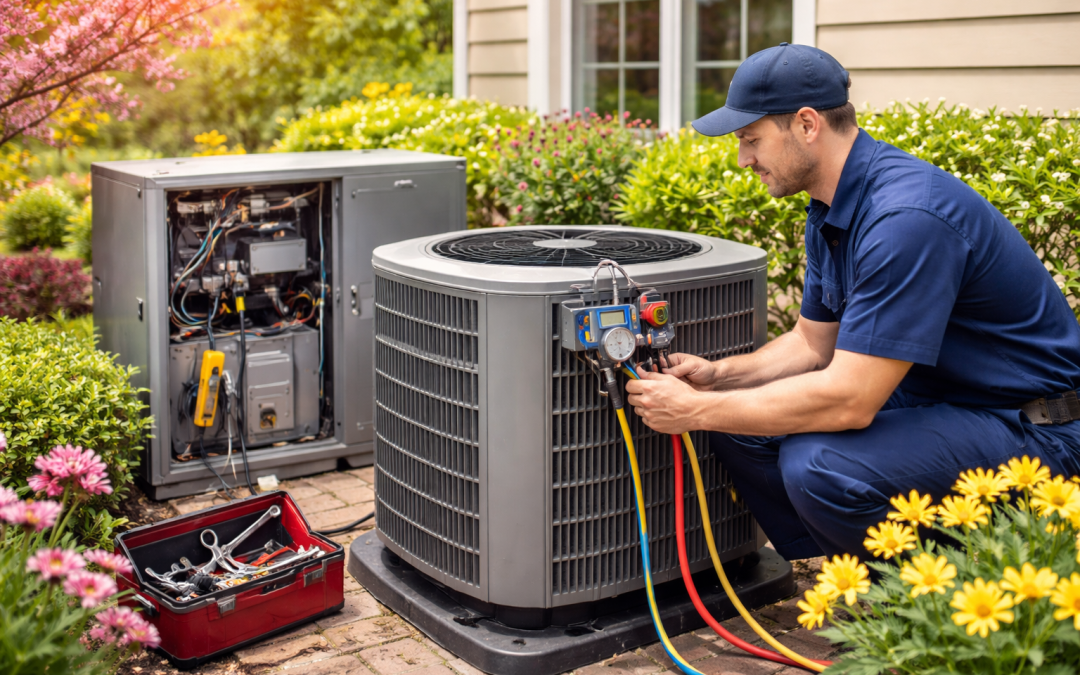
Spring represents the ideal window for air conditioning preparation in Santa Rosa, yet many homeowners delay servicing until temperatures spike. This timing difference often determines whether families enjoy uninterrupted cooling comfort or face emergency repair costs during Sonoma County’s hottest weeks.
Understanding when and how to service your cooling system can prevent the common scenario of discovering equipment failures on the year’s initial 90-degree day. North HVAC Services has observed consistent patterns in seasonal service demand that reveal why March and April appointments deliver better outcomes than waiting until summer arrives.
Why AC Maintenance Should Begin in March, Not June
The calendar matters more than homeowners realize when scheduling air conditioning service. Santa Rosa’s climate creates specific timing advantages that disappear once summer heat arrives.
Service Availability and Wait Times
March through early May represents the window when HVAC contractors maintain normal scheduling capacity. According to the U.S. Department of Energy‘s residential HVAC maintenance guidelines, preventive maintenance scheduled during off-peak periods allows for thorough inspections without the time pressures of emergency summer calls.
During the spring months, homeowners typically schedule appointments within 3-5 business days. By mid-June, that timeframe extends to 2-3 weeks as contractors work through backlogs of emergency calls. This delay means living without cooling during peak heat rather than addressing issues before they impact comfort.
Temperature Pattern Considerations
Historical climate data from Weather Spark for Santa Rosa shows the city typically reaches its first 85°F+ day between late April and mid-May. The first 90°F+ day usually occurs in late May or early June. Systems that haven’t operated for 6-8 months face higher failure rates during these initial startup cycles.
Equipment dormancy creates specific stresses. Refrigerant settles, lubricants thicken, and electrical components experience voltage surges after extended inactivity. Testing systems in March allows time to address these issues before they cause failures during actual cooling demand.
Parts and Supply Chain Factors
Spring service appointments benefit from full parts inventory at suppliers. Common components like capacitors, contactors, and fan motors are stocked at normal levels. Summer emergency repairs often require overnight shipping or multi-day waits for specialty parts, particularly for older system models.
What Professional Air Conditioner Maintenance Includes: The Complete 22-Point Inspection
Thorough “AC service near me” searches should identify contractors who perform systematic evaluations rather than cursory checks. Professional AC maintenance involves specific measurements and tests that homeowners cannot replicate with basic tools. North HVAC Services technicians follow manufacturer-specific protocols for each system brand we service.
Refrigerant System Verification
Technicians measure refrigerant charge using superheat and subcool calculations specific to each system’s design. Incorrect refrigerant levels reduce efficiency by 20% and accelerate compressor wear. This process requires specialized gauges and manufacturer specifications that vary by equipment brand and model.
Low refrigerant always indicates a leak, as systems are sealed and should never need “recharging” under normal operation. Professional service locates and repairs leaks rather than simply adding refrigerant that will leak out again.
Electrical Component Testing
Capacitors represent the most common failure point in air conditioning systems. These components provide starting and running voltage to motors but degrade over time regardless of usage. Testing reveals capacitance values before failures occur, preventing the $300-500 emergency service calls that result from capacitor-related breakdowns.
Contactors, relays, and wire connections undergo visual inspection and voltage testing. Pitted contactors or loose connections create resistance that generates heat, leading to component failures during high-demand periods.
| Component |
Normal Service Interval |
Failure Impact |
| Capacitors |
5-7 years |
System won’t start or runs inefficiently |
| Contactors |
10-12 years |
Prevents compressor operation |
| Condenser Fan Motor |
10-15 years |
Overheating and compressor damage |
| Evaporator Coils |
Clean annually |
30% efficiency loss when dirty |
Coil Cleaning and Airflow Measurement
Both evaporator (indoor) and condenser (outdoor) coils require cleaning to maintain heat transfer efficiency. Dirty coils force systems to run longer cycles to achieve set temperatures, increasing energy consumption and component wear.
Airflow measurement across the evaporator coil verifies proper CFM (cubic feet per minute) delivery. Systems designed for 400 CFM per ton of cooling capacity but delivering only 300 CFM indicate ductwork restrictions, undersized returns, or blower issues requiring correction.
Thermostat Calibration and Documentation
Thermostat sensors drift over time, causing temperature discrepancies between displayed and actual room conditions. A thermostat reading 72°F while the actual temperature measures 75°F forces systems to short-cycle without achieving comfort.
Professional service includes documentation of all measurements: refrigerant pressures, electrical voltages, temperature differentials, and airflow readings. This baseline data allows future comparisons that identify developing problems before they cause failures.
Common Problems Found During Santa Rosa AC Repair Inspections
Spring inspections consistently reveal issues that would cause mid-summer breakdowns if left unaddressed. Understanding these patterns helps homeowners recognize warning signs earlier.
Capacitor Degradation
Capacitors fail more frequently than any other air conditioning component. These cylindrical components store electrical charge to start and run motors, but their capacitance degrades approximately 5-7% annually regardless of system usage.
When capacitance drops below equipment specifications, motors struggle to start or run inefficiently. This creates amperage draw increases that accelerate compressor wear and can cause complete motor failures requiring expensive replacements. North HVAC Services carries common capacitor sizes on every service vehicle to provide same-visit replacements when needed.
Refrigerant Leaks and System Impact
The Environmental Protection Agency regulates refrigerant handling through Section 608 regulations due to environmental concerns, but leaks also create significant cost implications for homeowners. Systems low on refrigerant run longer cycles, consume more energy, and risk compressor damage from inadequate cooling.
Older systems using R-22 refrigerant face particularly high repair costs, as this phased-out refrigerant now costs $80-150 per pound compared to $20-30 for newer R-410A. A system requiring 3-4 pounds of R-22 to recharge may cost more than replacing the entire unit with modern equipment.
Compressor Starting Issues
Compressors that show hard-start characteristics during spring testing typically fail within the first month of regular summer operation. This condition develops when internal components wear, requiring more starting torque than capacitors can provide.
Adding hard-start kits can extend compressor life temporarily, but these symptoms often indicate replacement should occur on the homeowner’s timeline rather than during an emergency situation when options and negotiating power decrease.
Condensate Drainage Problems
Air conditioner maintenance must address the water removal systems that prevent flooding. Evaporator coils remove humidity from indoor air, generating 5-20 gallons of water daily during summer operation. This condensate drains through pipes that can develop blockages from algae growth, debris, or installation issues.
Blocked drains cause water backups that damage ceilings, walls, and flooring. Secondary drain pans and safety switches can prevent damage, but don’t address the underlying blockage requiring professional cleaning.
| Common Issue |
Typical Discovery Time |
Prevention Method |
| Capacitor failure |
During first hot-weather operation |
Annual spring testing and replacement |
| Refrigerant leaks |
When cooling becomes inadequate |
Pressure testing during tune-ups |
| Drain blockages |
After water damage occurs |
Annual drain cleaning and biocide treatment |
| Compressor wear |
Mid-summer breakdown |
Electrical testing and starting current measurement |
Ductwork Air Leaks
Even as California pours billions into clean energy and home efficiency, many houses lose a large portion of heated and cooled air through leaky, unsealed ductwork before it can be used indoors. This represents substantial wasted energy and reduced comfort.
Spring service should include duct inspection in accessible areas. Connections at registers, return grilles, and equipment often develop gaps that worsen over time from building settlement and temperature cycling.
DIY Pre-Season Checklist: What Homeowners Can Do Before Professional Service
Homeowners can perform basic preparation tasks that improve system performance and help professional technicians work more efficiently during scheduled maintenance appointments.
- Outdoor Unit Clearing: Condenser units require unrestricted airflow to reject heat effectively. Remove leaves, grass clippings, and debris from fins using a garden hose spray (never pressure washers, which bend delicate fins). Trim vegetation, shrubs, and tree branches to provide 24 inches of clearance on all sides of the unit.
Check that the concrete pad beneath the unit remains level. Settling that causes tilting can stress refrigerant lines and affect proper drainage from the unit.
- Air Filter Management: Standard 1-inch pleated filters require monthly inspection and replacement every 1-3 months, depending on household conditions. Homes with pets, construction projects, or high dust exposure need more frequent changes.
Dirty filters restrict airflow, forcing blower motors to work harder and reducing system capacity. A system designed to cool a home to 72°F might only achieve 75°F when filters are severely clogged.
- Indoor Register Maintenance: Walk through your home, checking each supply register (where cool air blows out) and return grille (where air returns to the system). Remove any furniture, drapes, or storage items blocking airflow. Vacuum register faces to remove dust buildup.
Close inspection often reveals temperature differences between rooms that indicate ductwork issues requiring professional assessment. One bedroom is significantly warmer than the others suggests supply duct problems affecting that area.
- Thermostat System Check: Replace thermostat batteries annually, even if low-battery warnings haven’t appeared. Test cooling mode by setting the temperature 3-4 degrees below the current room temperature and verifying the system starts within 30-60 seconds.
Listen for unusual sounds during startup and operation. Grinding, squealing, or banging noises indicate mechanical issues requiring immediate AC repair in Santa Rosa before continued operation causes additional damage.
Energy Efficiency Gains from Spring AC Tune-Ups
Regular maintenance delivers quantifiable energy savings that offset service costs while reducing environmental impact. Being aware of these benefits helps homeowners evaluate the return on investment from seasonal servicing.
Efficiency Degradation Patterns
A long-term field study of 56 Florida homes found that air conditioner and heat pump performance often declined over time, with many systems degrading by about 5% per year. A system operating at 95% of design efficiency in year two drops to 90% in year three without maintenance.
This degradation compounds over time. After five years without service, a system might operate at only 75-80% of its original efficiency, consuming 20-25% more electricity to provide the same cooling output. On a $200 monthly summer cooling bill, that represents $40-50 in unnecessary costs.
PG&E Rate Structure Considerations
Santa Rosa residents served by PG&E face electricity rates that can vary based on usage, season, and time of day. PG&E’s current residential summer pricing spans from roughly the low 30-cent range to just over 50 cents per kWh, depending on the rate plan and usage level.
Well-maintained systems that run more efficiently keep households in lower rate tiers, creating savings that exceed the direct energy consumption reduction. A system using 15% less electricity might reduce costs by 20-25% if that reduction prevents tier escalation.
SEER Rating Preservation
Air conditioners carry Seasonal Energy Efficiency Ratio (SEER) ratings indicating their efficiency under ideal conditions. A system rated 16 SEER delivers that efficiency only when properly maintained. Dirty coils, low refrigerant, or restricted airflow can reduce effective SEER to 12-13, equivalent to operating a much older, less efficient unit.
California Rebate and Incentive Programs
California property owners may be eligible for HVAC and home-energy rebates through utility programs, state-administered initiatives, and, in some areas, local air districts. Rebate requirements vary by program, but they often involve proof of purchase, installation details, equipment eligibility, and qualified contractor documentation. North HVAC Services assists customers with rebate documentation and qualification requirements for efficiency upgrade programs.
Recognizing Warning Signs That Require Immediate AC Repair in Santa Rosa
Some system behaviors indicate problems that will worsen rapidly without intervention. Recognizing these patterns helps homeowners distinguish between scheduling routine service and requesting urgent evaluation.
- Unusual Operating Sounds: Air conditioners should produce relatively consistent, quiet operation. New sounds indicate developing mechanical issues:
- Grinding: Bearings wearing in motors or compressor internal damage
- Squealing: Belt slippage (older systems) or bearing friction
- Banging/Clanking: Loose components or failed mounts
- Hissing: Refrigerant leaks or expansion valve issues
Continuing operation after unusual sounds develops risks of converting minor repairs into major component replacements.
- Airflow and Cooling Performance Issues: Weak airflow from registers despite the blower running suggests ductwork restrictions, blower motor problems, or evaporator coil icing. Uneven cooling between rooms indicates supply duct leaks, damper positions, or inadequate system capacity for the home layout.
Systems that run continuously without reaching thermostat settings demonstrate capacity problems. This might result from refrigerant loss, compressor wear, or undersized equipment for the cooling load.
- Short-Cycling Behavior: Normal cooling cycles run 12-18 minutes in moderate weather and 20-25+ minutes during peak temperatures. Systems starting and stopping every 5-10 minutes indicate thermostat problems, refrigerant overcharge, or oversized equipment.
Short-cycling accelerates component wear because starting represents the highest electrical stress and mechanical wear period. A system short-cycling 6 times per hour experiences starting stress equivalent to normal all-day operation.
- Electrical and Safety Concerns: Burning odors, circuit breaker trips, or visible sparking require immediate shutdown and professional evaluation. These symptoms indicate electrical failures that pose fire risks and will worsen with continued operation.
Musty or moldy odors when the system operates suggest biological growth in ductwork or drain pans. This affects indoor air quality and can aggravate respiratory conditions, particularly for children and sensitive individuals.
- Cost Analysis: Repair vs. Replacement: Spring tune-ups sometimes reveal damage beyond economical repair. Systems over 12-15 years old requiring compressor replacement, refrigerant conversions, or multiple component failures often make replacement more financially sound.
Secure Your Summer Comfort: Book Your Pre-Season AC Tune-Up with North HVAC Services
Santa Rosa homeowners who schedule spring air conditioner maintenance avoid the summer service delays and emergency repair premiums that affect those who wait for problems to develop. Our Santa Rosa AC Repair team brings Diamond Authorized Dealer status for Mitsubishi systems and Factory Authorized Dealer credentials for Trane and Day & Night equipment, which means we maintain factory-trained technicians with access to manufacturer technical support and genuine parts.
What Your Spring AC Maintenance Appointment Includes:
- Complete 22-point inspection with documented measurements
- Baseline performance data for your specific system
- Documentation valuable for warranty claims and efficiency rebate applications
- Professional evaluation of repair versus replacement economics
- Priority scheduling during March and April with experienced technicians
North HVAC Services schedules spring maintenance appointments Monday through Saturday, 6:00 AM to 6:30 PM, providing flexibility that accommodates work schedules.
Three Easy Ways to Schedule:
Don’t wait until the initial heat wave reveals problems that could have been prevented. Contact us today to protect your summer cooling comfort and avoid the emergency service delays that affect last-minute callers.
Apr 6, 2026 | HVAC, HVAC Maintenance
Santa Rosa’s spring season brings distinct challenges for homeowners managing their climate control systems. Between February and April, morning temperatures often drop to the mid-40s while afternoons can reach the mid-70s, forcing HVAC systems to switch between heating and cooling modes within the same day. This transitional period represents the optimal window for addressing both heating system maintenance after winter use and preparing air conditioning equipment for California’s demanding summer season. During this period, searches for “HVAC contractors near me” typically increase as homeowners plan preventive service. North HVAC Services has observed that homeowners who complete dual-system inspections during this shoulder season experience significantly fewer emergency breakdowns when temperatures peak in July and August.
Why Santa Rosa’s Spring Weather Demands Dual-System Attention
Sonoma County’s microclimate patterns create temperature variations that stress residential climate control equipment in ways unfamiliar to homeowners in more stable climates. March and April typically see overnight lows between 42°F and 48°F, followed by afternoon highs ranging from 68°F to 78°F. This 30-degree daily swing forces homeowners to run furnaces in early morning hours and switch to air conditioning by mid-afternoon.
How Temperature Swings Stress Both Heating and Cooling Systems:
- Heating components that operated continuously throughout winter face additional strain when cycled on and off repeatedly during spring’s fluctuating temperatures
- Cooling systems sitting dormant for months must restart suddenly under load rather than gradually ramping up usage
- The combination creates accelerated wear on electrical connections, motor bearings, and refrigerant seals
- Rapid transitions between heating and cooling modes increase mechanical stress on both systems simultaneously
Santa Rosa’s Unique Microclimate Challenges:
Weather patterns specific to different areas of the Santa Rosa compound exacerbate these challenges. Homes in the Fountaingrove hills experience different heating and cooling demands than properties in the Railroad Square area near downtown. Elevation changes, proximity to coastal fog patterns, and urban heat island effects all influence how individual systems perform during seasonal transitions.
North HVAC Services technicians account for these location-specific variations when evaluating system performance during spring inspections.
Why Spring Timing Matters for HVAC Service:
The narrow maintenance window before summer arrives makes spring timing critical. By late May, technician schedules fill with emergency repair calls as the first heat waves arrive. Homeowners who wait until June often face extended wait times for service appointments and limited equipment availability if replacement becomes necessary.
Heating and Air Conditioning: End-of-Winter Furnace Inspection Priorities
After months of continuous operation during Sonoma County’s heating season, furnace components accumulate wear that requires professional assessment before the system sits idle for summer. Spring inspections address several critical areas that determine both safety and performance for the coming year.
Heat Exchanger Integrity and Carbon Monoxide Safety
Heat exchangers–the metal chambers that transfer warmth from combustion gases to circulating air–develop stress cracks from repeated heating and cooling cycles. These cracks can allow carbon monoxide to enter living spaces, creating serious health risks that only become apparent through specialized testing equipment. Our factory-trained technicians at North HVAC Services use specialized combustion analysis equipment to detect heat exchanger issues before they create safety hazards.
According to the U.S. Department of Energy, furnace heat exchangers that leak mix combustion gases with house air, representing an important safety reason to have them inspected professionally. The DOE recommends cleaning heat exchangers and having technicians perform combustion-efficiency tests when considering system maintenance or replacement.
Critical Components That Degrade During Heating Season
Spring furnace inspections should evaluate several wear-prone components:
- Igniter condition and reliability – Hot surface igniters, which replaced standing pilot lights in modern furnaces, have finite lifespans measured in heating cycles. A weak igniter may still function during spring’s mild temperatures but fail completely when next season’s cold weather demands reliable starts. Identifying marginal igniters during spring inspections prevents mid-winter failures.
- Gas valve connections and burner cleanliness – Natural gas contains trace amounts of sulfur and other compounds that create residue buildup on burner surfaces. This buildup reduces combustion efficiency and can create irregular flame patterns that stress heat exchangers. Professional cleaning during spring maintenance restores optimal burn characteristics.
- Ductwork integrity and sealing – Spring provides an often-overlooked maintenance opportunity with attics and crawl spaces at moderate temperatures. Technicians can thoroughly inspect duct connections, sealing, and insulation that become difficult to access during extreme weather. Identifying air leaks or disconnected sections during the spring prevents efficiency losses throughout the entire year.
Essential HVAC Service Tasks for Sonoma County’s Spring Transition
Professional spring service addresses components critical to both heating and air conditioning operation. Thermostat calibration stands as the starting point, as sensors drift from their factory settings over time. A thermostat reading 72°F when the actual room temperature measures 70°F causes both heating and cooling systems to cycle incorrectly, wasting energy and reducing comfort.
Modern programmable thermostats require seasonal reprogramming to match changing schedules and temperature preferences. Many homeowners maintain winter settings well into spring, running heating systems longer than necessary or failing to activate cooling modes during afternoon warmth. Technicians verify programming logic and update schedules to match current seasonal needs.
| Spring Service Task |
Heating Benefit |
Cooling Benefit |
| Air filter replacement |
Removes winter dust accumulation |
Addresses spring pollen before cooling season |
| Condensate drain clearing |
Limited (furnace condensate in high-efficiency units) |
Prevents overflow when AC produces moisture |
| Electrical inspection |
Verifies igniter and blower connections |
Tests compressor and condenser fan circuits |
| Refrigerant verification |
Not applicable |
Identifies leaks before system operates under load |
Air Filter Replacement: Addressing Seasonal Contaminants
Air filter replacement during spring addresses two distinct contamination sources:
- Winter accumulation – Indoor dust from closed homes, dried skin particles, and combustion byproducts build up over months of heating system operation.
- Spring allergens – Santa Rosa’s diverse tree species, including oak, birch, and walnut, release significant pollen between March and May.
- Dual-season protection – A filter saturated with winter contaminants cannot capture spring pollen effectively, reducing both air quality and system efficiency.
Condensate Drain Line Maintenance
Condensate drain lines require attention before the humidity season arrives. Air conditioning systems remove moisture from indoor air, producing condensation that drains through dedicated pipes. During winter dormancy, these drain lines accumulate dust, biological growth, and debris that can cause blockages once the cooling operation resumes.
Consequences of neglected drain lines:
- Water backup that damages ceilings and walls
- Potential electrical component damage from overflow
- Reduced system efficiency and cooling performance
Electrical Connection Inspection
Electrical connection inspection protects both heating and cooling equipment. Thermal expansion and contraction from repeated use loosen wire connections and terminal screws. These loosened connections create electrical resistance that generates heat, potentially leading to component failure or fire risk.
What technicians verify during electrical inspection:
- Systematic tightening of all electrical terminations
- Wire insulation integrity throughout the system
- Proper connection security on both heating and cooling components
AC Maintenance: Pre-Season Cooling System Preparation Checklist
Outdoor condenser units accumulate substantial debris during the winter months when homeowners typically ignore these components. Leaves, seeds, dirt, and vegetation growth obstruct the aluminum fins that transfer heat from the refrigerant to the outdoor air. Even partial blockage reduces cooling capacity and forces compressors to work harder, increasing electricity consumption and accelerating wear.
Professional Condenser Cleaning
Professional condenser cleaning involves more than hosing off visible dirt. Technicians remove the unit’s protective grille to access coil surfaces from inside, using specialized coil cleaners and soft brushes that remove embedded debris without bending delicate fins. Straightening bent fins with proper tools restores airflow paths that casual washing cannot address.
Refrigerant Charge Verification
Refrigerant level verification represents a critical pre-season check that prevents costly damage. Air conditioning systems contain precisely measured refrigerant charges–too little causes inadequate cooling and potential compressor damage, while excess refrigerant reduces efficiency and stresses seals. Unlike automobile air conditioners that homeowners can recharge themselves, residential systems require EPA-certified technicians with proper gauges to measure subcooling and superheat values that determine correct charge levels.
Research conducted at Purdue University’s Herrick Laboratories found that approximately 50 to 67 percent of all air conditioners suffer from improper charge or airflow problems, causing them to operate 20 percent less efficiently than if they were properly installed or maintained. The same study, which was co-supported by the California Energy Commission and U.S. Department of Energy, demonstrated that refrigerant undercharging in the range of 12 to 19 percent can lead to an average reduction of 12.87 percent in cooling capacity and 7.6 percent in energy efficiency.
Refrigerant Leak Detection
Leak testing accompanies refrigerant verification, as systems losing charge indicate seal failures or mechanical damage. Technicians use electronic leak detectors or ultraviolet dye to identify even small leaks that would gradually reduce system performance throughout the summer. Repairing leaks before adding refrigerant prevents wasting expensive refrigerant and allows systems to maintain proper charge throughout the cooling season.
Compressor Health Assessment
Compressor functionality testing before the first heat wave identifies components approaching failure. Technicians measure starting amperage, running current, and capacitor values that indicate compressor health. Marginal compressors may start successfully during spring’s mild temperatures but fail when July’s heat demands maximum output. Identifying weak compressors during spring allows homeowners to plan replacements before emergency situations develop.
Fan Motor Inspection and Lubrication
Fan motor components require lubrication and inspection after sitting dormant through winter. Sealed bearings that appeared adequate in October may have deteriorated during months of inactivity. Blade balance affects vibration levels–imbalanced fans create noise and accelerate bearing wear. Technicians verify blade security, balance, and motor mounting integrity.
How Spring HVAC Maintenance Tune-Ups Prevent Emergency Summer Repairs
The financial difference between planned spring service and emergency summer repairs extends far beyond basic service call charges. During March and April, searches for HVAC contractors near you typically yield next-day or same-week appointment availability. By contrast, when Santa Rosa experiences its first 95°F day in June, service providers face multi-day backlogs of emergency calls from homes with non-functional cooling systems.
Emergency service rates reflect this demand reality. Standard diagnostic fees that might cost $125 during spring months often increase to $200-300 for same-day emergency calls during peak summer heat. Labor rates for weekend or after-hours service add 50-100% premiums to repair costs. Parts availability also becomes problematic–common components like capacitors or contactors that sit readily available in March may require ordering during summer’s peak demand, extending uncomfortable wait times.
Consider the cost comparison:
| Scenario |
Spring Planned Service |
Summer Emergency Repair |
| Diagnostic visit |
$95-125 |
$200-300 (emergency rate) |
| Capacitor replacement |
$150 total |
$325+ (parts shortage, premium labor) |
| Compressor replacement |
$2,800-3,200 (scheduled) |
$3,500-4,200 (emergency, limited availability) |
| Average wait time |
1-3 days |
3-7 days during heat waves |
Beyond immediate cost differences, spring maintenance identifies components approaching failure while they still function. A capacitor testing at 85% of rated capacity during April likely fails by July. Replacing it proactively during planned service costs significantly less than the emergency call, after-hours labor, and potential secondary damage that occurs when capacitors fail catastrophically under load.
Equipment availability advantages favor spring scheduling. Distributors maintain full inventory during shoulder seasons, allowing quick access to replacement parts ranging from basic contactors to complete condensing units. Summer demand creates regional shortages–the same compressor available overnight in April may require week-long backorders in July when every HVAC service provider in Northern California orders simultaneously.
Warranty protection represents another often-overlooked benefit of documented annual maintenance. Most equipment manufacturers require proof of annual professional service to maintain warranty coverage. Homeowners who skip spring furnace maintenance and AC maintenance risk voiding warranties on systems still within their coverage period. The detailed service report from spring visits provides documentation that protects warranty claims if components fail during covered periods.
North HVAC Services maintains extended spring scheduling availability specifically to help homeowners avoid summer emergencies.
Scheduling Strategy: When to Book Your Dual-System Service
Late February through mid-April represents the ideal scheduling window for comprehensive spring transition service in Santa Rosa. Earlier scheduling in February captures homeowners before widespread awareness drives appointment backlogs, while extending into mid-April still provides sufficient time to address identified issues before summer heat arrives.
What to Expect During Your Spring Inspection
A complete spring transition inspection typically requires 2-3 hours for thorough evaluation of both heating and cooling systems. This duration allows technicians to complete all checklist items without rushing, test system operation under both heating and cooling modes, and discuss findings with homeowners. Properties with multiple zones, commercial-grade equipment, or older systems may require additional time.
Preparing Your Home for Service
Homeowners should prepare for service visits by clearing access to both indoor and outdoor equipment. Simple preparation steps help technicians work efficiently:
- Remove stored items blocking furnace access panels in closets or garages
- Trim vegetation around outdoor condenser units to maintain 24 inches of clearance
- Move patio furniture or outdoor obstacles away from the AC equipment
- Clear pathways to mechanical areas for safe technician access
Warning Signs That Require Immediate Attention
Several warning signs indicate immediate attention regardless of seasonal scheduling recommendations:
- Unusual odors from heating systems, particularly sulfur or burning smells
- Visible rust or corrosion on furnace heat exchangers
- Air conditioning refrigerant lines showing ice formation
- Loud grinding, squealing, or banging noises from either system
- Visible water leaks or standing water near indoor or outdoor equipment
- Thermostat displaying error codes or failing to control temperature
These symptoms suggest problems requiring urgent evaluation rather than waiting for routine spring service. Component failures don’t respect seasonal schedules–addressing warning signs immediately prevents minor issues from escalating into major repairs.
Benefits of Establishing a Service Relationship
HVAC service providers in Sonoma County recognize these seasonal patterns and adjust staffing accordingly. Homeowners who establish relationships with local contractors often receive priority scheduling and preferential service timing. Annual HVAC maintenance tune-ups create service histories that help technicians identify gradual changes in system performance, catching deterioration before failures occur.
Beat the Rush: Schedule Your Complete Spring HVAC Transition Service Today
Book your furnace maintenance and air conditioning spring service before Santa Rosa’s peak scheduling season arrives. At North HVAC Services, we perform complete seasonal inspections to wrap up winter heating use and prepare cooling equipment for summer temperatures. Our technicians inspect both systems, document completed work, and provide records that support warranty protection and long-term system tracking.
Scheduling early helps reduce the risk of mid-summer breakdowns and allows potential issues to be addressed before they become costly repairs. Homeowners who plan ahead are more likely to secure preferred appointment times and maintain consistent indoor comfort during the hottest months. It’s also the time when many start searching “HVAC contractors near me” to compare providers and lock in dependable service before demand increases.
Don’t wait until the first 90-degree day creates a service backlog that delays your comfort for days or weeks. Contact our team at (415) 845-6910 or email northhvacservices@gmail.com to schedule your spring transition service while prime appointment slots remain available. You can also request service through our contact page with details about your current system and any specific concerns you’ve noticed during recent operation.
Feb 28, 2026 | HVAC
Understanding Uneven Temperature Problems in Homes
Uneven temperatures in your home can be more than just a minor inconvenience. They can lead to discomfort, higher energy bills, and even strain on your HVAC system. Various factors contribute to this issue, such as poor insulation, outdated heating and cooling systems, and improper air distribution. But did you know that smart thermostat benefits can play a crucial role in solving these issues?
Homes with multiple levels or large open spaces tend to experience uneven temperatures more frequently. For example, a two-story home might have a comfortable living room downstairs, but upstairs bedrooms that are too hot or too cold. This imbalance can be frustrating, especially when different family members have varying comfort preferences.
At North HVAC Services, we often meet homeowners dealing with these challenges. Our experience shows that understanding the root cause of uneven temperatures is the first step towards an effective solution. Many times, a smart thermostat can help bridge the gap by offering precise control and adjustments to your HVAC system.
How Smart Thermostats Detect Temperature Variations
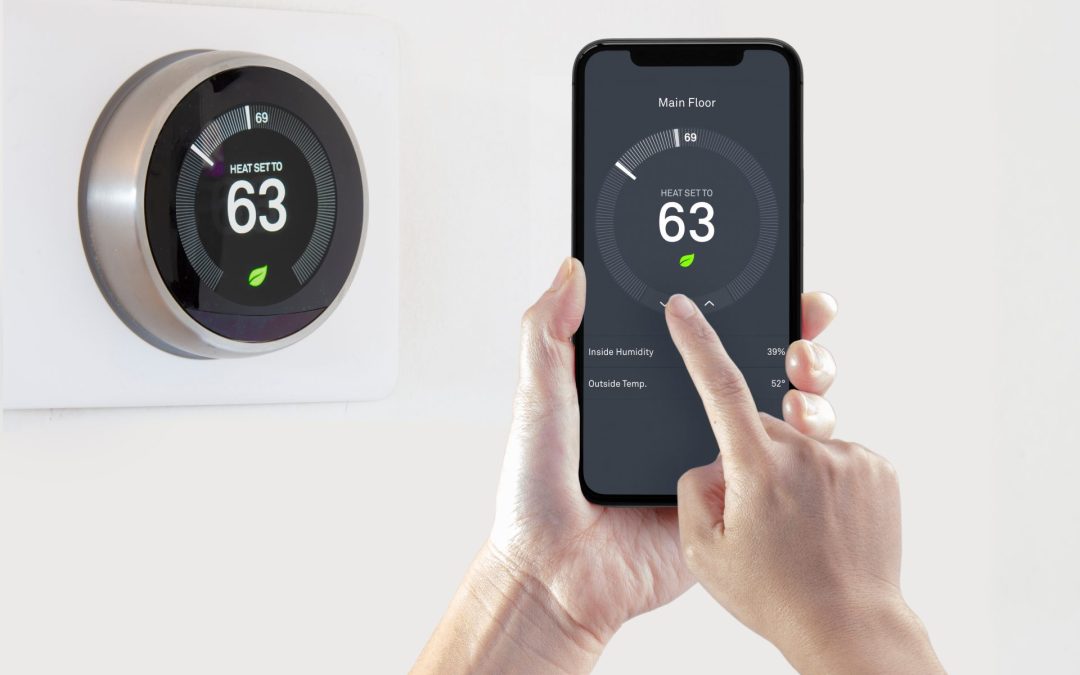
Smart thermostats are designed to detect temperature variations throughout your home. Unlike traditional thermostats, these advanced devices use sensors to monitor different areas and adjust settings accordingly. This means they can identify when certain rooms are warmer or cooler than others and take steps to balance the temperature.
For further reading, see Smart Thermostats from energystar.gov.
For instance, a smart thermostat can learn your daily routines and adjust the temperature based on occupancy and usage patterns. If it detects that your upstairs bedrooms are consistently warmer, it can adjust the HVAC system to distribute more cool air to those areas. This way, you achieve a more uniform temperature throughout the house.
- Smart thermostats use motion sensors to detect when rooms are occupied.
- They can be programmed to maintain different temperatures in different zones.
- Some models integrate with weather forecasts to adjust settings proactively.
These capabilities make smart thermostats a valuable tool in addressing uneven temperature issues, providing a more comfortable and energy-efficient home environment.
Smart Thermostat Benefits for Temperature Control
One of the key smart thermostat benefits is their superior temperature control capability. By using data from various sensors, they can make real-time adjustments that traditional thermostats simply can’t match. This leads to improved comfort and energy efficiency.
For example, smart thermostats can help reduce energy consumption by only heating or cooling rooms when necessary. If your home is equipped with zoned comfort solutions, a smart thermostat can optimize these zones to ensure each area of your home is at the desired temperature.
- Energy Savings: By learning your schedule, smart thermostats optimize heating and cooling cycles, potentially lowering your utility bills by 10-15%.
- Remote Access: Control your thermostat from anywhere using a smartphone app. This is particularly useful if you forgot to adjust your settings before leaving home.
- Custom Schedules: Set different temperatures for different times of the day, ensuring comfort when you’re home and savings when you’re not.
These benefits contribute to a more balanced temperature throughout your home, making smart thermostats an excellent investment for solving uneven temperature problems.
Integration of Smart Thermostats with Zoning Systems
Integrating smart thermostats with zoning systems is a powerful way to solve uneven temperature issues. Zoning systems divide your home into different areas, each with its own thermostat. This allows for precise control of the temperature in each zone, ensuring that every part of your home remains comfortable.
Smart thermostats enhance this by automating adjustments based on real-time data. For instance, if the family room is warmer than desired, the smart thermostat can adjust the HVAC system to cool that specific zone without affecting the rest of the house. This targeted approach not only improves comfort but also increases energy efficiency.
- Smart thermostats can independently control each zone, providing personalized comfort.
- They work with existing HVAC systems, making it easier to implement zoned comfort solutions.
- By reducing the workload on your HVAC system, they can prolong its lifespan and reduce maintenance needs.
North HVAC Services can help you integrate these systems seamlessly, ensuring optimal performance and comfort in your home.
Case Study: Solving Uneven Temperatures in a Two-Story Home
Let’s consider a real-life scenario to illustrate how a smart thermostat can solve uneven temperature issues. A family in Petaluma had been experiencing significant temperature differences between the first and second floors of their home. The bedrooms upstairs were often too warm, while the living areas downstairs remained comfortable.
After contacting North HVAC Services, we conducted a thorough heating system diagnostics to identify the root cause. It turned out that the existing HVAC system was not efficiently distributing air between the floors. Our team recommended installing a smart thermostat along with minor adjustments to the ductwork.
- The smart thermostat was programmed to adjust temperatures based on occupancy and time of day.
- Integration with the existing HVAC system allowed for better airflow control between floors.
- As a result, the family noticed a significant improvement in comfort and a reduction in energy bills by 12%.
This case study highlights how smart thermostats, when combined with professional HVAC troubleshooting, can effectively solve uneven temperature problems.
Choosing the Right Smart Thermostat for Your Needs
When selecting a smart thermostat, it’s important to consider your home’s specific needs and the features that will be most beneficial. Smart thermostats vary in terms of compatibility, features, and price points, so understanding your requirements is key.
Look for models that support zoned comfort solutions if your home has multiple zones. Compatibility with your existing HVAC system is crucial, as not all smart thermostats work with every system. Additionally, consider the user interface and ease of use—many offer intuitive smartphone apps for convenient control.
- Check compatibility with existing HVAC systems.
- Consider additional features like voice control or integration with smart home devices.
- Evaluate the thermostat’s ability to create custom schedules based on your lifestyle.
North HVAC Services can assist you in selecting the right smart thermostat, ensuring it meets your specific needs and integrates smoothly with your system.
Installation Tips for Smart Thermostats
Installing a smart thermostat can be straightforward, but there are a few tips to ensure a successful setup. First, check the wiring of your current thermostat to ensure compatibility. Most smart thermostats require a C-wire for power, but some models offer solutions if one isn’t present.
Follow the manufacturer’s instructions carefully during installation, and consider the placement of the thermostat. It should be located in a central area away from direct sunlight or drafts. This ensures accurate temperature readings and optimal performance.
- Turn off the power to your HVAC system before starting the installation.
- Label the wires during removal of the old thermostat for easy reconnection.
- Test the new thermostat thoroughly to ensure it communicates effectively with your HVAC system.
For those who prefer professional installation, North HVAC Services offers a comprehensive thermostat installation and replacement service, ensuring everything is set up correctly and efficiently.
Long-term Benefits of Using Smart Thermostats
The long-term benefits of using smart thermostats go beyond immediate comfort and energy savings. By maintaining consistent temperatures and optimizing HVAC usage, they can extend the lifespan of your heating and cooling systems. This reduces the need for frequent repairs and replacements, saving you money over time.
Smart thermostats also contribute to a more sustainable home by reducing energy consumption. This aligns with North HVAC Services’ commitment to environmental sustainability by promoting energy-efficient solutions. Moreover, with regular hvac maintenance and tune-ups, you can ensure your system runs smoothly and efficiently for years to come.
For anyone struggling with uneven temperatures in their home, smart thermostats offer a practical and cost-effective solution. If you’re considering this upgrade, contact North HVAC Services for a free consultation at (415) 845-6910 to explore how we can help make your home more comfortable and energy-efficient.
Frequently Asked Questions
How can a smart thermostat help with uneven temperatures in my home?
A smart thermostat uses sensors to detect temperature variations in different rooms, allowing it to make adjustments to your HVAC system to balance temperatures. This means you can achieve a more consistent climate throughout your home, reducing discomfort and potentially lowering energy costs.
Do I need professional installation for a smart thermostat?
While some people may feel comfortable installing a smart thermostat themselves, having a professional like North HVAC Services can ensure proper setup and integration with your existing HVAC system. You can reach North HVAC Services at (415) 845-6910 for expert installation in Petaluma, CA.
Can a smart thermostat reduce my energy bills?
Yes, smart thermostats can help reduce energy bills by optimizing your HVAC system's efficiency. They adjust temperatures based on your schedule and preferences, ensuring energy isn't wasted on heating or cooling unoccupied rooms.
What features should I look for in a smart thermostat?
Look for features such as multi-room sensors, learning capabilities, remote access via smartphone apps, and compatibility with your HVAC system. These features enhance comfort and convenience while maximizing energy savings.
Is a smart thermostat compatible with all types of HVAC systems?
Most modern smart thermostats are compatible with a wide range of HVAC systems, but it's always best to check the specific requirements. Consulting with professionals like North HVAC Services can help determine compatibility with your current setup.